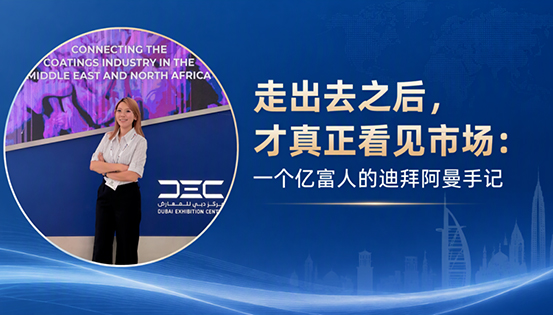
Hello everyone, my name is Zeng Jinyin, my English name is Bree, and I am responsible for the Middle East market development at Yifu Intelligence.
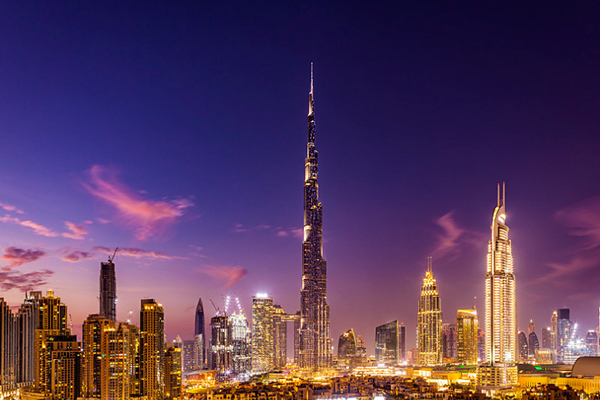
Before setting off for Dubai, my imagination of this area was actually quite "flat" - hot weather, developed cities, rich oil resources, and a "overseas market" that sounded huge. But when I actually walked from the exhibition hall in Dubai to the streets of Oman, I discovered that the market can never be summarized by a map or a few numbers.
The real market consists of specific people, factories, channels, and the complex business habits behind them.
This trip to Dubai and Oman is not just a business trip for me, but more like an on-the-spot classroom that truly leaves the office and enters the market.
From the excitement in the exhibition hall to the reality on the streets
From the end of September to the beginning of October, I followed the company's foreign trade team from Dubai to Oman, taking the "exhibition + field research" route.
In Dubai, we participated in the 2026 Middle East Coatings Show. There were more than 300 exhibitors on site, and about one-third of the exhibitors were from China. Standing in the passage and looking around, almost all the familiar grinding and dispersing equipment colleagues were here. There was a lot of traffic at the exhibition, but there were far fewer people who were really willing to stop and have in-depth exchanges than imagined.
As the person in charge of the Middle East market, what I do at the exhibition is not to "cast a wide net", but to observe with a selective eye: Which customers actually have projects to promote? Which agents have channels? Buyers from which countries have shorter decision-making chains? I added dozens of Baipao customers on WhatsApp and LinkedIn, but what I care more about is how many people are willing to continue chatting about process solutions after the exhibition.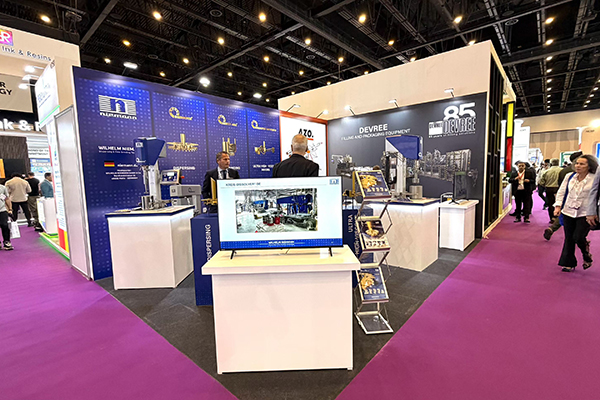
After the exhibition, we moved to Oman. It’s not a far flight from Dubai, but you can feel it as soon as you get off the plane. These are two markets with completely different rhythms. Apart from a few high-rise buildings, most of Muscat's buildings are low-rise and low-rise buildings. We went to the Sohar Free Trade Zone to visit local customers and learn about the industrial base on the spot. Many small factories have almost the same appearance as residential buildings, and you can't tell them apart unless you look carefully. Entry and exit from the free trade zone requires review, and the process is not simple; the local English penetration rate is not high, and public transportation basically relies on taxis. 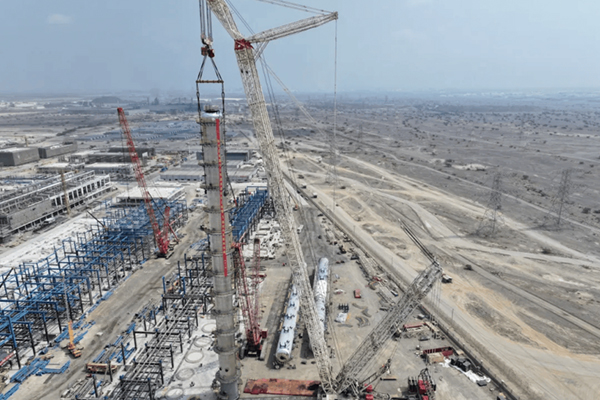
Standing on the land of Oman, I truly felt for the first time: market opportunities and market difficulties are often hidden in those inconspicuous details at the same time.
Going out is easy, staying is the real skill
The most intuitive feeling I have from this exhibition is that Made in China has really gone out, and more and more people are going out.
But going out does not mean staying.
In the exhibition hall, some foreign brands' booths are not large, but there are still local customers from the Middle East (white-robed merchants) who take the initiative to stop and discuss process plans around the negotiation table. On the other hand, many Chinese companies have good products and have advantages in price, delivery, and response speed. However, customers' brand awareness and trust cannot be established by participating in one exhibition. 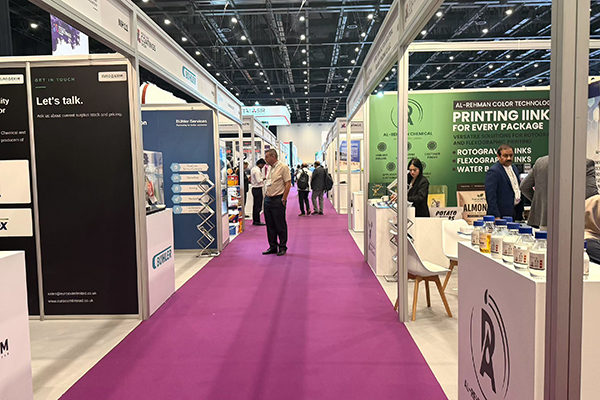
This made me understand the word "going to sea" again.
I used to think that foreign markets were nothing more than selling products there. But when I actually stood in the Dubai exhibition hall, I realized that products are just the beginning, and trust is where the business really begins.
Some overseas customers have used European and American brands for a long time and have formed habits and trust in these brands. Even if the performance of domestic equipment continues to improve, barriers to brand recognition still exist. This cannot be overcome with one exhibition or one picture album.
What are our advantages? Compared with imported equipment from Europe and the United States, domestic sand mills have a price advantage; the domestic supply chain is complete, and the plan feedback, production response, and delivery cycle are faster. But these advantages must become something that customers can feel - real cases, stable products, timely technical support, reliable after-sales, and the sense of security that "someone will take care of you after you buy it."
Price advantage is only truly meaningful if it is based on trust.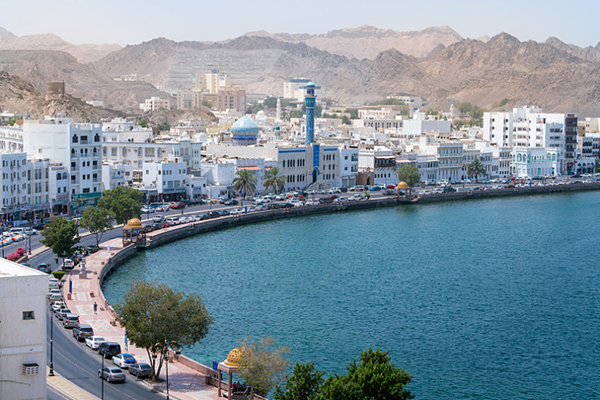
In Oman, this feeling is even deeper. Local industrial supporting facilities are insufficient, manufacturing-related equipment mainly relies on external supply, and the market cultivation cycle is longer. You can’t expect to hand over a business card today and sign a contract tomorrow. The sand mill is not a consumer product. It involves production process, equipment parameters, capacity planning, stability verification, spare parts supply and long-term use costs. For such a market, what is really needed is patience - first understand the market clearly, establish customer relationships, and slowly start projects one by one.
After coming back, I redefined "developing customers"
This business trip also gave me a new understanding of my work.
When I was doing customer development before, I paid more attention to: Is this customer a target customer? Are there any purchasing needs? When can the transaction be completed? But after going abroad, I feel more and more that the first thing we should learn when doing overseas business is to understand customers. 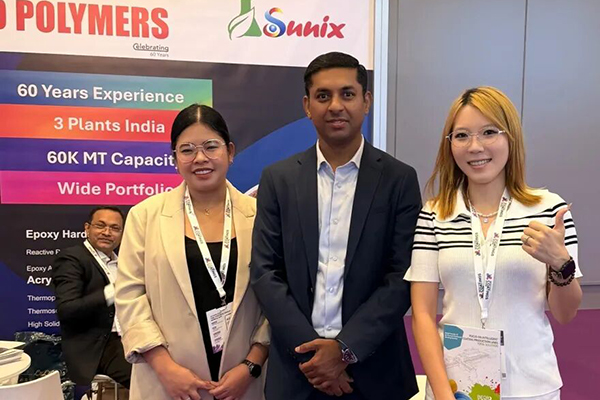
They are also Middle Eastern countries. The market environments of Dubai and Oman are so different, let alone Saudi Arabia, Qatar, and Kuwait. We cannot simply treat the "Middle East" as a whole. Different countries have completely different economic levels, industrial bases, business habits, regulations and policies, and channel structures.
Returning to market development in the Middle East, I have set three directions for my next stage:
First, take the Middle East apart and look at it. Dubai is a window and hub, suitable for brand exposure and agent selection; Oman is a long-term cultivation market, which requires patience to build relationships and explore channels; Saudi Arabia is for future growth, and it must be planned in advance. Every country has its own way of fighting, but it cannot conquer the world with one set of words.
Second, upgrade from "sending letters" to "making solutions". What customers ask is no longer "how much does it cost", but "do you understand my craftsmanship?" I need to translate the parameters of Yifu's sand mill into the production line language that customers can understand - particle size, solid content, viscosity, and production capacity matching. Only when the conversation reaches this level, the customer will feel that you are not here to sell things, but to help him solve problems.
Third, make up for your own shortcomings. When facing a customer this time, they casually asked about a device parameter or an application scenario. If I didn’t have enough knowledge reserves, it would be difficult to continue the conversation in depth. I used to think that learning product knowledge was boring, but now I understand: Only by truly understanding your own products can you be confident in front of customers; only by truly understanding your customers' industry can you know what to talk about.
Really going overseas requires time, patience and accumulation
After this trip to Dubai and Oman, my biggest gain is difficult to measure with a few customers and a few business cards. Because some changes happen in your own heart.
In the past, I used to look at overseas markets through a screen; now, I actually go to the city where my customers are. I used to think that "the Middle East market is huge", but now I know that different countries have different market logics. I used to think that the sale of a product was the completion of the sale, but now I understand that the real overseas business only begins after the product is sold.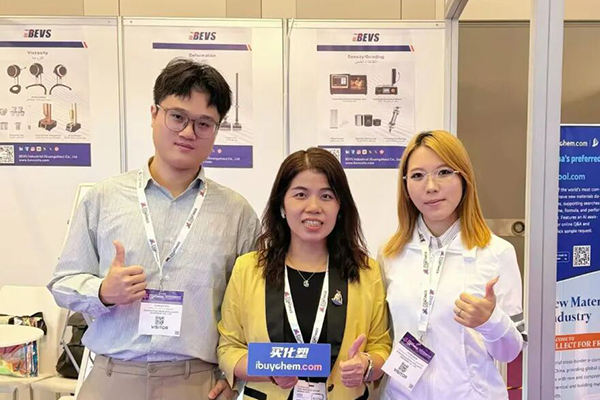
I am still optimistic about the long-term potential of the Middle East market, but this optimism is no longer the simple judgment of "this place is huge, so there should be many opportunities" when I first started. Now I know better: just because the market is big, it doesn’t mean it’s easy to do it; there are many opportunities, but it doesn’t mean it must belong to us. 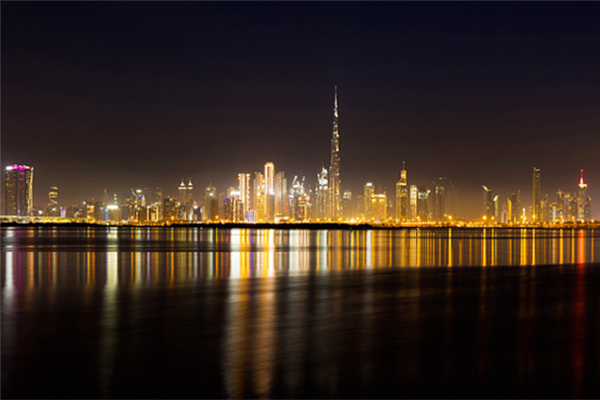
Regarding Yifu’s layout in the Middle East, my idea is: use Dubai as a bridgehead, give priority to opening up agent channels, and form a model project; use Oman as a long-term incubation sample to accumulate project experience in weak industrial areas; and then gradually penetrate into neighboring countries such as Saudi Arabia and Qatar. Don't pursue "flowering everywhere", first make a point, then let the point turn into a line, and finally form a surface.
Really going overseas requires time, patience, professionalism and real accumulation time and time again.
What I can do is, from now on, do a good job in every customer communication, understand every product detail, and carefully digest every market information. Maybe one business trip cannot change a market, but going out again and again and settling down again and again will one day give us the ability to truly go overseas and stand firm overseas.
I am Zeng Jinyin, Bree.
——In Yifu Intelligence, doing business in the Middle East market starts from understanding a person and starting from doing a good job.

 English
 亿富机械
 +86-0769-85626082
 541476175@qq.com
 东莞市大岭山镇颜屋村莲颜路88号