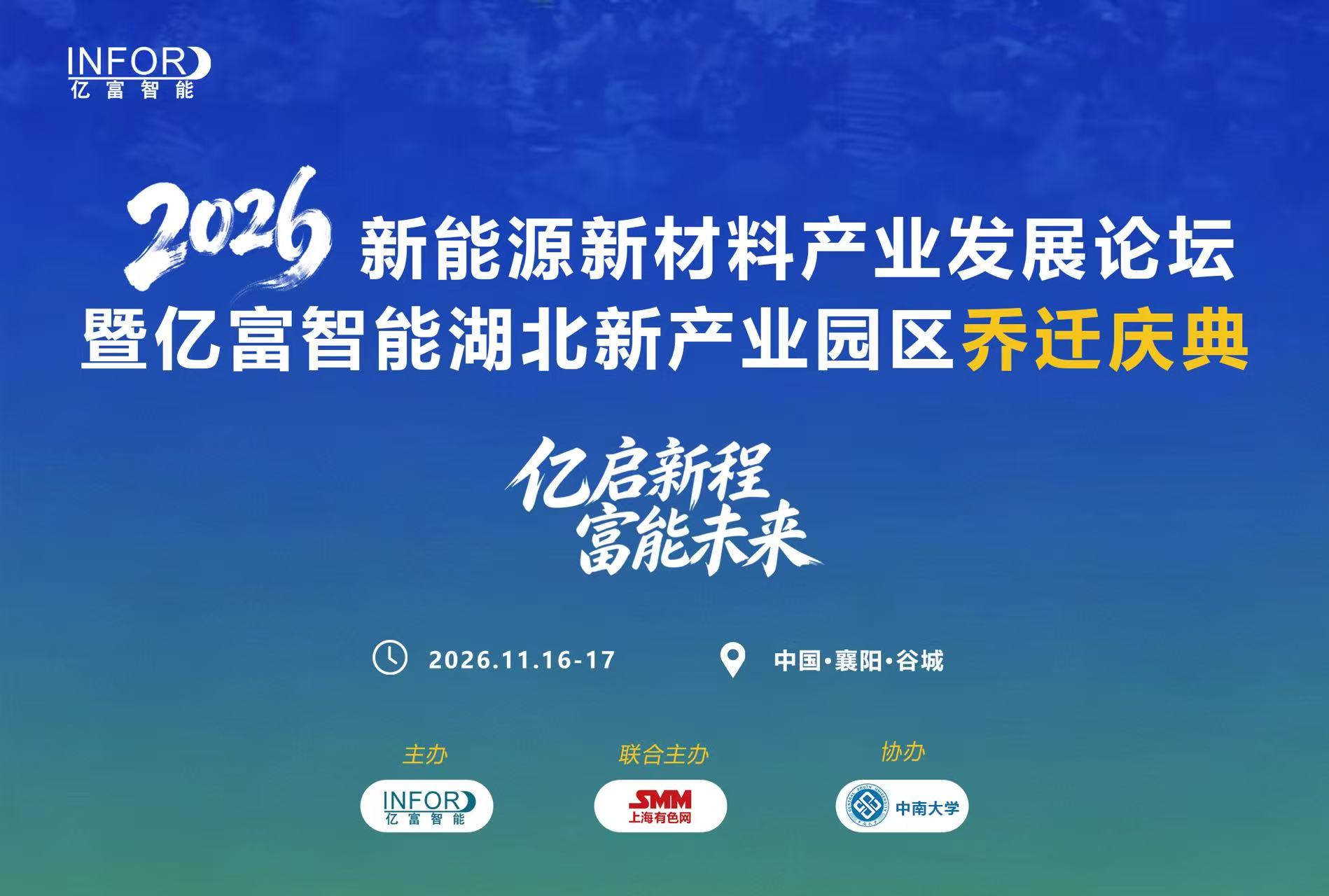
November 16-17, 2026, Gucheng, Xiangyang, Hubei.
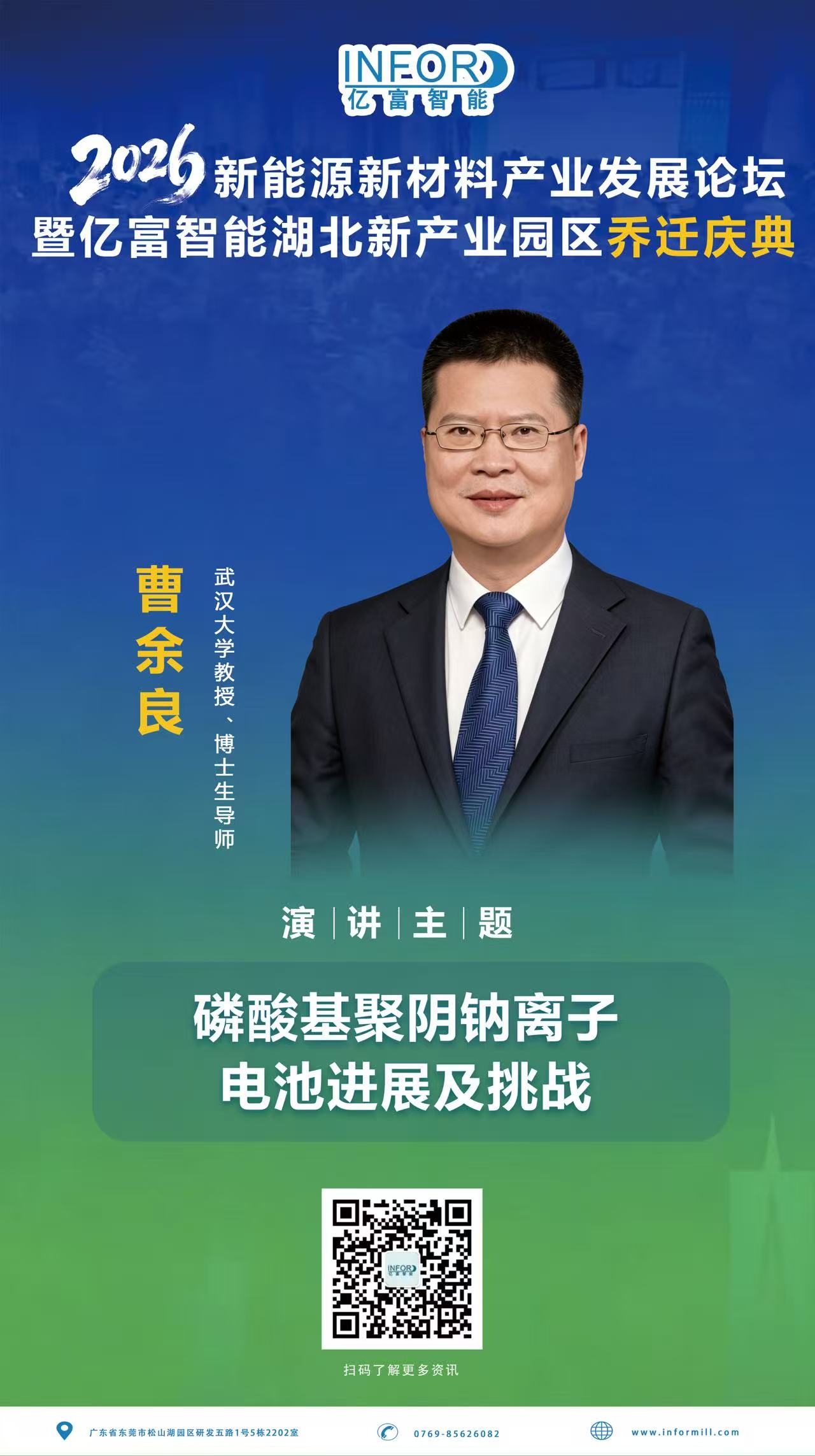
At the 2026 New Energy and New Materials Industry Development Forum and the housewarming celebration of Yifu Intelligent Hubei New Industrial Park, a key figure who pushed the sodium-ion battery polyanion route from the laboratory to the 10,000-ton production line was officially confirmed to attend - Cao Yuliang, a second-level professor at the School of Chemistry and Molecular Sciences at Wuhan University, a "Yangtze River Scholar" distinguished professor of the Ministry of Education, and the chairman of Shenzhen Jiana Energy Technology Co., Ltd., was officially confirmed to attend this forum and will bring a special report on "Progress and Challenges of Phosphate-Based Polyanion Sodium Ion Batteries"!
A pioneer who "wrote sodium power into China's energy storage plan"
Cao Yuliang is a professor and doctoral supervisor at Wuhan University and a “Changjiang Scholar” Distinguished Professor of the Ministry of Education. He graduated with a doctorate from Wuhan University in 2003. He successively engaged in postdoctoral research at Kyoto University in Japan and the University of California at Berkeley in the United States. In 2006, he returned to Wuhan University to teach until now. He has long focused on the research on key materials and electrochemical energy storage of sodium-ion batteries, and is one of the earliest scholars in China to systematically carry out research on sodium-ion batteries.
He has published more than 300 SCI papers in top international journals such as Nature Energy, J. Am. Chem. Soc., Angew. Chem. Int. Ed., Energy & Environmental Science, and Advanced Materials. He has been cited tens of thousands of times and has been selected as one of Clarivate Analytics' "Global Highly Cited Scientists" for many years. He has presided over more than 20 national-level scientific research tasks such as national key research and development plan projects and key projects of the National Natural Science Foundation.
In 2022, Professor Cao Yuliang founded Shenzhen Jiana Energy Technology Co., Ltd., dedicated to the industrialization of key materials for sodium-ion batteries. In just four years, a kiloton-level sodium-electric material production line was built, and the first phase of Zigong’s 100,000-ton/year sodium-electric cathode material production base was successfully put into operation. The products are widely used in energy storage, two-wheeled vehicles, communications power backup and other scenarios.
NFPP: The most worthwhile "polyanion road" for sodium electricity
Among the current three major routes for cathode materials for sodium-ion batteries, polyanion compounds (represented by NFPP) are considered to be the most suitable technical route for large-scale energy storage scenarios due to their advantages such as high structural stability, long cycle life, good thermal safety, and low raw material costs.
Cao Yuliang’s team continues to work hard on the polyanion system and solves multiple industrial-level pain points:
- Air stability: By adjusting the ratio of PO₄³⁻ and SO₄²⁻, the Na/Fe occupancy is optimized to greatly improve the storage stability of the material in the air;
- Cycle life: Build a stable three-dimensional frame structure to achieve long-term cycle maintenance of 10,000 times;
- Rate performance: Through carbon coating and particle size control, the capacity retention rate at high rates is significantly improved;
- Batch consistency: During the scale-up process from kilogram level to ton level, a full-process process parameter window is established to ensure controllable product quality.
"This is like installing a 'longevity heart' on the energy storage system." Cao Yuliang likened it this way: the structural skeleton of NFPP is like reinforced concrete. No matter how many times it is charged and discharged, it can firmly lock the inlet and outlet channels of sodium ions, ensuring the battery's service life of more than ten years.
What is the actual effect? The NFPP cathode material independently developed by Jiana Energy has an initial discharge capacity of more than 110 mAh/g. The capacity retention rate of button batteries exceeds 90% after 10,000 cycles. The capacity retention rate of soft-pack batteries is still higher than 85% after 3,000 cycles at 1C rate. The material cost is more than 20% lower than similar products, and it has passed the rigorous verification of many leading energy storage companies.
From laboratory to 10,000-ton production line: "Sodium speed" in the industrialization of sodium power
Relying on the profound accumulation of the electrochemistry research team of Wuhan University, Professor Cao Yuliang led Jiana Energy to embark on a rapid industrialization path of "basic research - pilot test verification - 10,000-ton mass production":
- 2022: The company is established, angel round financing is completed, and the construction of a 1,000-ton pilot line is launched;
- 2023: The first 1,000-ton NFPP production line is put into production, and product samples are sent to leading customers and passed verification;
- 2024: Zigong 100,000 tons/year sodium electrolyte cathode material base starts construction;
- 2025: The first phase of the project is officially put into production, becoming one of the world's largest polyanionic sodium cathode material monomer factories;
- 2026: The second phase of production expansion plan is launched, with the target total production capacity exceeding 150,000 tons/year.
Behind this speed is Cao Yuliang’s team’s deep understanding of the coupling relationship between material genes, process windows, and equipment adaptation. As he often says: "Sodium electricity is not a 'bonsai' in the laboratory, but a 'forest' that will grow on a 10,000-ton production line. Materials science must dialogue with equipment engineering to turn the insertion and detachment curve in the paper into a battery that runs stably on the grid side."
Golden Autumn November, Yifu New Park, Gucheng, Hubei Province.
When sodium power moves from "technical reserve" to "large-scale commercialization", when NFPP transforms from "laboratory star" to "energy storage main force", when materials scientists and intelligent equipment engineers dialogue at the same industrial site - Professor Cao Yuliang has used nearly two decades of persistence to hand over an answer sheet from basic research to 10,000-ton production lines.
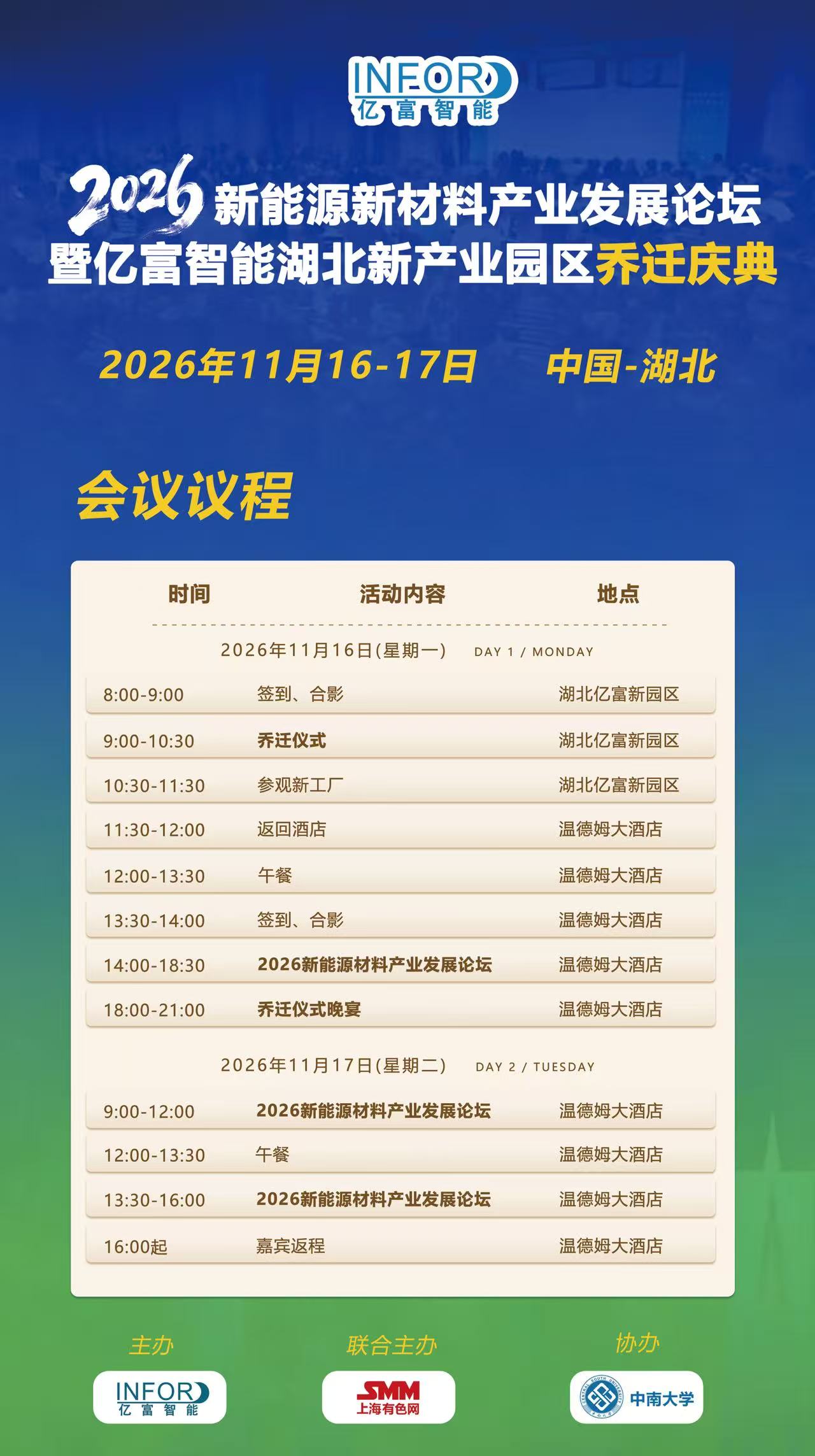
2026 New Energy and New Materials Industry Development Forum and Yifu Intelligent Hubei New Industrial Park Moving Celebration
Time: November 16-17, 2026 | Location: Gucheng, Xiangyang, Hubei, China
Speaker: Professor Cao Yuliang
Speech Topic: Progress and Challenges of Phosphate-Based Polyanion Sodium Ion Batteries
Hosted by: Yifu Intelligent
Co-organized by: Shanghai Nonferrous Metal Network
Co-organized by: Central South University
Supported by: Gucheng County People's Government

 English
 亿富机械
 +86-0769-85626082
 541476175@qq.com
 东莞市大岭山镇颜屋村莲颜路88号