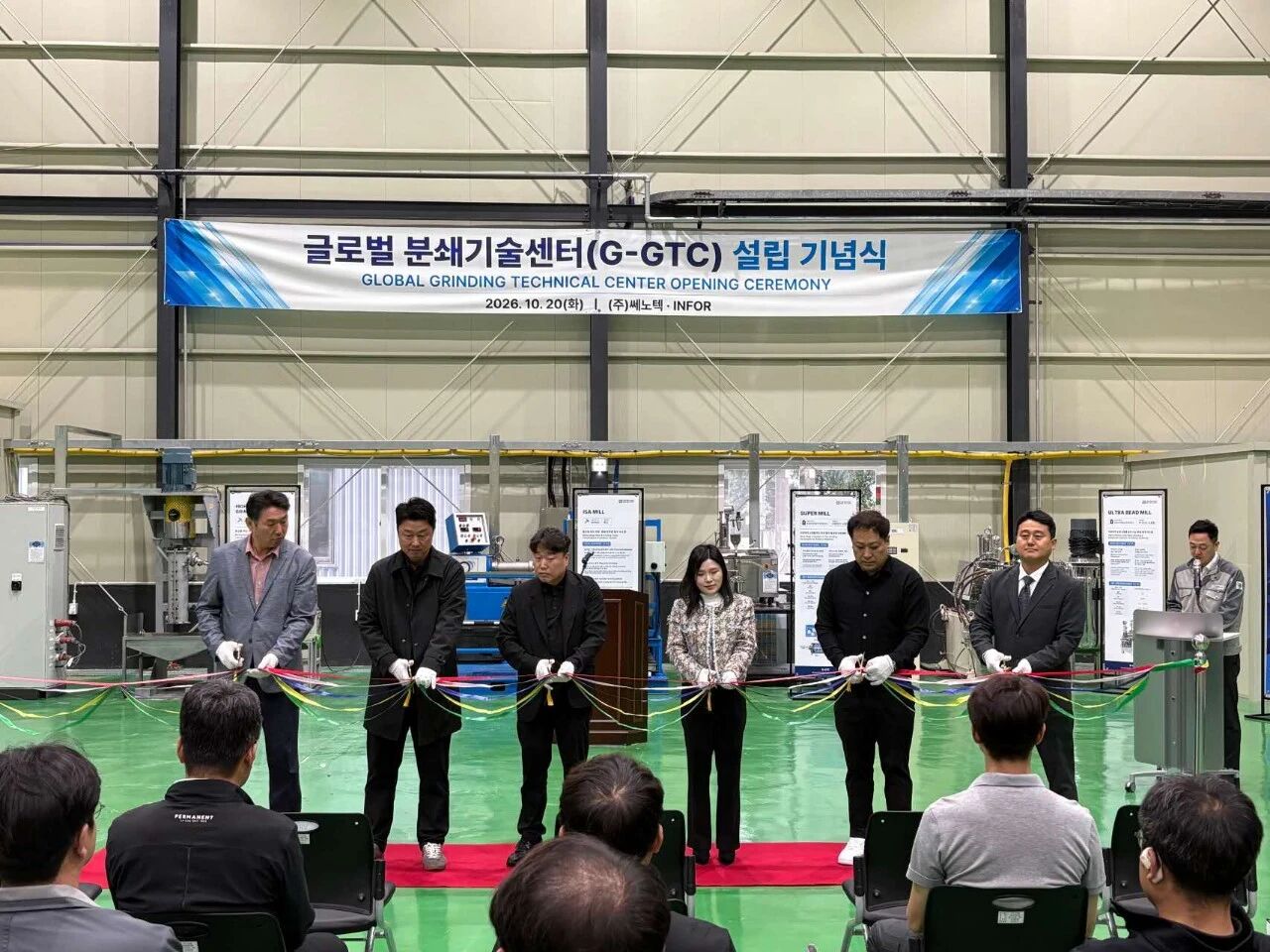
On October 20, the establishment ceremony of CENOTEC & INFOR Global Grinding Technology Center (G-GTC) was successfully held.
On one side is South Korea's leading company in high-end ceramic grinding media, and on the other side is the "craft school" that is moving global sand mill equipment from China. When Sano's zirconium beads meet Yifu's sand mills, it is not a simple matter of "making a set of accessories", but twisting "equipment + media + technology" into the same technical spindle.
This day is not only a ribbon-cutting ceremony, but also a node where the two Chinese and Korean companies advance their cooperation from a "buyer-seller relationship" to a "joint R&D relationship" in scenarios such as new energy materials, nano-grinding, and battery cathodes/solid electrolytes.
1. From meeting at exhibitions to sharing the same technology: the two companies are "compatible"
The fate of Yifu and Sano began with repeated encounters at industry exhibitions and project sites.
At that time, Yifu continued to iterate on vertical sand grinding and nano-dispersion equipment, taking "how to grind materials finer, more even and more stable" as its core proposition; while South Korea's CENOTEC has been deeply involved in ceramic grinding media such as zirconium oxide and zirconium silicate since 1999. It is a "bead expert" listed on KOSDAQ in South Korea and recognized by high-end customers around the world.
What really makes both parties move from "understanding" to "identification" is the same customer pain point:
What the customer buys is not a machine, nor a bag of zirconium beads, but a set of grinding process results that can be grounded - particle size distribution, specific surface area, slurry consistency, equipment wear, media consumption, all need to be accounted for.
No matter how powerful the machine is, if the beads do not match, stable data cannot be produced; no matter how good the beads are, the flow field and separation system of the equipment cannot keep up, and the media performance cannot be exerted.
So, the "equipment people" and the "media people" began to sit at the same table.
2. From supporting supply to long-term cooperation between Party A and Party B
If the relationship between the two companies was made into a short film, the beginning would not be "strategic cooperation", but a very simple industrial scene:
"You make zirconium beads, I do the grinding, and the customer calls both parties together for debugging."
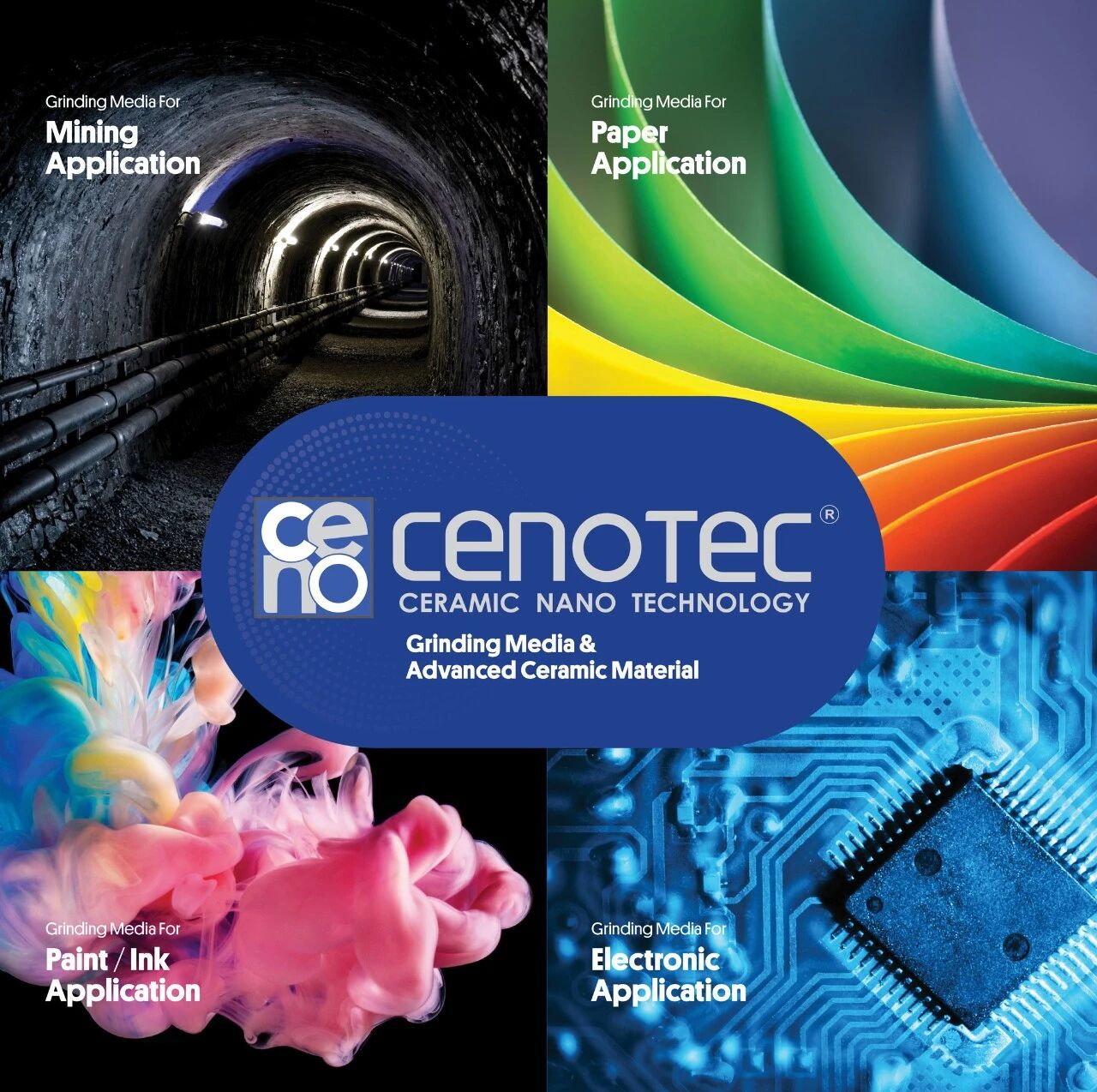
In the early days, CENOTEC's ceramic grinding media (zirconia beads, zirconium-aluminum composite beads, etc.) had a solid reputation in South Korea and overseas markets; INFOR's vertical/horizontal sand mills were also increasingly used in new energy material production lines.
Customers often come up with a sentence:
"Which Sano beads should be matched with Yifu's sand mill? What is the filling rate? Is the 0.1 mm medium blocked? How to suppress the temperature rise of high solid content slurry?"
So - first matching, then mutual testing: Sano uses INFOR's equipment to test the wear rate, breakage rate, and pollution amount of its own media; INFOR uses Sano's beads to test the separation system, particle size distribution, and continuous operation stability; Later, they became parties A and B: In the project, INFOR recommended CENOTEC media to the customer, and CENOTEC also gave priority to recommending INFOR's sanding solution to the material factory.
From product supporting cooperation to "you help me define the process boundaries, and I will help you expand the equipment capabilities" - the positions of Party A and Party B began to flow, and trust also sank from the business layer to the technical layer.
3. Turn "trial and error" into "co-creation": What exactly does the Global Grinding Technology Center (G-GTC) solve?
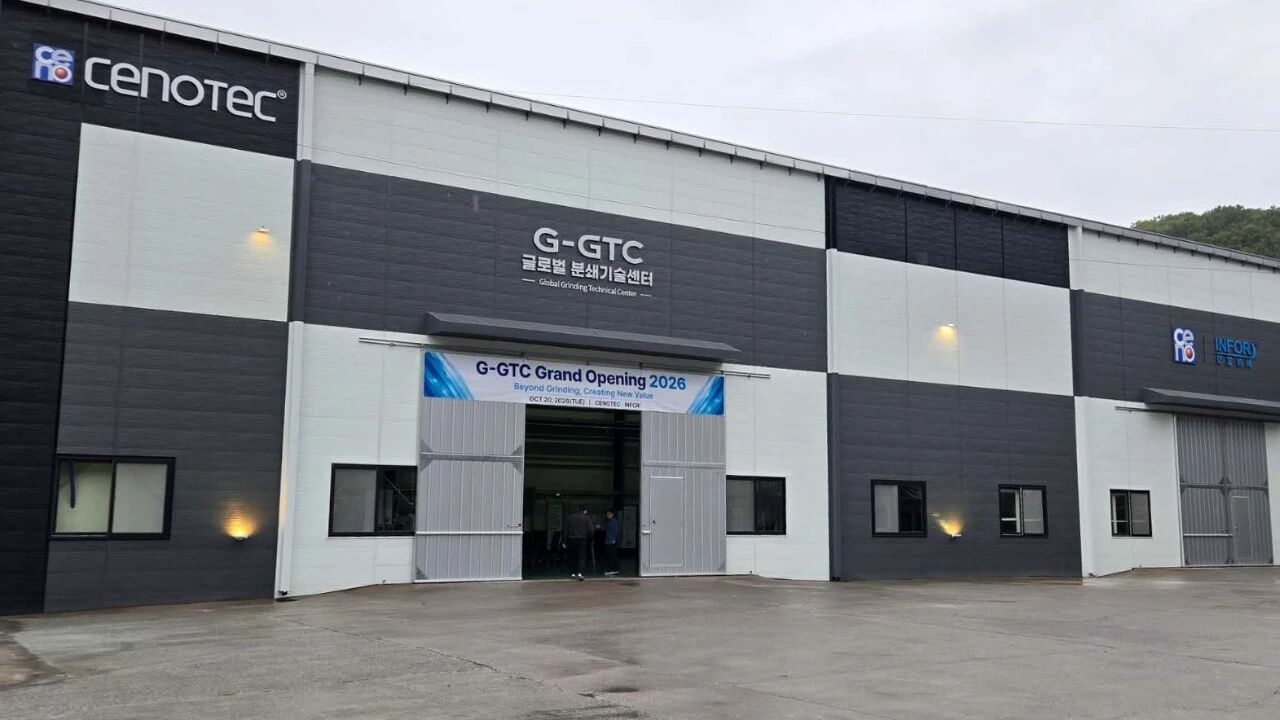
The CENOTEC and INFOR Global Grinding Technology Center (G-GTC) established on October 20 is essentially to precipitate the "hidden experience" scattered in the customer's production line in the past into reusable, verifiable, and deliverable public capabilities.
Our Global Grinding Technology Center mainly does three things:
1. Real material testing
Instead of running the demo with water and calcium carbonate, we run the demo with the customer's positive electrode slurry, negative electrode slurry, solid electrolyte precursor, and electronic ceramic slurry. The material properties are different, and the bead diameter, rotation speed, temperature curve, and number of cycles are all different.
2. Optimization of process parameters
Through multiple rounds of controlled experiments, "machine-beads-material-viscosity-temperature-particle size distribution" was made into a parameter matrix. The output was not an "equipment manual" but a process card of "how to grind this material."
3. Joint verification of equipment and media
Yifu provides sand mills, flow fields and separation systems, and operating data; Sano provides ceramic media, wear analysis, media life and pollution assessment. Both parties jointly judge:
• Are the beads finely ground but broken?
• Is the efficiency high but the metal impurities in the slurry exceed the standard?
• Is it possible for the laboratory to scale up to 60L / 150L / 1000L and it will drift?
The value of the Global Grinding Technology Center is here:
Let customers clearly calculate the process risks before buying equipment and media, and the answers are written in the G-GTC report.
4. More than just Korea: Package “equipment + media” into a common language for battery materials in Asia
Why South Korea?
South Korea has leading battery and material systems such as LG New Energy, Samsung SDI, SK On, Ecopro, L&F, and POSCO. It has strict customer verification, heavy data culture, and is almost paranoid about "traceability." For this reason, Yifu and Sano chose to open the Global Grinding Technology Center (G-GTC) in South Korea. This is in itself using the toughest market to practice the toughest technology.
What both parties have to do in the future is not to sell goods separately, but to:
• For Korean customers: provide integrated proofing of "sand mill + Sano zirconium beads + process report";
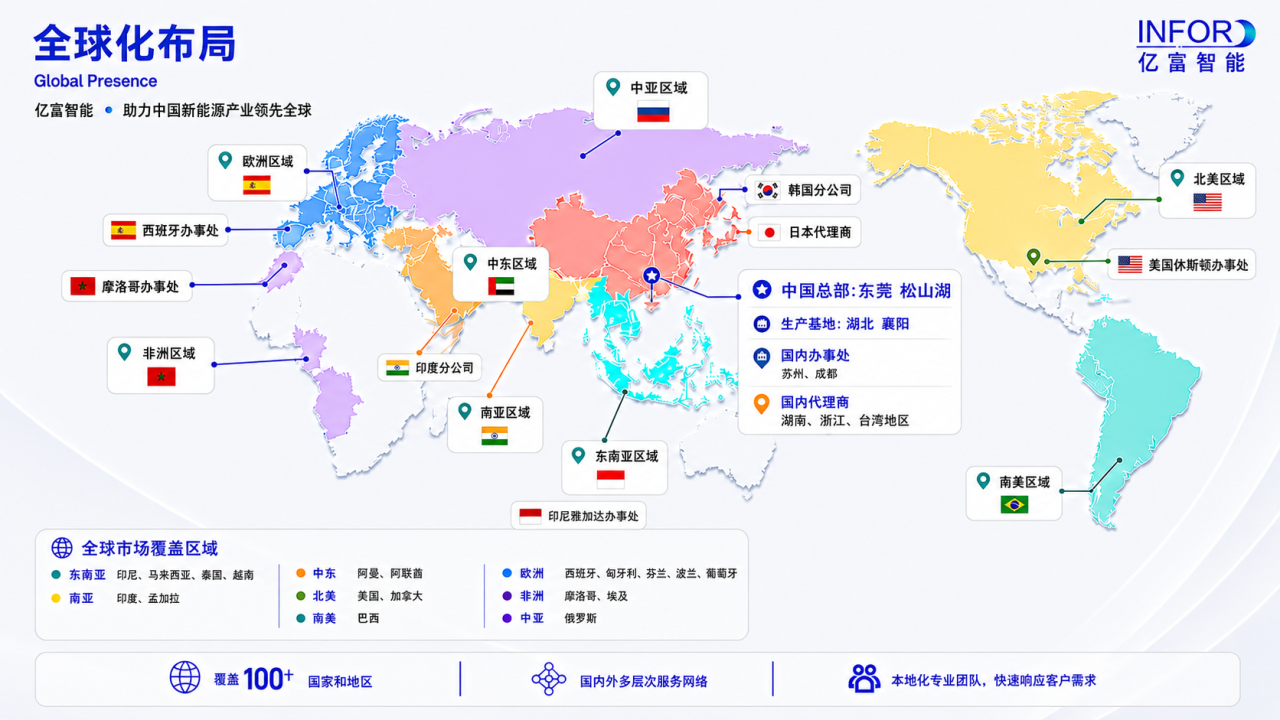
• For Chinese overseas customers: copy the process package verified in South Korea to production lines in Southeast Asia, Europe, and North America;
• For global material companies: output a joint database of "equipment-medium-particle size-dispersion stability" for all-solid, silicon anode, high nickel, LFP and other systems.
In the past, Yifu helped customers choose machines, and Sano helped customers choose beads; now, the two companies work together to help customers negotiate the yield rate of the production line. South Korea is the training ground, the Global Grinding Technology Center (G-GTC) is the ammunition depot, and the global next-generation battery materials are the real battlefield.
5. The ribbon-cutting ceremony ended successfully, and the pace of globalization is just the beginning
"The establishment of the Global Grinding Technology Center (G-GTC) will bring us closer to the actual needs of customers."
The establishment ceremony has ended, but the alignment of the two technical systems of China and South Korea has just begun.
For Yifu, this is a step from a single equipment manufacturer to a "process partner";
For Sino, this is a step from "Korean high-end media" to a "process solution provider";
For customers, there is one less blind purchase and one more common backend that can generate real data.
CENOTEC and INFOR Global Grinding Technology Center (G-GTC) are not just a cooperation ceremony, but a signal:
It is not only necessary to grind the materials, but also to deepen the cooperation, penetrate the market, and raise the technological ceiling of new energy materials higher.
The next stop for Yifu is to integrate Korean experience into global production lines.

 English
 亿富机械
 +86-0769-85626082
 541476175@qq.com
 东莞市大岭山镇颜屋村莲颜路88号
