November 16-17, 2026, Gucheng, Xiangyang, Hubei.
When the new energy industry moves from the "single battery route" to the multi-energy coupling of "electricity-hydrogen-heat-storage", when sodium-ion batteries, methanol reforming hydrogen production and fuel cells begin to be put into the same integrated energy system to settle accounts, an industry summit gathering materials scientists, battery engineers and intelligent equipment manufacturers is moving from a "forum agenda" to an "industry scene."
2026 New Energy and New Materials Industry Development Forum and Yifu Intelligent Hubei New Industrial Park’s Housewarming Celebration welcomed a guest who spans "lithium-sodium batteries-hydrogen energy-integrated energy" with industry-university-research integration—Ma Zifeng, Chair Professor of the School of Chemistry and Chemical Engineering of Shanghai Jiao Tong University, Dean of the Shaoxing New Energy and Molecular Engineering Research Institute, and founder of Zhejiang Sodium Innovation Energy, officially confirmed to attend this forum and gave a special report on "Hydrogen-Electric Hybrid Power and Integrated Energy System Technology."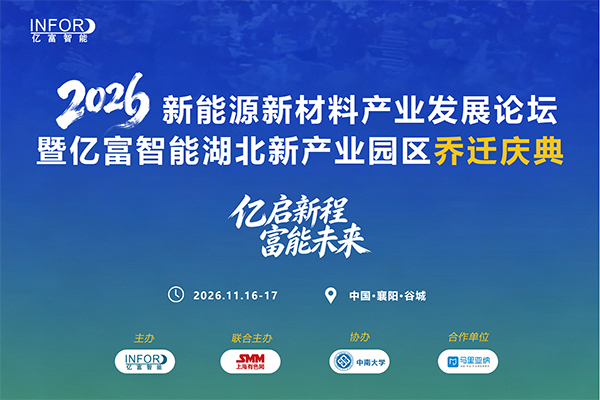
Systematic scholar who wrote "new energy chemical industry" into the battery and hydrogen energy production line
Ma Zifeng - Chair professor and doctoral supervisor at the School of Chemistry and Chemical Engineering of Shanghai Jiao Tong University, currently the dean of the Shaoxing Institute of New Energy and Molecular Engineering of Shanghai Jiao Tong University, the founding director of the Shanghai Electrochemical Energy Device Engineering Technology Research Center, the founding director of the Zhejiang Provincial Sodium Ion Battery Technology Engineering Research Center, the chief scientist of the National 973 Program, a fellow of the China Chemical Industry Society, and enjoys special allowances from the State Council.
Research directions focus on key materials and devices for lithium/sodium ion batteries, multifunctional electrolytes and interface engineering, methanol reforming hydrogen production and fuel cell systems, advanced electrochemical energy storage and green integrated energy system optimization design. He has twice served as the chief scientist of the National 973 Program, and has presided over the completion of many national-level tasks such as key projects of the National 863 Program and National Natural Science Foundation of China. He has published more than 300 academic papers in journals such as JACS, Energy & Environmental Science, and Advanced Energy Materials, applied for more than 160 invention patents, and authorized more than 80 patents. Many of his achievements have been industrialized.
His research has a very clear industrial main line: don’t let the material stop in the paper. Invented a new reaction for the synthesis of atomically economical lithium iron phosphate, breaking international patent barriers, and supporting the construction of my country's nano-lithium iron phosphate 10,000-ton production line; taking the lead in laying out the sodium-ion battery track, creating Zhejiang Sodium Innovation Energy, and building a 10,000-ton sodium cathode and electrolyte production line; at the same time, developing a new approach to hydrogen production through methanol reforming - high-temperature proton exchange membrane fuel cell technology, and turning "hydrogen production - power generation - electricity storage" into a system solution, and then allowing sodium power and hydrogen power to work together in the same integrated energy system.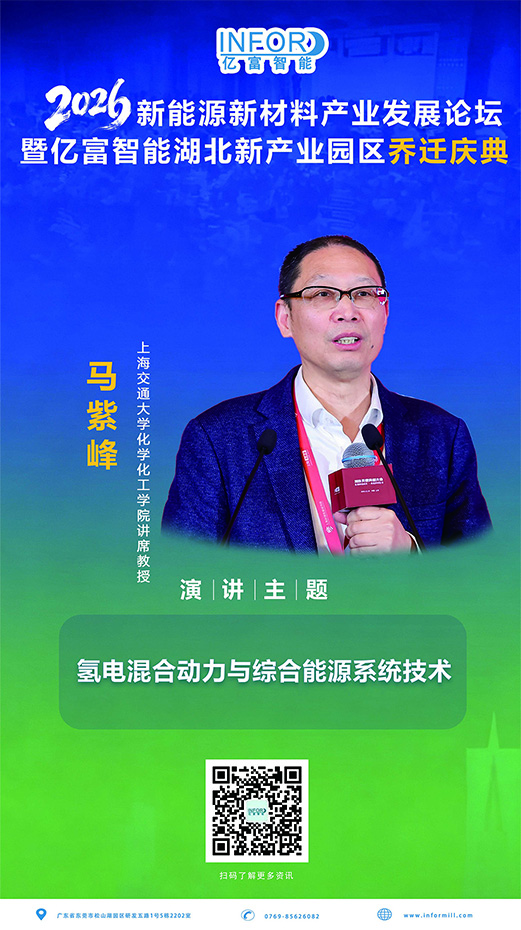
From lithium iron phosphate and sodium ion batteries to hydrogen-electric hybrid
In the new energy materials circle, Professor Ma Zifeng’s signature feature is “the courage to write laboratory reactions into process packages, and the courage to put multiple technical routes into the same system”:
• Lithium iron phosphate engineering: proposed new synthesis reactions and new processes to solve the problems of nanometerization, low-temperature characteristics and high magnification. The related results won the second prize of the National Science and Technology Progress Award in 2018, and the products have entered the supply chains of BYD, CATL, etc.;
• Sodium-electric materials and electrolytes: Developed sodium ferrite-based positive electrodes, co-precipitation-sintering amplification process and multi-functional electrolyte system, built a 10,000-ton sodium-electric material production line, won the Petrochemical Federation Technology Invention Award and the 2025 First Prize for Scientific and Technological Progress, and cooperated with BYD to build a megawatt-hour sodium electric energy storage demonstration system;
• Hydrogen-electric hybrid power: In response to the pain points of high-pressure hydrogen storage, we proposed an integrated solution for methanol reforming hydrogen production and high-temperature proton exchange membrane fuel cells, overcame the manufacturing of integrated reforming microreactors, non-precious metal catalysts and membrane electrodes, developed 300W, 5kW methanol reforming hydrogen fuel cell power generation modules, and built the world's first 40,000 sets/year power generation module production line;
• Integrated energy system: Leading the development of the world's first set of "sodium ion battery-methanol reforming hydrogen production-fuel cell" integrated energy product, which combines the peak shaving capability of sodium power with the continuous power supply capability of hydrogen power, and conducts engineering verification for communication base stations, outdoor operations, distributed energy and backup power supply scenarios;
• Battery system layer: Establish a lithium battery SOC/SOH Gaussian regression coupling model with a prediction accuracy of 97%, and connect the material end, BMS end and hydrogen energy management end to calculate accounts.
As he often emphasizes: "The nature of the new energy industry cannot be circumvented by chemical engineering and electrochemical engineering - how the material reaction is designed will determine how the production line is grown; and how the energy system is configured depends on whether batteries, hydrogen energy and green electricity can cooperate in the same schedule."
In-depth echo with the theme of the forum "New Energy and New Materials"
In Professor Ma Zifeng's view, the competition for the next generation of energy storage is no longer just "which material is better", but whether the material system, hydrogen-to-electricity conversion, manufacturing process and equipment window can be iterated together.
This is exactly in line with the four main lines of this forum:
• Material dimension: How to recombine lithium/sodium cathodes, hard carbon anodes, and multi-functional electrolytes to support wide temperature range and high safety;
• Hydrogen electricity dimension: How can methanol be used as a hydrogen carrier, and how reforming hydrogen production can couple with high-temperature PEMFC and sodium electricity packages to produce a stable output;
• Equipment dimension: How can the grinding, dispersion, and coating processes support the consistency of powder batches, and how can they meet the amplification needs of fuel cell catalysts and membrane electrodes;
• System dimension: From a single cell to a "sodium electricity + hydrogen electricity" integrated energy system, whether the stuck point is at the material end, the control end, or the production line end.
This also echoes the positioning of Yifu New Industrial Park - not only to produce grinding and dispersing equipment, but to enter the collaborative scene of "new energy materials-battery core manufacturing-hydrogen power systems-intelligent equipment".
In November, the new park opens in Gucheng, and the system-level energy class starts on time
During this forum, Professor Ma Zifeng will focus on "Hydrogen-Electric Hybrid and Integrated Energy System Technology" and combine his engineering experience with lithium iron phosphate power batteries, key materials for sodium-ion batteries, methanol reforming hydrogen fuel cells and sodium-hydrogen integrated energy systems to share with the participants his judgment on "how materials are introduced into the system and how the system reverses materials."
For material companies, battery cell factories, and hydrogen energy equipment and system suppliers, the value of this dialogue does not lie in explaining the basic principles again, but in listening to someone who has turned patents into production lines and connected the production lines into energy systems. He can clearly explain "how materials are implemented, how hydrogen and electricity are mixed, and how the system calculates accounts."
2026 New Energy and New Materials Industry Development Forum and Yifu Intelligent Hubei New Industrial Park Moving Celebration
Time: November 16-17, 2026 | Location: Gucheng, Xiangyang, Hubei, China
Speaker: Professor Ma Zifeng (Chair Professor of Shanghai Jiao Tong University, Dean of Shaoxing Institute of New Energy and Molecular Engineering, Chief Scientist of the National 973 Program)
Speech Topic: "Hydrogen-Electric Hybrid and Integrated Energy System Technology"
Hosted by: Yifu Intelligent
Co-organized by: Shanghai Nonferrous Metal Network
Co-organized by: Central South University
Supported by: Gucheng County People's Government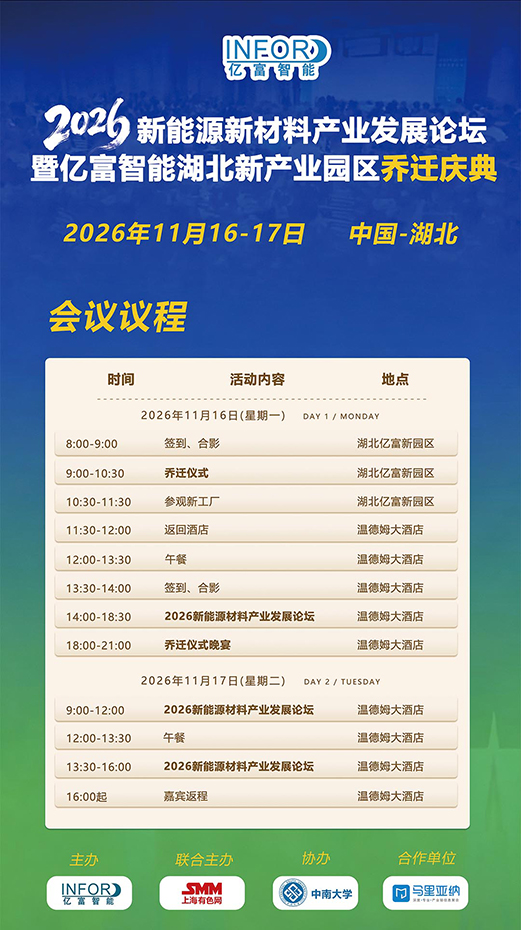

 English
 亿富机械
 +86-0769-85626082
 541476175@qq.com
 东莞市大岭山镇颜屋村莲颜路88号