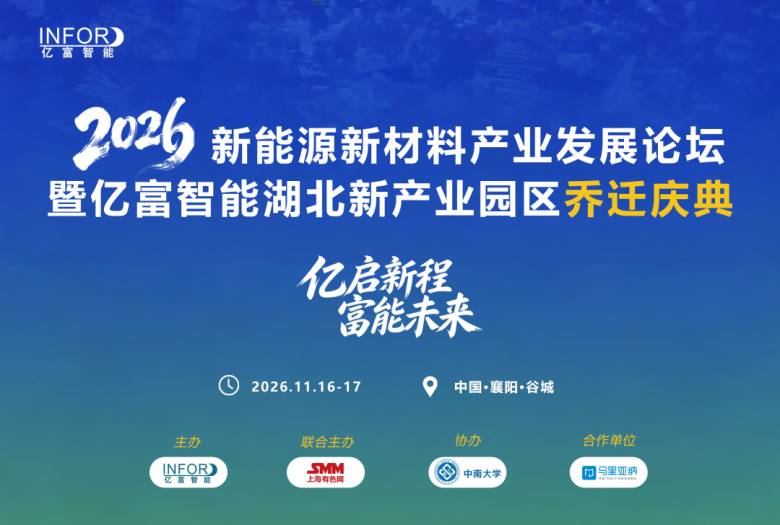
November 16-17, 2026, Gucheng, Xiangyang, Hubei.
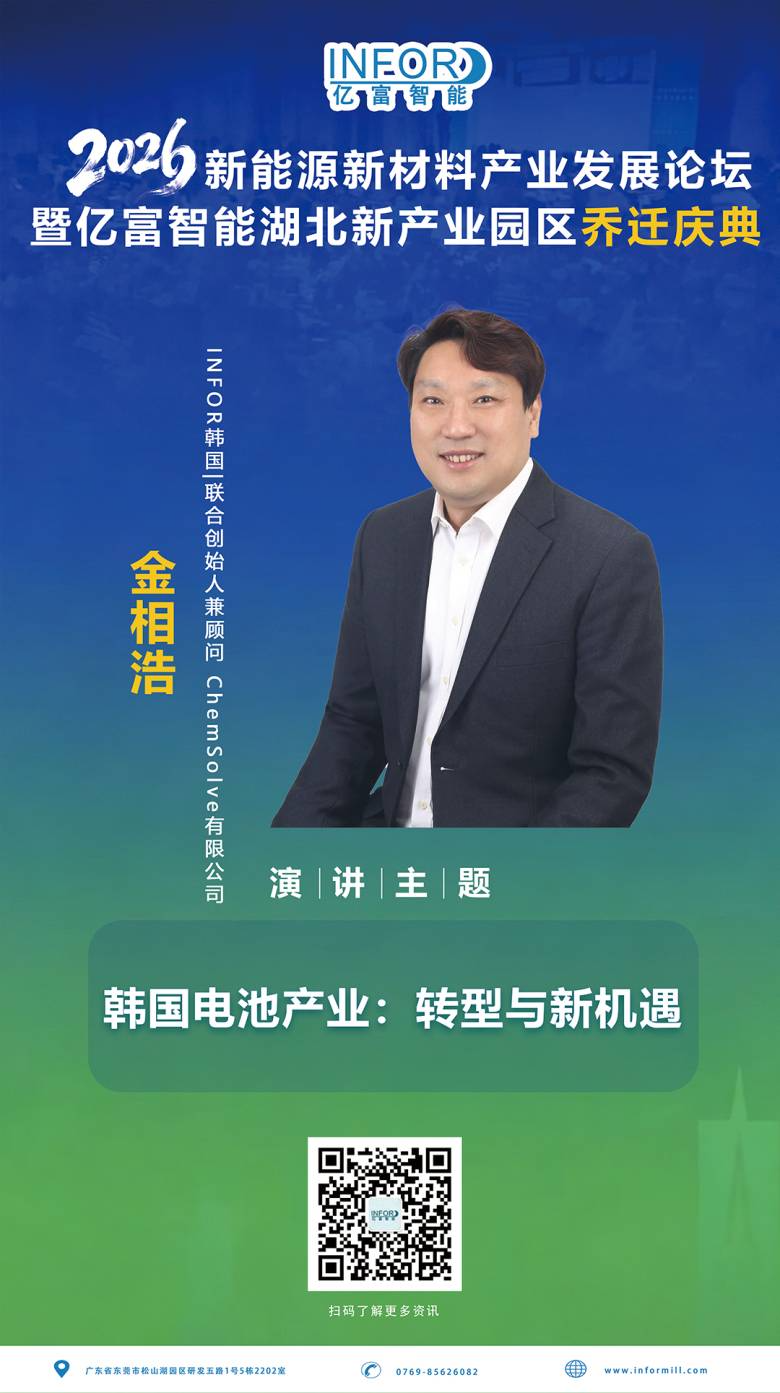
At this round of two-way adaptation of the China-South Korea industrial chain, we invited a senior chemist who spans academia, LG Chem and nanomaterials entrepreneurship - Dr. Sang Ho Kim, co-founder and consultant of INFOR South Korea and co-founder and consultant of ChemSolve Co., Ltd.. He has officially confirmed to attend this forum and the relocation celebration of Yifu Intelligent Hubei New Industrial Park, and will bring a keynote report "The Korean Battery Industry: Transformation and New Opportunities". From the Seoul laboratory to the Gucheng production line, he will explain clearly the technical choices and equipment requirements for the next stop of Korean batteries.
The nanomaterial scientist who embedded the "chemical background" into the collaboration of battery equipment between China and South Korea
Dr. Sang Ho Kim holds a bachelor's and master's degree in chemistry from Seoul National University and a Ph.D. in chemistry and biochemistry from the University of California, Los Angeles (UCLA). He is also an expert in nanomaterials and electrochemistry with more than 30 years of academic and industrial experience. His career track covers: chief research scientist of LG Chem, professor of the Department of Chemistry of Gongju National University, research experience at HP Labs, and CEO of the nanomaterials company SG Flexio he founded; starting from 2022, he will be a senior consultant of ChemSolve Co., Ltd., participating in the construction of chemical hazard characterization and material characterization systems.
He is currently INFOR's business consultant in South Korea and is deeply involved in Yifu's promotion of bead mills and the implementation of LFP battery material technology in South Korea - from a 50,000-ton vertical sand grinding production line model to a complete set of solutions for continuous, energy-saving and intelligent central control, directly connecting the process database of "equipment-medium-particle size-dispersion stability" to Korean material factories. On the academic side, he has published 23 scientific papers and holds 24 registered patents. He is a typical "bridge" expert who translates basic chemical language into production line parameters.
In-depth echo with the theme of the forum "New Energy and New Materials"
Dr. Kim Sang-ho's report"Korean Battery Industry: Transformation and New Opportunities" just brings the main axis of this forum "New Materials - New Equipment - New Globalization" to the Korean perspective:
The report will be divided into three layers: the transformation layer - Korean batteries have shifted from "high nickel ternary dominance" to LFP local factory construction, lithium iron phosphate pilot trials, and all-solid-state sampling. The material system has multi-track parallelism for the first time; the equipment layer - Korean local production lines must meet FEOC Due to compliance, North American traceability and low-carbon electricity price constraints, traditional horizontal mills are insufficient in terms of energy consumption, online particle size, and dielectric loss, and vertical energy-saving sand grinding + AI dispersion systems have become a new necessity; the cooperation layer - the mature process package of China's high-end equipment, just makes up for the shortcomings of South Korea's "localization of materials but reliance on imported equipment". China and South Korea have moved from "buying and selling" to "joint process research."
For Korean material factories, it answers "How to build LFP production lines that are more energy-saving and more compliant"; for domestic companies going overseas, it reminds Korea that South Korea is not a low-price market, but a high-standard market; for equipment companies such as Yifu, it means that the equipment must go overseas with data, media, and process reports. The window for South Korea's transformation is essentially a joint verification field of "Chinese Intelligent Manufacturing + Korean Scenario".
In the golden autumn of November, Gucheng’s new garden opens
With the opening of the Gucheng New Park, Yifu Intelligent has moved the new generation of vertical sand grinding, AI dispersion and online granularity systems into the central China base. On the surface, it is expanding production, but on the deep side, it is preparing the same set of process bases for the "Chinese and Korean dual markets". When Korean customers come to inspect the factory with FEOC and carbon footprint sheets, each set of energy consumption curves of the front-end equipment and the CV value of each batch of particle size are evidence of delivery.
From November 16th to 17th, the new park and forum opened simultaneously in Gucheng, Xiangyang, Hubei. It is recommended that all friends who are engaged in LFP overseas, Korean supply chain docking, sand grinding equipment and all-solid-state pilot tests reserve their seats: listen to Dr. Kim Sang-ho explain clearly from the perspective of Seoul "Where to turn Korean batteries and how to connect Chinese equipment"; also see how Yifu's new production line uses energy-saving vertical mills + intelligent central control to turn the Gucheng base into the starting point of the same frequency for Chinese and Korean grinding processes. Relocation is not a ribbon-cutting, it is a matter of battery workers like Yifu and Dr. Kim Sang-ho across the Pacific, working together to close the loop on Northeast Asian materials.
Meet in Gucheng, see you there!
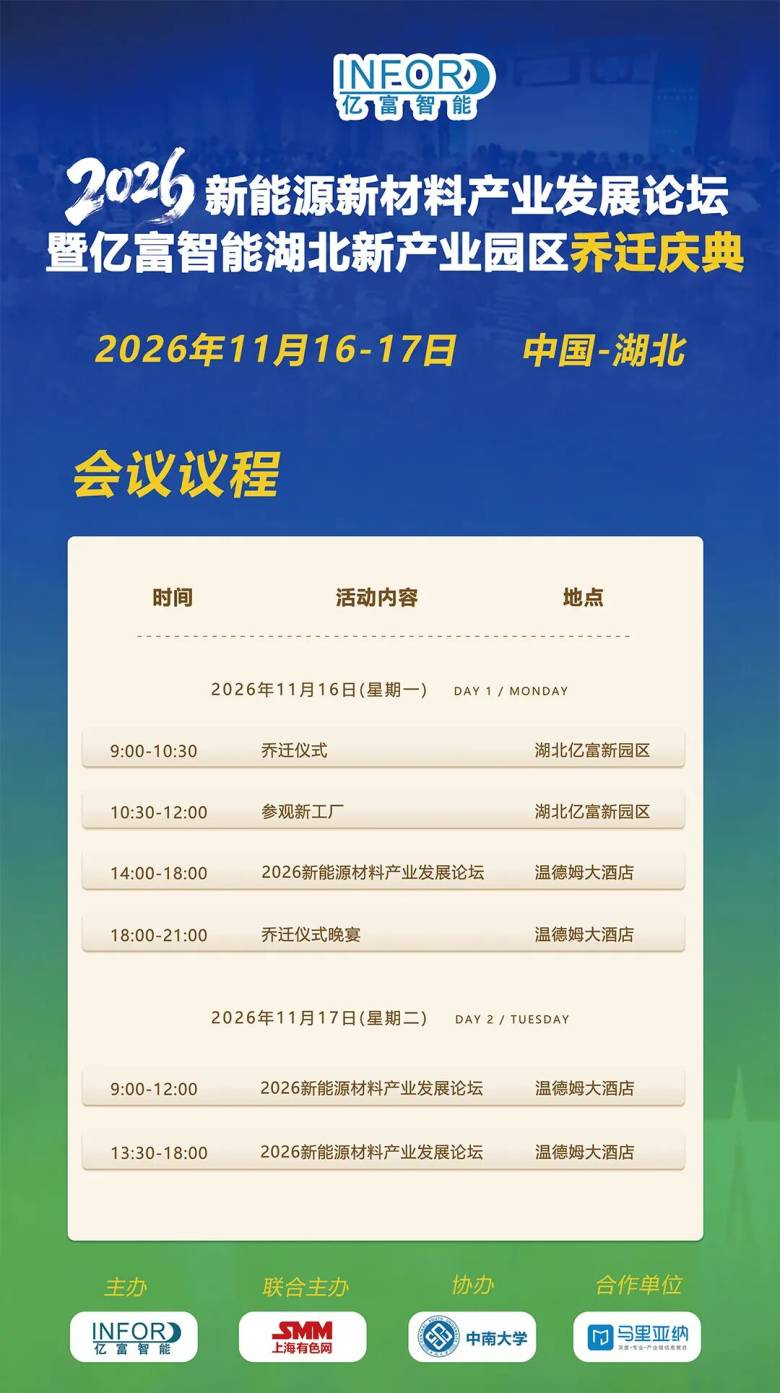
2026 New Energy and New Materials Industry Development Forum and Yifu Intelligent Hubei New Industrial Park Moving Celebration
Time:November 16-17, 2026 | Location: Gucheng, Xiangyang, Hubei, China
Speaker:Dr. Sang Ho Kim (Co-founder and consultant of INFOR Korea, co-founder and consultant of ChemSolve Co., Ltd.)
Speech Topic:"The Korean Battery Industry: Transformation and New Opportunities"
Sponsor:Yifu Intelligent
Co-organizer:Shanghai Nonferrous Network
Co-organizer:Central South University
Support:Gucheng County People's Government
 English
 亿富机械
 +86-0769-85626082
 541476175@qq.com
 东莞市大岭山镇颜屋村莲颜路88号
