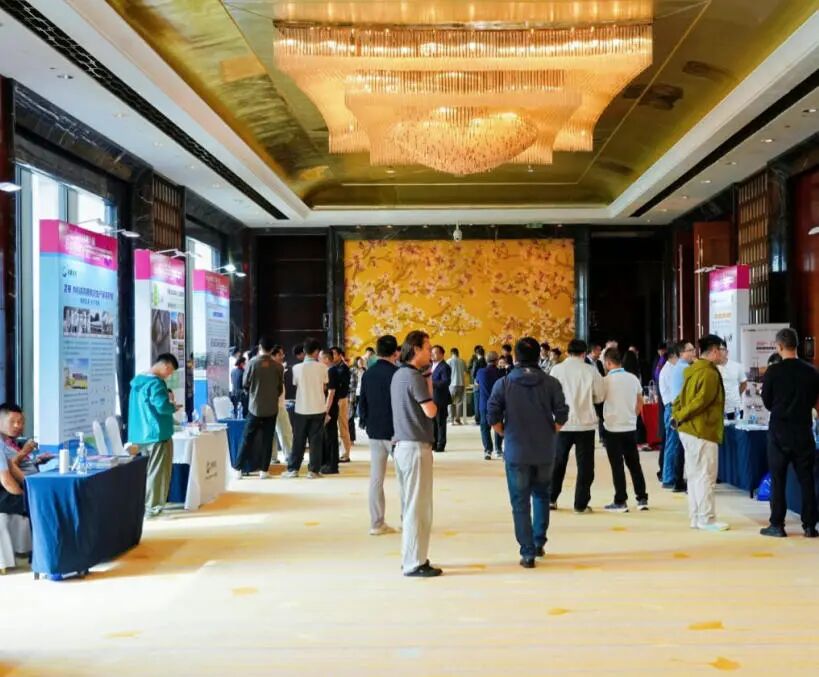
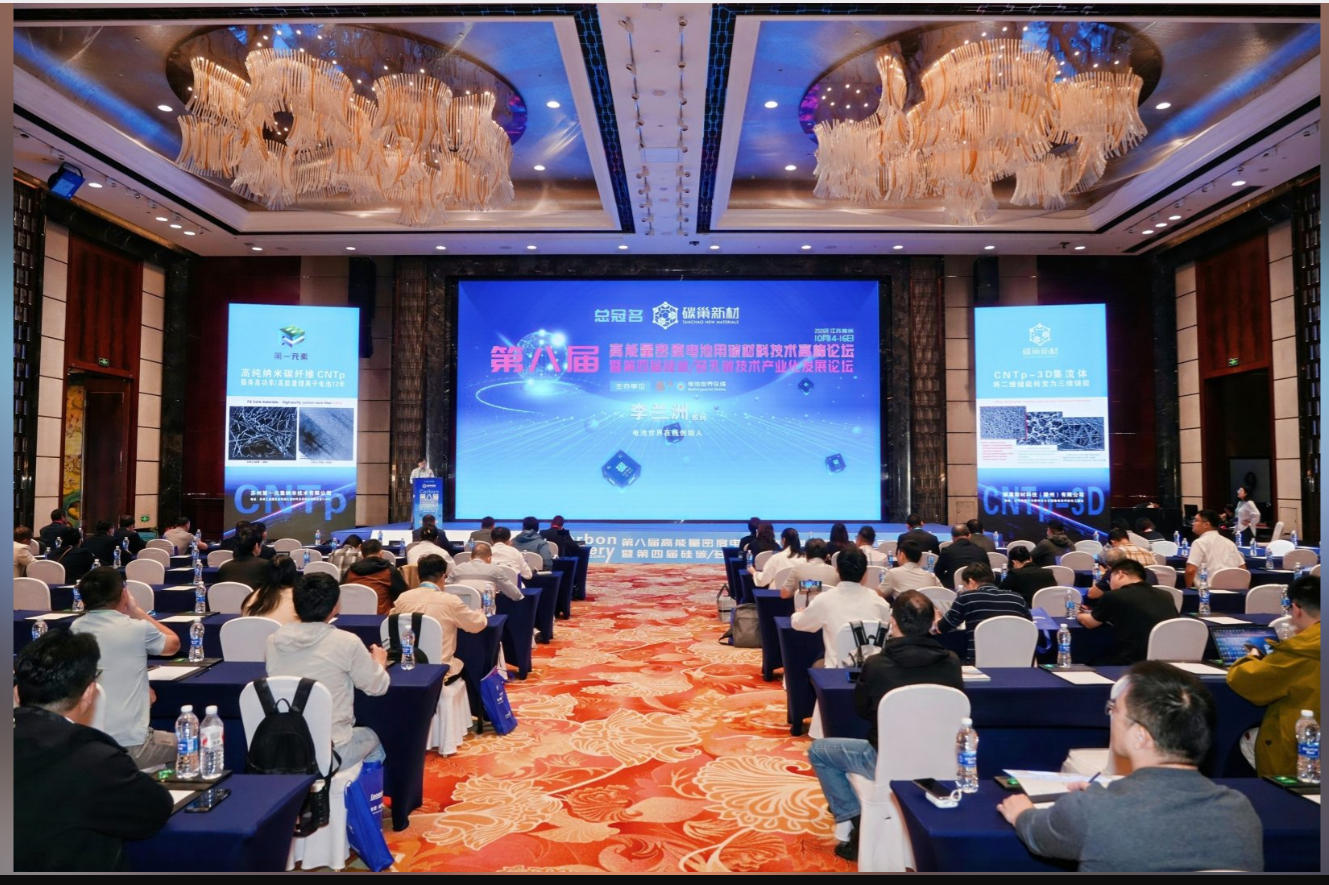
From October 14th to 16th, the 8th Carbon Materials Technology Summit Forum for High Energy Density Batteries and the 4th Silicon Carbon/Porous Carbon Technology Industrialization Development Forum were held at the Fudu InterContinental Hotel in Changzhou.
During the three-day agenda, silicon carbon anode, CVD silicon carbon, sodium electrohard carbon, porous carbon, single-walled carbon nanotubes, graphene conductive slurry - these materials that are recognized as "amazing in the laboratory and overturned when scaled up", became the protagonists of the event.
The industry signal is more straightforward than in the past: carbon materials have changed from "auxiliary materials" for batteries to "key variables" that determine energy density, fast charging, and cycle life.
But in order to turn variables into production capacity, you must first pass the dispersion and grinding process in the front stage - if the particle size distribution is wider, the roller pressing and circulation of the pole pieces in the back stage will return ten points.
This is exactly the question that Yifu wants to answer most this time in Changzhou.
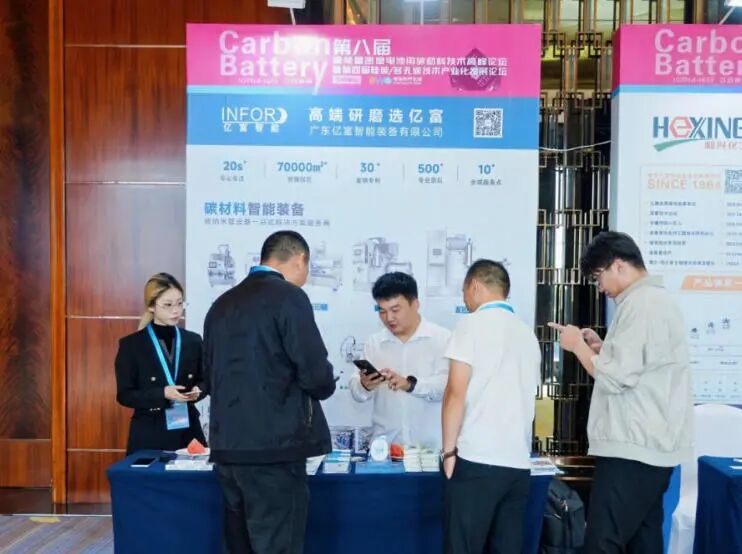
The real question at the booth: Carbon materials are no better than cathodes, and dispersion is more difficult than grinding
In this forum, the most talked about word is "uniformity" - it is not a matter of fineness or fineness, but a matter of whether it is dispersed widely and whether it is stable or unstable.
The high-frequency problems we heard on A20 are concentrated in four categories:
① Silicon carbon anode: Nano-silicon is agglomerated, and if it is not dispersed enough, it will overturn.
Nano-silica powder has a large specific surface area and is easy to agglomerate. If the pre-dispersion is not done well, it will be "cold rice" when it is put into the sand mill - the surface is ground away, but the core is still hard and agglomerated. What the customer asked was "Can it be ground to below 100nm?" What really matters is whether the primary dispersion rate is sufficient and whether the Zeta potential is stable.
② Porous carbon precursor: high viscosity + high solid content, the separation structure directly determines life and death
Phenolic resin-based and pitch-based porous carbon precursors, with viscosities ranging from thousands to tens of thousands of cps. Traditional screen separation is a "time bomb" under this working condition - once it is blocked, the entire batch of slurry will be scrapped. What customers want is not "can rotate", but no clogging, no leakage, and continuous operation under high viscosity.
③ Hard carbon biomass route: Impurity control starts with grinding media
Hard carbon follows the sodium-ion battery route and has extremely low tolerance for metal impurities. The biomass precursor itself is full of impurities. If the grinding medium introduces iron and chromium to dissolve, the subsequent demagnetization process will not be able to save it. This knife must be selected from the cavity material and medium.
④ CVD silicon carbon: post-processing after vapor deposition, how to lock the particle size distribution
CVD silicon carbon particles have a special morphology. If the shear rate and residence time are not well controlled in the later dispersion grinding stage, it will either be over-grinded and broken, or large particles will remain - both results will directly waste the electrochemical performance.
Our answer is: The process window of carbon materials is much narrower than that of the cathode. The sand mill cannot only be used as a "crushing tool", but as a "decentralized control system".
What Yifu handed over on the carbon material track is a set of equipment that can “amplify without overturning”.
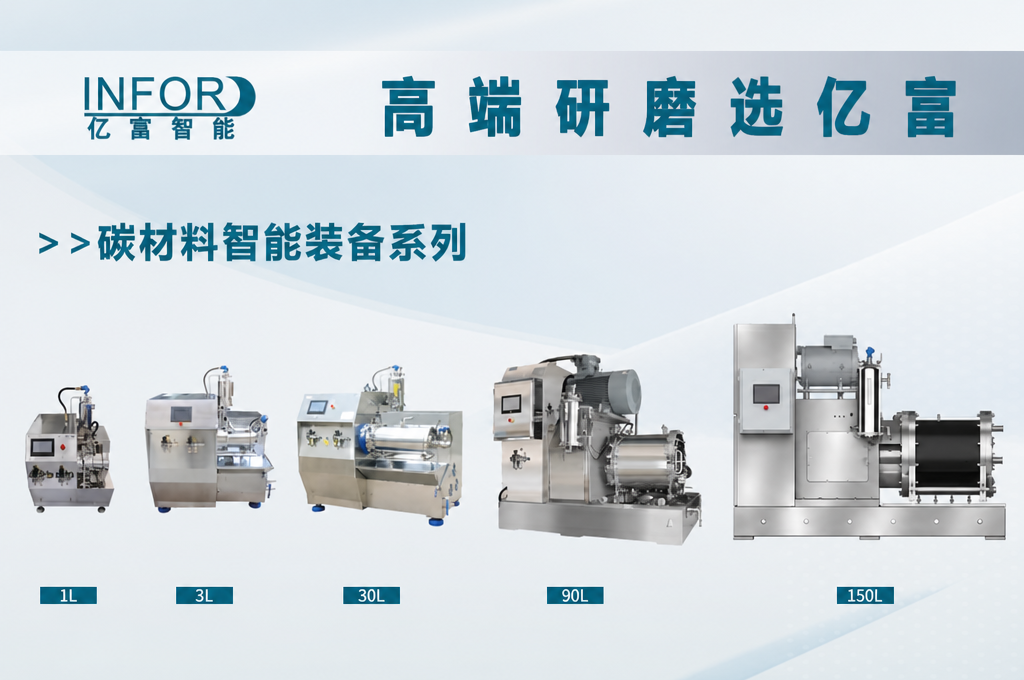
Facing the stage where silicon carbon, porous carbon, hard carbon, and conductive agents are moving from "small trial data" to "10,000-ton yield", Yifu highlighted five capability lines at the booth:
🔹 Ultra-fine grinding solution for silicon carbon/porous carbon powder
LPM series covers the full range of 1L-2000L, and laboratory conclusions can be directly transferred to the production line.
🔹 Single-wall/multi-wall carbon nanotube slurry dispersion system
Solve the stubborn problem of high aspect ratio fibrous fillers that "the more they are worn, the more they become lumpy, and the conductive network cannot be formed".
🔹 Graphene composite conductive slurry wet process
Control metal foreign matter, control the peeling degree of the lamellae, and control batch D50 drift.
🔹 Hard carbon precursor crushing-dispersion-homogeneous connection
Reduce transit dust and moisture absorption, suitable for consistency control of sodium electric hard carbon mass production.
🔹 Solid electrolyte / conductive agent / negative electrode material shared grinding platform
The same production line logic can handle a variety of carbon materials, helping customers save equipment idle rates.
To summarize the on-site logic in one sentence:
Carbon materials are not "just grinded", but particle size, morphology, dispersion state, metallic foreign matter, temperature rise, and energy consumption, none of which can be compromised.
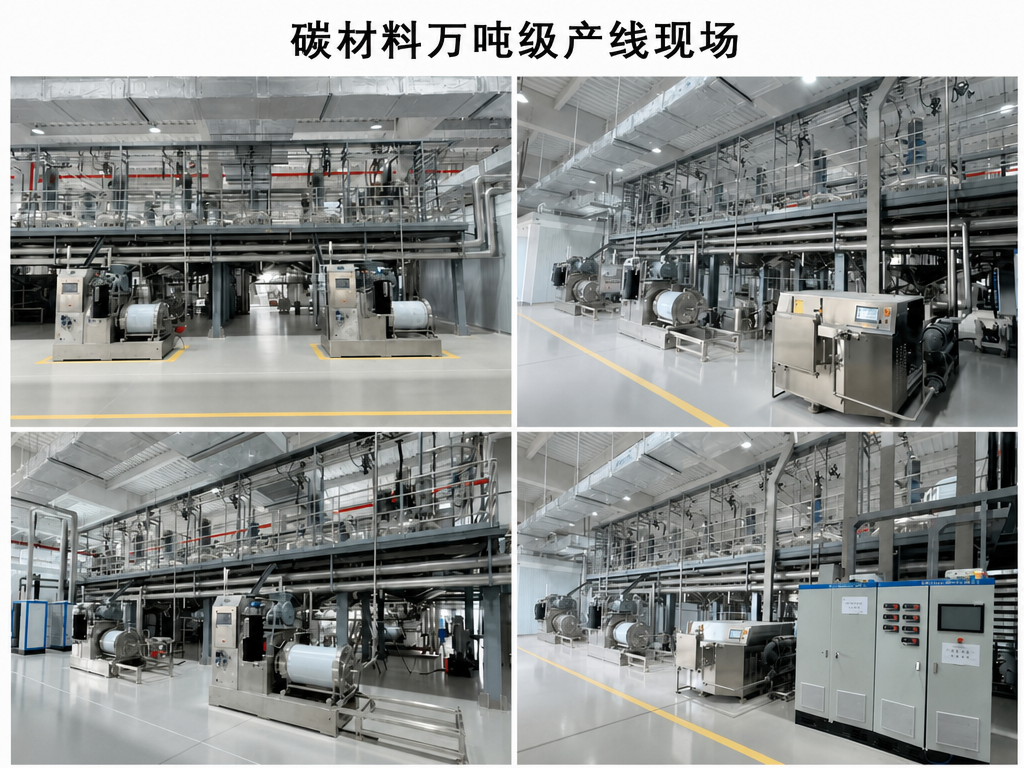
Material iteration is accelerating, and equipment must run ahead
The Changzhou Forum has ended, and an obvious signal we see is:
The carbon material industry is redefining "equipment vendors" into "process partners." The front-end crushing, dispersing, and grinding are no longer supporting tasks, but are the core process nodes that determine the specific surface area, dispersion uniformity, batch consistency, and manufacturing cost per ton.
The pace of material technology iteration is accelerating, and Yifu always responds to every upgrade with hard-core equipment.
The trip to Changzhou has come to an end. The next stop is Shaoxing. We invite you to attend the next process verification!

 English
 亿富机械
 +86-0769-85626082
 541476175@qq.com
 东莞市大岭山镇颜屋村莲颜路88号