Hello everyone, I am Yan Tao, my English name is Carlos, and I am responsible for the African market at Guangdong Yifu Intelligent Equipment Co., Ltd.
Before going abroad, I studied for a master's degree in digital media at Goldsmiths College, University of London, and I was used to using "content, users, and communication" to understand one thing. But this time, walking from the exhibition hall in Dubai to the construction site in Sohar, Oman, I suddenly discovered: overseas markets cannot be explained through PPT. You have to step in, stand in the dust, and shake the hands of customers before you really start to understand.
What I want to do is to be a person who stands between Yifu Equipment and overseas customers: while understanding our machines and processes, I also understand why the other country built the factory, why it chose this production line, and which step it is stuck at.
This trip to the Middle East is the first time since I started doing foreign trade that I have seen "Made in China going overseas" from one sentence to a concrete picture.
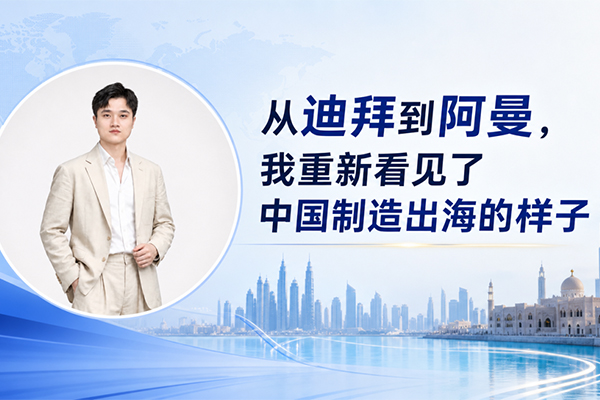
This trip was "heavier" than I expected
From September 27th to October 3rd, my colleagues and I traveled from Dubai to Oman in just seven days, but the density was very high.
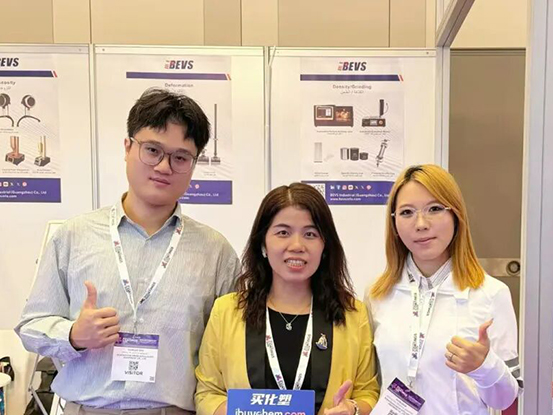
I was in Dubai for the first three days, participating in the Middle East Coatings Show. It's not just a casual tour of the exhibition, but a real stand at the booth, looking at peers and chatting with customers.
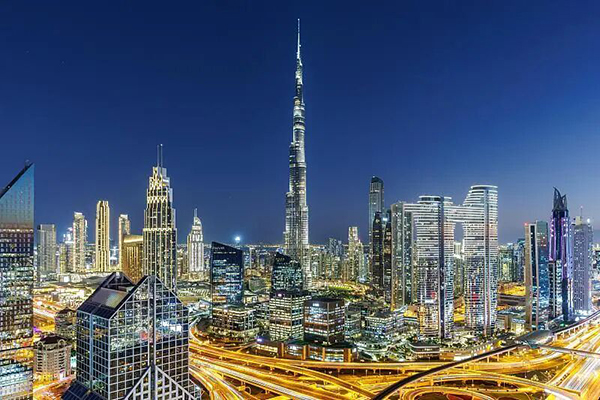
The most intuitive impact at the scene was twofold:
First, the Chinese really came, and they came very densely.
More than half of the exhibitors in the exhibition hall are from China. In the grinding and dispersing equipment track where we are located, there are almost a dozen or twenty domestic and foreign counterparts. Some bring complete machines, some make special installations, and some people stop by to chat at the standard exhibition. When you stand in the aisle, you can clearly feel that the competitive pace of domestic peers has also followed that of the Middle East.
Second, overseas customers are no longer in a state of being “made in China”.
Some people took the initiative to go around to the Chinese booth to ask about the process. Someone asked, "Do you have any cases in Africa?" and "Can you provide full-line cooperation?" I was a little proud at that moment - in the past we had to explain "what is Made in China", but now the other party already knows that China's supply chain can compete.
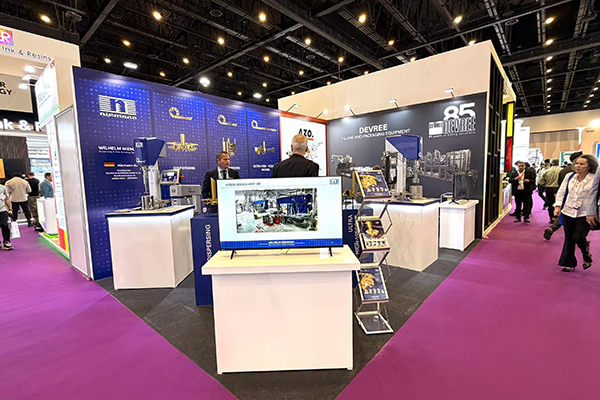
But taking a step back from pride is pressure.
Because everyone is strong, customers will not just ask "How much does it cost?" but will ask: "Do you understand my materials? Do you understand my particle size? Do you understand how I configure the production line behind me?"
The last three days in Oman poked me even more than the exhibition.
We went to the Sohar Free Trade Zone to visit an overseas project of a leading Chinese new energy materials company. The office building has been topped out, and the two factory buildings are built together. The carbonization area and the finished product area are separated. The first phase has 100,000 tons and is expected to be put into production in July 2027. The second phase will have 200,000 tons. Kilns, steel structures, and supporting equipment all pass from China.
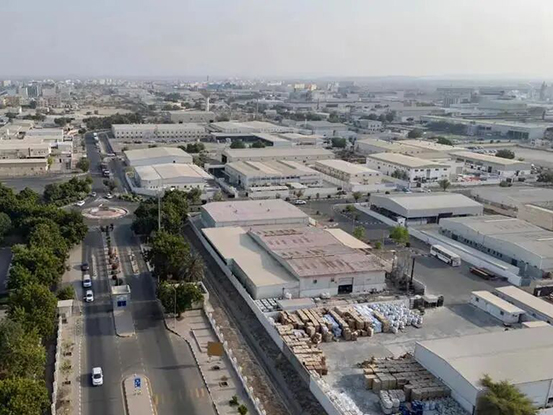
I was standing in a workshop that had not yet installed equipment. It was very windy and the smell of dust was mixed with the smell of welding smoke.
That feeling was very strange - not "Wow, what a big project", but suddenly realizing:
This is not a problem of a sand mill traveling across the ocean.
This is a Chinese industrial capability that has been moved entirely to another country that is undergoing transformation.
In my eyes, China's manufacturing going overseas: It's not "cheaper", it's "able to be implemented"
The most intuitive feeling this time is: overseas customers have long known "Made in China".
In the exhibition hall, some customers did not ask "How much does your machine cost?", but "Do you understand my process?" "Have you ever made my target particle size?" "Who will take care of you if it breaks down later?" 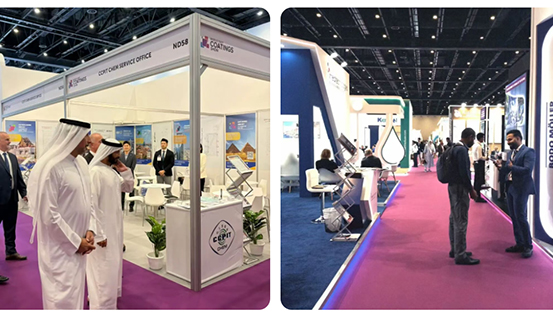
At this time, I understood that relying on "low prices" was no longer tenable.
The real advantages of Made in China that I see are five things stacked together:
First, the industrial chain is complete. From grinding media, mechanical seals, motor control to tank welding, we can solve it all together in China, without customers having to fight for parts all over the world.
Second, strong engineering capabilities. In a market like Oman, where the industrial foundation is still weak, what customers want is not a sand mill, but "help me run the production line."
Third, the response speed is fast. Overseas projects are most afraid of waiting. After changing a parameter, domestic engineers can produce drawings overnight, and the response speed is often faster than that of overseas suppliers.
Fourth, strong iteration capability. The particle size, solid content, and viscosity of new energy materials change every year, and equipment manufacturers will be eliminated by customers if they do not iterate.
Fifth, be willing to accompany customers from 0 to 1. In the early days of building overseas factories, no one dared to boast that they would make a profit. But Chinese companies dare to intervene early, test technology, and be present. 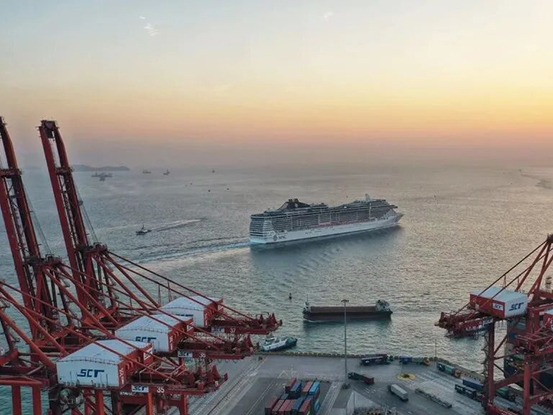
So I think the real competitiveness of China's manufacturing overseas is not "I am cheaper than you", but:
I can roll products, equipment, engineering, processes and after-sales into a set of solutions that can be implemented.
Price is just a stepping stone, and implementation ability is the reason to retain customers.
Return to yourself: Jump out of the quotation and dive into the process
In this business trip report, I wrote a lot of customer lists and competitive observations, but what I want to remember most are a few very personal things.
First, it is not just about memorizing parameters, but also about the customer’s process.
When I meet customers in the future, I don’t want to report “how many liters does the cavity of our sand mill have” first.
I want to ask first: What materials do you make? Which equipment are you using now? Where is the jam? Is the particle size stable? Will it float when changing batches of materials?
The equipment is just the carrier, and the customer’s problems are the entrance.
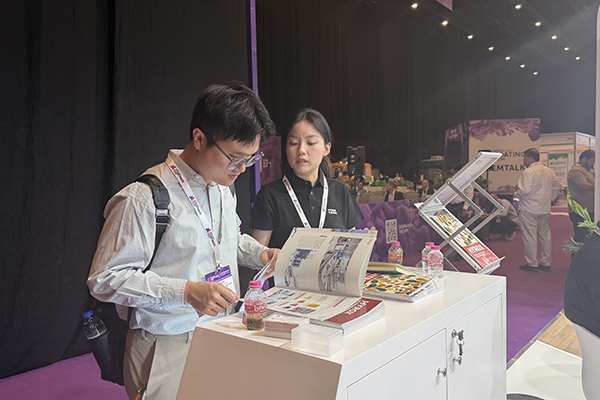
Second, do not regard overseas markets as "an extension of the domestic market."
Dubai is not simply moving its exhibition stand abroad, and Oman is not simply moving its domestic factory to another location.
Religion, decision-making chain, agent habits, acceptance logic, and after-sales expectations are all different.
The hardest thing about going from 0 to 1 is not the quotation, but the first trust, the first project, and the first on-site firefighting.
Third, I don’t want to just be a “Sales Carlos”, I want to be an “Interface Carlos”.
On one side are Yifu's nano sand mills, dispersion systems, and complete line capabilities;
On the other side are actual factories under construction for customers in Africa, the Middle East, and North Africa.
What is missing in the middle is not the product, but the translator -
translate the industry language into the equipment language, and translate the equipment language into the reasons why customers can make decisions. 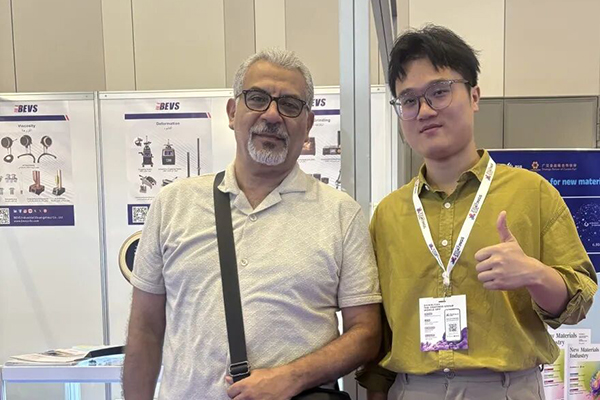
So the next stage I give myself is just three sentences:
Understand the country, the industry, and the craft.
No longer just memorizing parameters, we must translate "customer problems" into "Yifu's solutions."
No longer just waiting for inquiries, but standing next to customers at the early stage of new projects.
I want to work hard to be Yifu's bridge connecting overseas factories -
On one side are China's equipment, technology and supply chain; on the other side are the emerging factories and real needs in the Middle East, Africa, Oman, Saudi Arabia and Egypt.
Finding: Starting from a piece of equipment, starting from a market
 From the noisy flow of people in the Dubai exhibition hall to the sound of welding at the Sohar construction site, this journey made me confirm one thing:
Made in China is moving from "product export" to "industrial capability export".
The car is like this, the negative electrode material is like this, and the sand mill is the same.
For Yifu, this is an opportunity and a tough battle.
For the customer, what he wants is not a machine, but a person who can help him open the factory.
For me, this overseas trip has just begun. 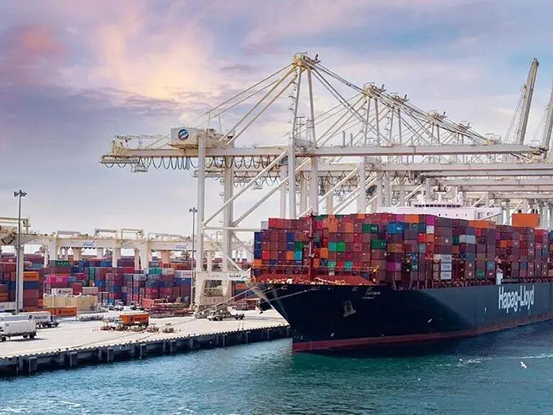
Next, I will follow up with the more than 20 potential customers contacted by this exhibition one by one, sort out the list of new projects in the Middle East, North Africa and Africa, and will continue to follow up on more long-term contacts.
Start from a piece of equipment, start from a customer, start from a market.
Gradually understand an industry, and slowly find your place in this wave of globalization.
I am Yan Tao, Carlos.
In Yifu Intelligence, we are engaged in the African market, and we are also following the trend of the Middle East and going deeper.

 English
 亿富机械
 +86-0769-85626082
 541476175@qq.com
 东莞市大岭山镇颜屋村莲颜路88号