In May 2025, the European tram market showed a booming development trend. The sales volume of electric vehicles in the nine countries reached 233,400 units, a year-on-year increase of 37.2%, and a month-on-month increase of 7.4%. The penetration rate soared to 27.5%. Judging from the data from January to May, the cumulative registration volume in nine European countries reached 1.0884 million vehicles, a year-on-year increase of 28.0%, the penetration rate was 25.7%, and the overall growth was strong.
In terms of policy, the European Commission passed a new amendment to the carbon emission assessment in March, relaxing the original target of 2025 to 2025-2027 to be completed in three years. Car companies have more buffer space in carbon emission compliance. Affected by this, combined with the strong performance in the first five months, European electric car sales are expected to be raised to 3.6 million in 2025, a year-on-year increase of 21%.
However, the market landscape is undergoing drastic changes. Tesla's sales in the European market continue to decline. In May, sales in the nine countries totaled 9,771 vehicles, a year-on-year decrease of 26.6%, and its market share fell to 4.2%, a year-on-year decrease of 3.6 percentage points. The reasons include fierce competition in the European market, aging models and unstable political situation in Europe. In sharp contrast, Chinese brands are making rapid progress in the European market, and the sales of BYD and other car companies have increased significantly. Chinese brands sold 65,808 vehicles in Europe in May, and their market share doubled to 5.6%.
The investment of Chinese new energy companies in Europe has formed three core layouts: vehicle manufacturing, battery supply chain, and energy storage system. They not only avoid trade barriers, but also aim to deeply integrate into the European energy transformation system.
1. Complete vehicle manufacturing: Multi-country production capacity network taking shape
BYD:
Hungary has established a European headquarters and a super factory with an annual output of 300,000 vehicles in Budapest, Hungary, with a localization rate of parts and components of 65%, and supporting photovoltaic roofs to achieve 100% green electricity production;
Cyprus has established a fiscal and taxation and compliance center to optimize cross-border operations by taking advantage of the 12.5% corporate income tax rate and the free flow of EU funds;
Türkiye has built a new 150,000-vehicle production base (to be put into production in 2026), relying on the EU-Turkey Customs Union to avoid 27.4% tariffs.
奇瑞 & 长安:
奇瑞与西班牙车企合资工厂将于2025年Q3投产,成为西欧首个中国量产基地;
长安计划在东欧设厂,目标2030年实现本土化生产。
Leapmotor: Joint venture with Stellantis (51% shareholding), obtains European manufacturing and sales rights, and launches smart driving models in 2026.
2. Battery industry chain: Technology output leads the co-construction of production capacity
CATL:
_ Together with Stellantis, it will build a 4.1 billion euro lithium iron phosphate factory in Spain with an annual production capacity of tens of GWh, filling the gap in low- and mid-range batteries in Europe;
_ The Debrecen factory in Hungary has a planned production capacity of 100GWh, making it the largest single battery factory in Europe and attracting more than 40 Chinese material manufacturers to settle in.
EVE Lithium Energy: Accelerate technology localization through equity cooperation model and avoid the carbon footprint requirements of the EU's "Battery Law".
EU localized response: The EU Innovation Fund injected 852 million euros into 6 battery projects (including LG Poland’s 46 series large cylindrical battery project), with the goal of adding 56GWh of production capacity in 2030.
3. Energy storage system: Industrial and commercial storage demand drives local services
Hongzheng Energy Storage: Constructing a 200MWh frequency modulation project in the Czech Republic, setting up a technical service center in Prague, using AI algorithms to adapt to European power grid standards, and improving fault response efficiency by 40%.
Policy bonus: The promotion of dynamic electricity prices in Germany has enabled the IRR of industrial and commercial storage projects to reach more than 15%, attracting Chinese companies to deploy peaking arbitrage scenarios.
4. Material companies: production capacity expansion is accelerating
Dangsheng Technology plans to establish a 300,000-ton ternary material and 300,000-ton lithium iron manganese phosphate material base in Finland; Yuneng Technology is preparing to build a 50,000-ton lithium iron phosphate production line in Spain, and German Nano plans to build a 50,000-ton lithium iron phosphate production line in Spain, etc.
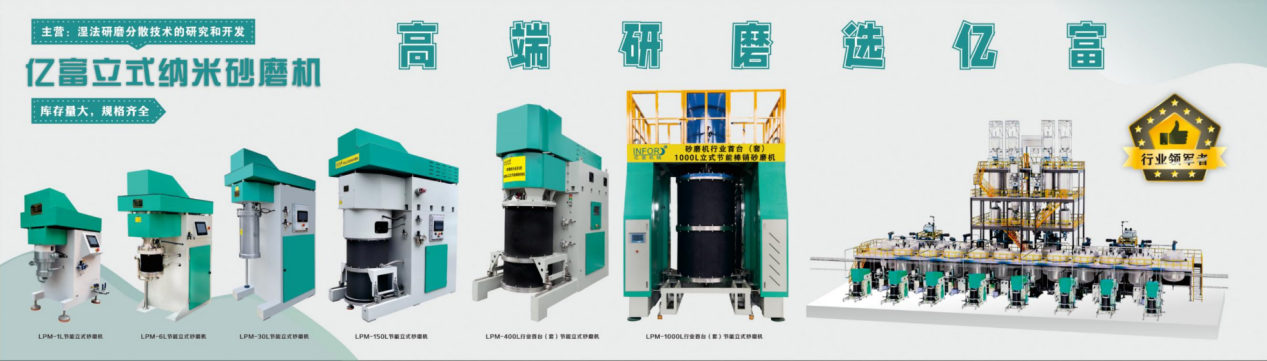
亿富机械跟随大材料产线的脚步,在欧洲建立了办事机构及与多家本地企业建立了设备及市场层面的合作,旨在将服务本地化,将中国的先进砂磨技术带向欧洲,为中国新能源企业在欧洲的发展做贡献。
2. Strategic path: from production capacity transfer to value chain symbiosis
1. Localization 2.0 model
R&D adaptation: BYD’s Hungarian factory develops right-hand drive models for the British market, and CATL’s CTP technology is licensed to European partners.
Closed-loop service: Hongzheng Energy Storage has established a 7×24-hour operation and maintenance team in Europe, and the efficiency of spare parts deployment has increased by 40%.
2. Policy hedging strategy
Tariff avoidance: Turkish and Hungarian factories use the EU Free Trade Agreement to replace direct exports (such as BYD's Turkish base to avoid 27.4% tariffs).
Carbon management front-end: Leading companies obtain ISO 14067 certification in advance to cope with the EU CBAM carbon tariff in 2025.
3. Local ecological embedding
CATL led 40+ Chinese material dealers to enter the Hungarian Industrial Park;
SAIC MG took advantage of the UK’s zero tariff advantage (compared to the 27 EU countries) and sold 126,000 vehicles in Europe from January to May 2025, accounting for 2.3% of the European market share.
3. Challenges and response strategies
1. Geopolitical risks
The EU's "Battery Law" requires that recycled materials account for 30% in 2030, and Chinese companies need to jointly build a recycling system (such as CATL's closed-loop cooperation with Stellantis).
Spain’s abstention in the EU tariff vote reflects the conflict between member states’ economic interests and protectionism. Chinese companies can focus on breaking through policy-friendly countries such as Hungary and Spain.
2. Market penetration bottleneck
BYD sold only 776 vehicles in Germany (in the first five months of 2024), mainly due to weak channels; countermeasures include cooperating with Société Générale in auto finance to lower the threshold for car purchase.
The density of charging piles in Europe is only 17 units/100 kilometers (Hungary), which requires cooperation with charging and swapping network companies such as IONITY.
3. Cost control pressure
The average hourly wage in Hungary is 15 euros (1/2 in Western Europe), but the industrial inflation rate reaches 17.1%; Chinese companies reduce installation costs through modular design (such as Hongzheng energy storage split DC cabinets).
IV. Future Trends and Global Impact
Production Capacity Shifts Eastward: Arrow predicts that in 2030, Chinese car companies’ annual production in Europe will reach 800,000 units, with their market share rising to 10%. During the same period, local European car companies may close 400,000 units of production capacity.
Technology competition: Solid-state batteries (Porsche Cellforce silicon anode project) and smart driving (Xpeng-Volkswagen cooperation) have become the next battlefield.
Dependence on the EU: European domestic battery projects have been repeatedly delayed (such as Northvolt's bankruptcy), and the technology and production capacity of Chinese companies have become key supports for its electrification transformation.
The investment of Chinese new energy enterprises in Europe has been upgraded from "capacity transfer" to "value chain symbiosis", and competition barriers are built through technology authorization (such as Ningde CTP), policy adaptation (carbon management) and ecological embedding (local service network). In the next five years, the production capacity clusters in Hungary, Spain and Turkey will support Chinese brands to achieve 10% market share in Europe, but they need to be wary of the double squeeze of EU protectionism and iteration of technical standards.

 English
 亿富机械
 +86-0769-85626082
 541476175@qq.com
 东莞市大岭山镇颜屋村莲颜路88号