
On the grand stage of industry, although valves are small, they play a decisive role. It is like the "throat" of industrial equipment, controlling the flow of fluid and affecting the smoothness and safety of the entire production process. Today, let’s take a closer look at the types, performance, and unique applications of valves in sanding production lines.

Colorful categories of valves
Valves have many types according to different classification standards. Common valve types include gate valves, globe valves, ball valves, butterfly valves, etc.
The gate valve is like a steady "goalkeeper". Its closing part is a gate, and the on-off of the fluid is controlled by the lifting and lowering of the gate. The advantage of the gate valve is that the fluid resistance is small, and the sealing surface is less eroded and eroded by the medium when fully open. It is suitable for occasions with low fluid resistance requirements. However, it takes a long time to open and close, has a complicated structure, and is relatively troublesome to repair.
The stop valve is like a fine "regulator". It relies on the pressure of the valve stem to make the valve disc sealing surface and the valve seat sealing surface closely fit, thereby preventing the flow of media. The stop valve has good regulating performance and can accurately control the flow and pressure, but the fluid resistance is large and is not suitable for large-diameter pipelines.
The ball valve is like a flexible "rotating dancer". Its sphere rotates 9° around an axis perpendicular to the channel, opening and closing the valve. The ball valve opens and closes quickly and has good sealing performance, making it suitable for frequent operations. Moreover, it has a simple structure and easy maintenance, and has been widely used in the industrial field.
The butterfly valve is like a light "wing". Its butterfly plate rotates around a fixed axis in the valve body to open and close the valve. Butterfly valves have compact structure, small size, light weight, easy operation, and good flow regulation characteristics. They are often used in large-diameter, low-pressure pipelines.
Excellent performance of valves
The performance of the valve is directly related to its use in industrial production. There are many indicators to measure valve performance, among which sealing, flow characteristics, pressure resistance and corrosion resistance are the most important aspects.
Sealing is one of the core properties of valves. Good sealing performance can prevent media leakage and ensure the safety and environmental protection of the production process. The sealing of the valve mainly includes the valve seat seal and the packing seal. The valve seat seal is achieved by the tight fit between the valve disc and the valve seat, while the packing seal prevents the medium from leaking from the gap between the valve stem and the valve cover. In order to improve the sealing performance, valve manufacturers usually use high-quality sealing materials and perform precision processing on the sealing surface.
The flow characteristics reflect the valve's ability to control fluid flow. Different types of valves have different flow characteristics. For example, the flow characteristics of a globe valve are relatively linear and can accurately control the flow; while the flow characteristics of a ball valve are relatively fast-opening and are suitable for quickly cutting off or opening fluids. Understanding the flow characteristics of the valve will help you choose the appropriate valve according to actual needs.
Pressure resistance refers to the ability of a valve to work normally under a certain pressure. In industrial production, the pressure in the pipeline is often high, so the valve must have sufficient pressure resistance. The pressure resistance performance of a valve is closely related to its material, structure and manufacturing process. Generally speaking, valves made of high-strength materials have better pressure resistance.
Corrosion resistance is an important guarantee for the valve to work properly in harsh environments. In industries such as chemical and pharmaceutical industries, the media in pipelines are often corrosive, which requires valves to have good corrosion resistance. In order to improve the corrosion resistance of valves, manufacturers usually use corrosion-resistant materials, such as stainless steel, ceramics, etc., or perform special treatments on the valve surface.
Key applications of valves in sanding production lines
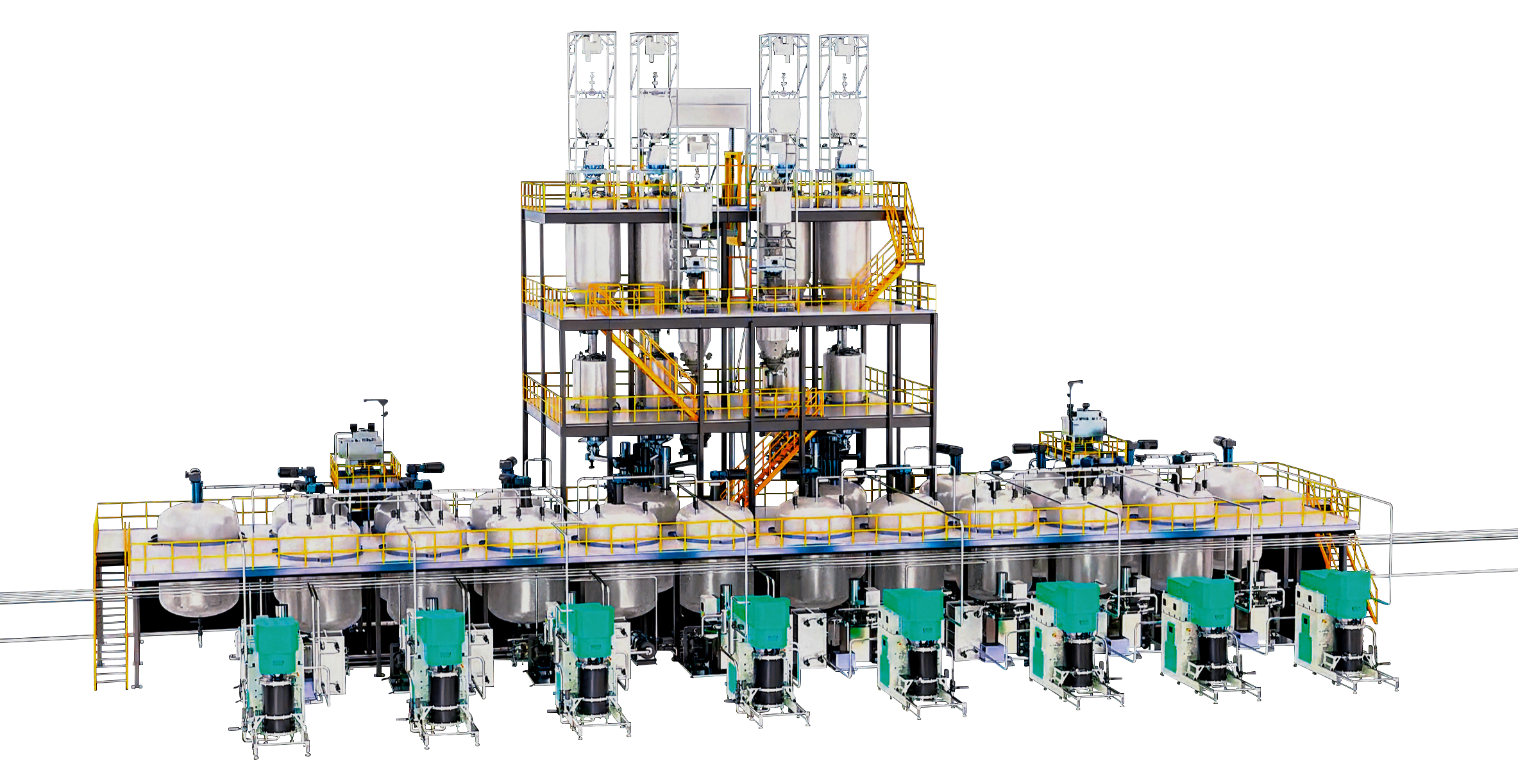
Sanding production line is a production equipment used for grinding and dispersing materials. It is widely used in coatings, inks, pigments and other industries. In the sanding production line, valves play a vital role. They can control the inflow and outflow of materials, regulate flow and pressure, and ensure the stability and efficiency of the production process.
In the feeding process of the sanding production line, valves are used to control the transportation of materials. By selecting the appropriate valve type and size, the flow and velocity of the material can be accurately controlled to ensure that the material enters the sand mill evenly. For example, the use of stop valves can achieve precise adjustment of material flow, while ball valves can quickly cut off the delivery of materials and prevent material leakage.
During the sanding process, the valve is also used to regulate the pressure and temperature within the sanding machine. When the sand mill is working, the internal pressure and temperature will continue to change. In order to ensure the sanding effect and equipment safety, the pressure and temperature need to be adjusted in time through valves. For example, when the pressure in the sand mill is too high, the excess pressure can be released through the safety valve; when the temperature is too high, the flow of coolant can be adjusted through the regulating valve to reduce the temperature of the sand mill.
In addition, valves also play an important role in the discharging process of the sanding production line. It can control the discharge of ground materials to ensure that the materials enter the next process smoothly. At the same time, the valve can also filter and separate materials, remove impurities and large particles, and improve product quality.
As an important component in industrial production, valves have a wide variety of categories and outstanding performance. They play an irreplaceable role in many fields such as sanding and grinding production lines. With the continuous development of industrial technology, the performance and quality of valves are also constantly improving. In the future, valves will be more intelligent and efficient to protect the development of industrial production. Let us look forward to valves creating more miracles in more fields!

 English
 亿富机械
 +86-0769-85626082
 541476175@qq.com
 东莞市大岭山镇颜屋村莲颜路88号
