Sand mills and ball mills are both equipment used for crushing and grinding materials, but they have significant differences in structure, working principle, application scenarios, etc. The following are the main differences between the two:
1. Structural design
Sand mill
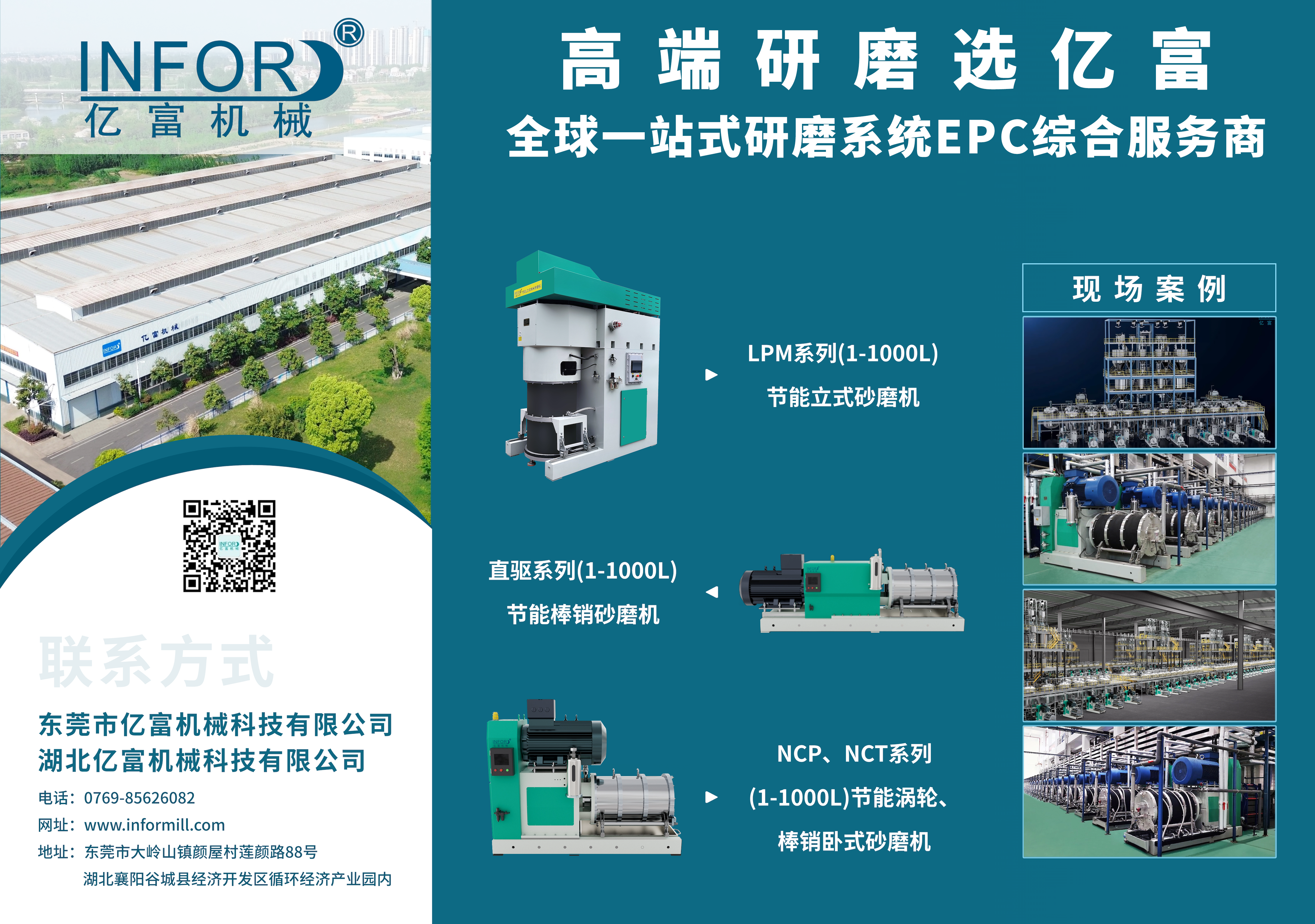
mainly consists of grinding cylinder, dispersion disc (or rotor), grinding media (such as zirconium beads, glass beads, etc.), feeding pump and cooling system.
Adopt vertical or horizontal structure, the grinding chamber is small in size, suitable for continuous production.
Core components: The high-speed rotating dispersion disc drives the grinding media to move, generating shearing force and impact force.
Ball mill
consists of a horizontal or inclined rotating cylinder, grinding balls (steel balls, ceramic balls, etc.) and a driving device.
The cylinder is larger and is usually operated in batches (there are also continuous operations).
The core component relies on the rotation of the cylinder to drive the grinding ball up and down, and crushes the material through gravity impact and friction.
2. Working principle
Sand mill
High shear force + impact: Materials and grinding media collide and shear violently under the action of the high-speed rotor, suitable for ultra-fine grinding (up to nanometer level).
Usually it needs to cooperate with the pumping system to circulate materials, which has high efficiency and is suitable for low viscosity slurry.
Ball mill:
Impact + friction: When the cylinder rotates, the grinding ball rises with the centrifugal force and then falls, crushing the material through impact and rolling friction.
Suitable for dry grinding or wet grinding, but the efficiency is lower, the grinding time is longer, and the particle size distribution is wider.
3. Grinding efficiency and fineness
Sand mill:
High efficiency, low energy consumption, suitable for large-scale continuous production.
The finished product has a finer particle size (up to submicron or nanometer level) and a uniform particle size distribution.
Suitable for industries with high precision requirements (such as coatings, inks, electronic materials).
Ball mill:
It has low efficiency and high energy consumption (especially during dry grinding), and is suitable for coarse grinding or medium fineness requirements.
The particle size of the finished product is generally in the micron level, with a wide particle size distribution.
Suitable for mining, ceramics, cement and other industries.
4. Applicable materials
Sand mill:
Suitable for slurries with low viscosity and good fluidity (such as dyes, lithium battery slurries, nanomaterials).
The grinding effect of high-hardness materials (such as silicon carbide) is better than that of ball mills.
Ball mill:
It can handle dry powder or high viscosity slurry and has strong adaptability.
Often used for coarse/medium crushing of hard materials such as metal ore, quartz, cement clinker, etc.
5. Maintenance and Cost
Sand mill:
The structure is complex and the maintenance cost is high (such as wearing parts such as the dispersion disk and seals need to be replaced regularly).
The initial investment is large, but the operating energy consumption is low.
Ball mill:
Simple structure and easy maintenance (grinding balls can be replenished).
The initial cost is low, but the energy consumption is high (especially when dry grinding).
Summary
Select a sand mill: Ultra-fine, uniform nano/micron powder is required, and the material is a low-viscosity slurry.
选球磨机:对粒度要求不高,需处理干粉或高粘度物料,或预算有限时。
Choose more suitable equipment based on the nature of the specific material, target particle size and production needs.

 English
 亿富机械
 +86-0769-85626082
 541476175@qq.com
 东莞市大岭山镇颜屋村莲颜路88号