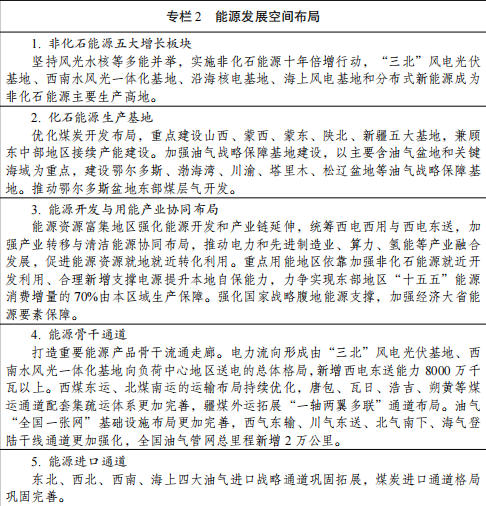
Recently, the newly released "15th Five-Year Plan" new energy system plan has set off a huge wave in the entire new energy circle - a 25 trillion-level investment scale, everyone is hotly discussing it. Today, I will give you a clear overview of the policy truth, industry changes, global landscape, and core opportunities in the next five years.
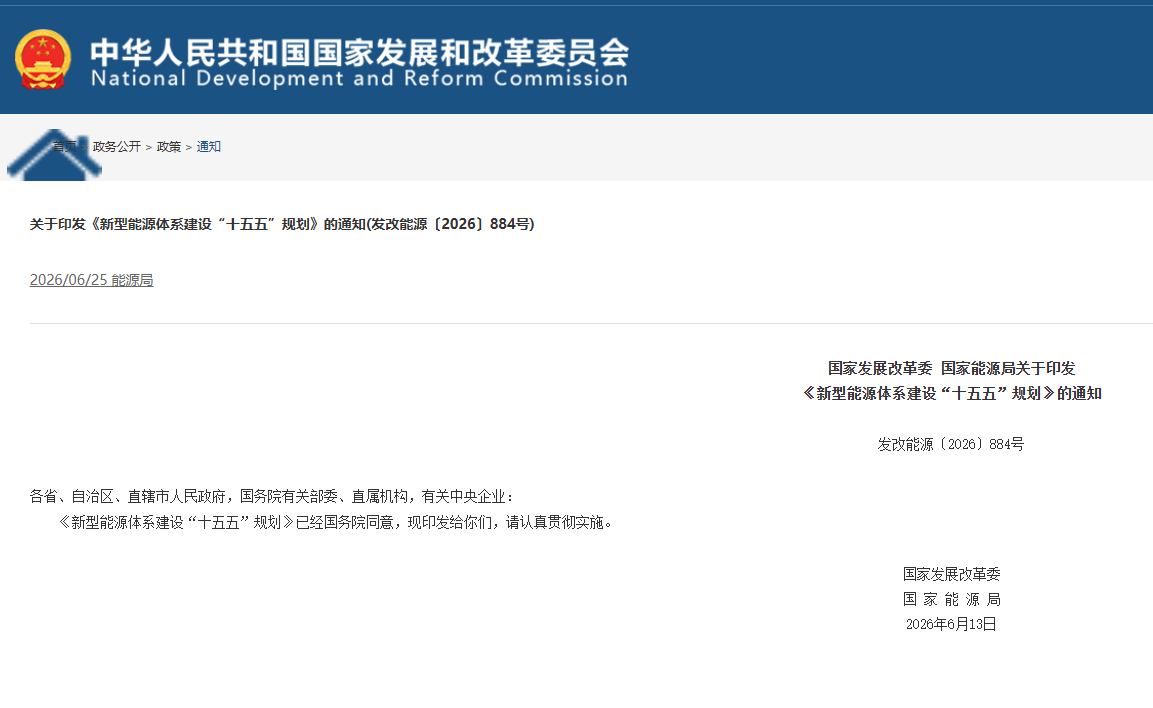
First of all, let me correct the biggest misunderstanding on the Internet: this time is not the "14th Five-Year Plan", but the "15th Five-Year Plan".
First, the time windows are completely different.
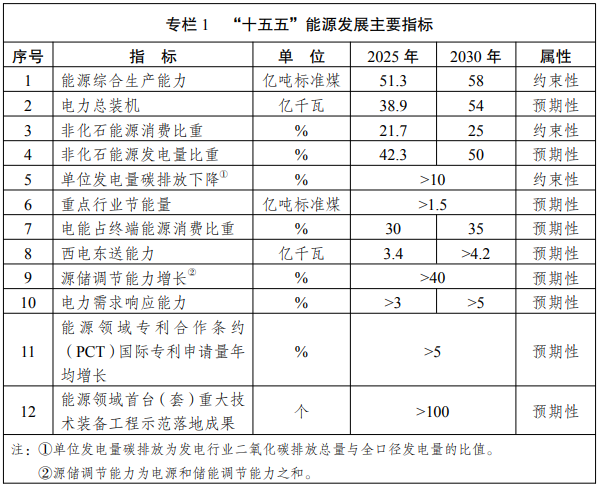
25 trillion is not a plan for the past five years, but the "15th Five-Year Plan" cycle from 2026 to 2030. This official document titled "New Energy System Fifteenth Five-Year Construction Plan" was just officially released on June 25 - which means that the next five years will be the real super dividend period.
Second, the true composition of 25 trillion.
This is the total investment in the entire new energy industry chain in the country, covering wind power, photovoltaics, ultra-high voltage power grids, pumped hydro energy storage, electrochemical energy storage, lithium battery materials, battery manufacturing and green hydrogen industries.
Several key data, please remember:
· Grid transformation investment: over 5 trillion
· Energy storage independent track: five-year investment over 2.5 trillion
· New energy storage installation target: locked in 300 million kilowatts
It is worth noting that the investment growth rate of energy storage has completely surpassed photovoltaic and wind power, becoming the golden track with the highest growth rate among the new energy tracks.
Third, thoroughly clarify misunderstandings.
During the five years of the "14th Five-Year Plan", the total investment in energy storage was only about 2 trillion, with limited increment and serious involution. The real explosion, real increment, and real industrial dividends are all concentrated in the five years from 2026 to 2030.
Secondly, the domestic industry has completely changed: energy storage has been upgraded from a "supporting role" to a "national rigid need".
First, the country’s rigid allocation of reserves has been comprehensively upgraded.
Now all large wind and solar bases and new energy power stations have mandatory allocation and storage. The three major markets of power supply side, power grid side, and industrial and commercial user side are fully liberalized. Energy storage is no longer an auxiliary regulation, but an indispensable core force of the power system.
Second, the technical route will be fully expanded.
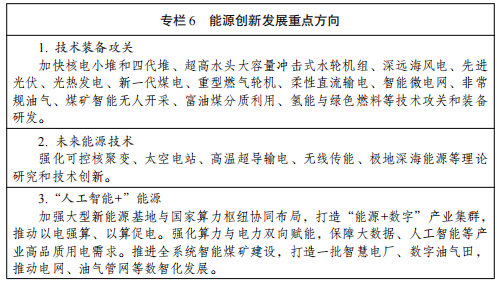
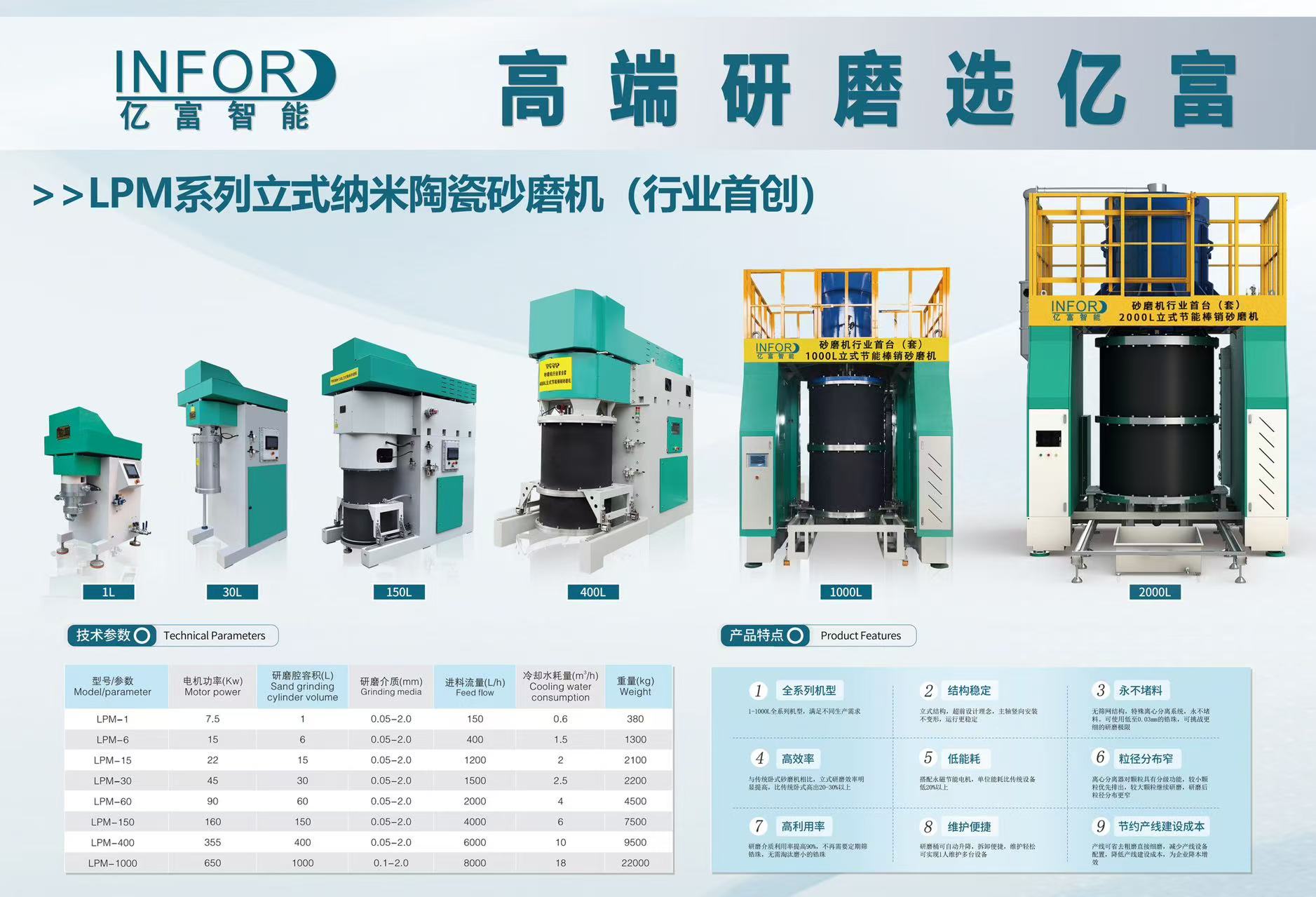
Not only traditional lithium iron phosphate, but also multiple technical routes such as sodium-ion batteries and NFPP new batteries are exploding simultaneously. Large-scale new production lines for cathode materials and powder processing are being built across the country, and orders for a complete set of equipment including grinding, drying, sintering, and crushing are ushering in sustained and explosive growth.
Third, the extreme domestic involution has forced production capacity to go overseas on a large scale.
Domestic battery and material production capacity has been seriously saturated, and the price competition is fierce. In the next five years, relocation of production capacity is the only way out. South Asia, Southeast Asia and emerging overseas industrial parks are becoming the first choice for Chinese-funded new energy companies to set up operations - they can not only reduce costs, avoid tariffs, but also ensure supply efficiency.
Furthermore, the global new energy landscape is undergoing a historic reshaping.
First, there is a major reshuffle of the global industrial chain and a complete reset of the division of labor.
· China: firmly controls upstream core technologies, powder materials, equipment manufacturing and battery cell production, and has the highest say in the entire industry chain;
· Europe and the United States: only retains high-end R&D, system integration and brand operations, and completely withdraws from high-energy-consuming, high-pollution material smelting and powder processing links;
· Emerging countries (such as Bangladesh, Pakistan, Vietnam, Brazil, etc.): undertakes midstream manufacturing capacity.
The future global fixed model will be: Chinese core raw materials + overseas local factories + finished products exported to Europe and the United States, and a new supply chain pattern has officially taken shape.
Second, the global resource game is intensifying, and the risks of a single country's deployment have increased sharply.
Countries with strategic resources such as lithium, nickel, cobalt and phosphorus have tightened their export policies - Indonesia has locked up nickel and Zimbabwe has locked up lithium, and resource protection has become increasingly fierce. Companies no longer dare to bet on production capacity in a single country, and global multi-site decentralization has become a standard strategy for leading companies. This is also the fundamental reason why a large number of capital and enterprises have withdrawn from Indonesia this year and moved to Bangladesh, Brazil, and Madagascar.
Third, the demand for energy storage is moving from China to the world, and overseas demand is exploding in full force.
Europe and the United States focus on integrating household energy storage and photovoltaic storage; in South Asia and the Middle East, there is perennial power shortage and large-scale power outages, and industrial and commercial backup energy storage has become an urgent need for life-saving electricity. For example, in Bangladesh, a nationwide power shortage is driving the energy storage market into an explosive growth cycle.
In addition, the core impact on our industry in the next five years is reflected in three levels:
· Material side: lithium iron phosphate and sodium cathode production capacity continues to expand, domestic production expansion + overseas factory construction are parallel, and powder processing production lines continue to be built;
· Equipment side: a complete set of new energy equipment such as sand mills, sintering furnaces, drying, and crushing. Domestic orders are stable, overseas orders are soaring year by year, and the equipment industry is ushering in a five-year super dividend cycle;
· Industry overseas: From multiple-choice questions to required questions. Domestic overcapacity, transparent profits, and serious involution; high tariff barriers and intensified trade protection in Europe and the United States. Building factories overseas has become the only option for companies to survive, increase growth, and earn dividends.
The 25 trillion national-level strategy of the "15th Five-Year Plan" will continue to promote the comprehensive expansion of upstream materials, equipment, and production capacity, and overseas industrial parks will be the main battlefield for the next round of new energy industry.
Finally, to summarize:
Among the 25 trillion super new energy market in the "15th Five-Year Plan", energy storage is the golden track with the highest growth rate and the strongest certainty.
Domestic involution is a foregone conclusion, and the export of production capacity to overseas markets is unstoppable. Compared with some Southeast Asian countries with repetitive policies and higher risks, Bangladesh has stable policies, is friendly to China, has huge demographic dividends, low labor costs, and enjoys zero export tariffs. It is the best destination for lithium battery materials, energy storage industry, and new energy equipment companies to go overseas in the next five years.
Finally, to summarize:
Among the 25 trillion super new energy market in the "15th Five-Year Plan", energy storage is the golden track with the highest growth rate and the strongest certainty.
Domestic involution is a foregone conclusion, and the export of production capacity to overseas markets is unstoppable. Compared with some Southeast Asian countries with repetitive policies and higher risks, Bangladesh has stable policies, is friendly to China, has huge demographic dividends, low labor costs, and enjoys zero export tariffs. It is the best destination for lithium battery materials, energy storage industry, and new energy equipment companies to go overseas in the next five years.
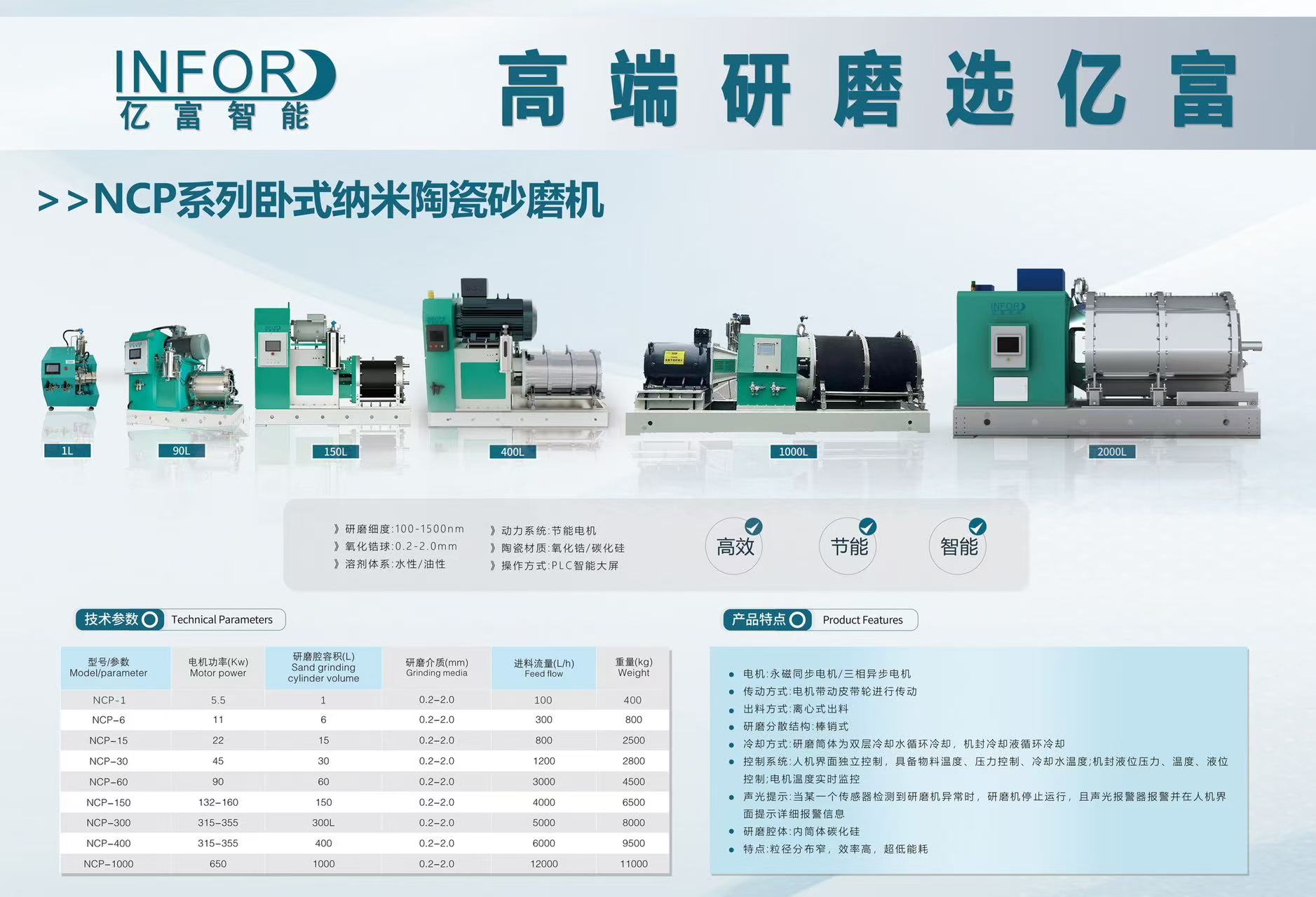
And we at Yifu Intelligence, after years of intensive cultivation and accumulation, have already laid out plans in advance and fully matched the general trend of the industry. At present, whether it is lithium iron phosphate or sodium electric circuit, we have the entire line construction experience of many domestic and foreign leading companies.
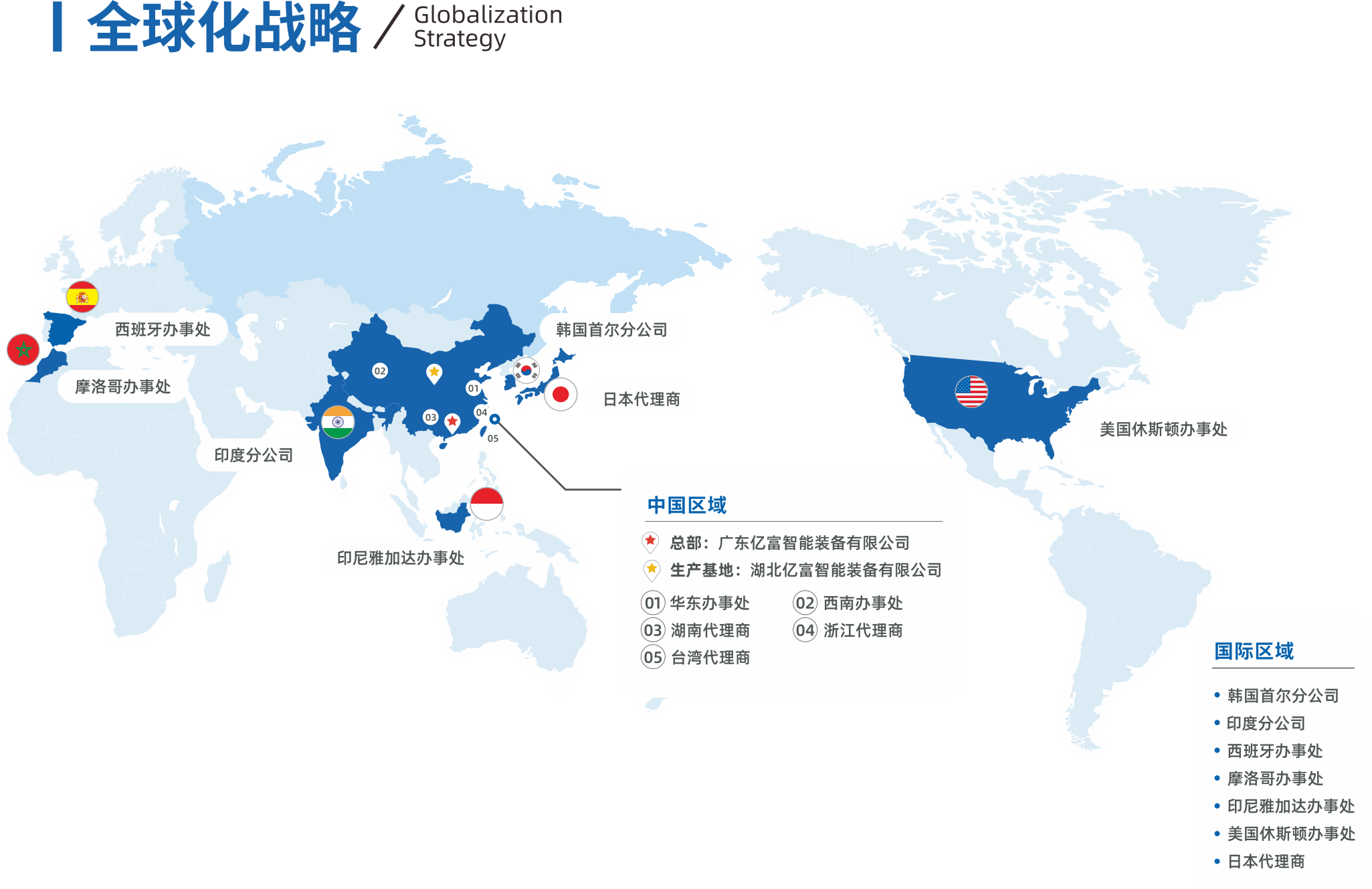
The service territory covers China, South Korea, Indonesia, the United States, Europe, Vietnam, the Middle East, Bangladesh and other global mainstream new energy markets. There are mature implementation cases and dedicated after-sales teams in various places.
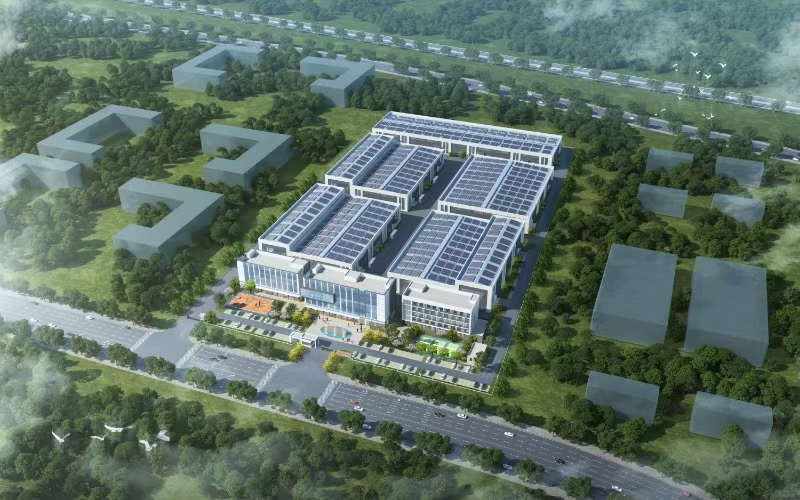
The new park has been fully upgraded, the overall image and factory scale have been iteratively improved, and the delivery capacity and mass production strength fully match the demand for this wave of global overseas orders. We have added a number of large-scale precision machine tools and CNC machining centers, and the hardware has been fully upgraded - with more stable quality, higher precision, faster delivery, and greater production capacity.

 English
 亿富机械
 +86-0769-85626082
 541476175@qq.com
 东莞市大岭山镇颜屋村莲颜路88号
