The diaphragm pump is an important part of the work of the sand mill. The quality of the diaphragm pump often directly affects the efficiency of the entire production line. Today we will talk about the diaphragm pump.
Diaphragm pump, also known as control pump, evolved from the reciprocating piston pump in the 1970s by adding a diaphragm chamber. It is a new type of conveying machinery and the most novel type of pump in China. It is different from ordinary pumps in that it is the main type of actuator. It accepts the control signal output by the modulation unit and uses power operation to change the fluid flow. The power often used includes air, electric devices, liquid media, etc.
The core structure of the diaphragm pump consists of the transmission part and the diaphragm cylinder head. It uses hydraulic, pneumatic or electric drive to realize the suction and discharge of the medium. The working medium is completely isolated from the transmission parts. It can pump out all kinds of corrosive liquids, liquids with particles, high viscosity, volatile, flammable and highly toxic liquids.
Diaphragm pumps can be divided into three types: pneumatic, electric and hydraulic according to the power used by their actuators, namely pneumatic diaphragm pumps that use compressed air as the power source, electric diaphragm pumps that use electricity as the power source, and electro-hydraulic diaphragm pumps that use the pressure of liquid media (such as oil, etc.) as the power source. The two most commonly used types of sand mills are pneumatic and electric.
Pneumatic diaphragm pumps are made of four materials: plastic, aluminum alloy, cast iron, and stainless steel. The pneumatic diaphragm pump uses compressed air as the power source. It is a volumetric pump that changes the volume caused by the reciprocating deformation of the diaphragm. Its working principle is similar to that of a plunger pump.
Diaphragm pumps use nitrile rubber, chloroprene rubber, fluorine rubber, polytetrafluoroethylene, and polytetrafluoroethylene according to different liquid media. To meet the needs of different users. It is placed in various special occasions and used to pump media that cannot be pumped by conventional pumps, and has achieved satisfactory results.
Features of pneumatic single diaphragm pump
(1) The pump will not overheat and no harmful gas will be discharged.
(2) No sparks will be generated.
(3) Not easily blocked.
(4) Minimal agitation of materials, suitable for conveying unstable substances.
(5) The flow rate is adjustable, and a throttle valve can be installed at the material outlet to adjust the flow rate.
(6) It has the function of self-priming.
(7) It can be run dry without danger.
(8) Can work diving.
(9) The fluids that can be transported are extremely wide, from low viscosity to high viscosity, from corrosive to viscous.
(10) No complex control system, no cables, fuses, etc.
(11) Small size, light weight, easy to move.
(12) No lubrication is required, so maintenance is easy and the working environment will not be polluted due to dripping.
(13) The pump can always maintain high efficiency and will not be reduced due to wear.
(14) One hundred percent energy utilization, when the outlet is closed, the pump automatically stops.
(15) There is no moving seal, easy maintenance and avoids leakage. No dead spots when working.
The electric diaphragm pump motor drives the diaphragms on the plungers at the left and right ends to reciprocate one after another through the reduction box. In the left and right pump chambers, there are four up and down one-way ball valves. The movement of the diaphragm causes the volume in the working chamber to change, forcing the four one-way ball valves to open and close alternately, thereby continuously sucking in and discharging liquid.
Characteristics of electric diaphragm pump
(1) No need for irrigation and water diversion, self-priming capacity of more than 7 meters.
(2) The passing performance is good, and particles and mud with a diameter of less than 10 mm can pass through effortlessly.
(3) Since the diaphragm separates the transported medium from the transmission mechanical parts, the medium will never leak outward. And the pump itself has no shaft seal, which greatly extends its service life.
(4) Small size and light weight: Due to the use of planetary cycloid transmission structure, the pump type has a small size. Compared with the same type of pump, its volume and weight are reduced by about half.
(5) The part where the medium flows through the pump body can be divided into cast iron, stainless steel, and rubber-lined according to user requirements. The motor can be divided into ordinary type, explosion-proof type, and speed-regulating type.
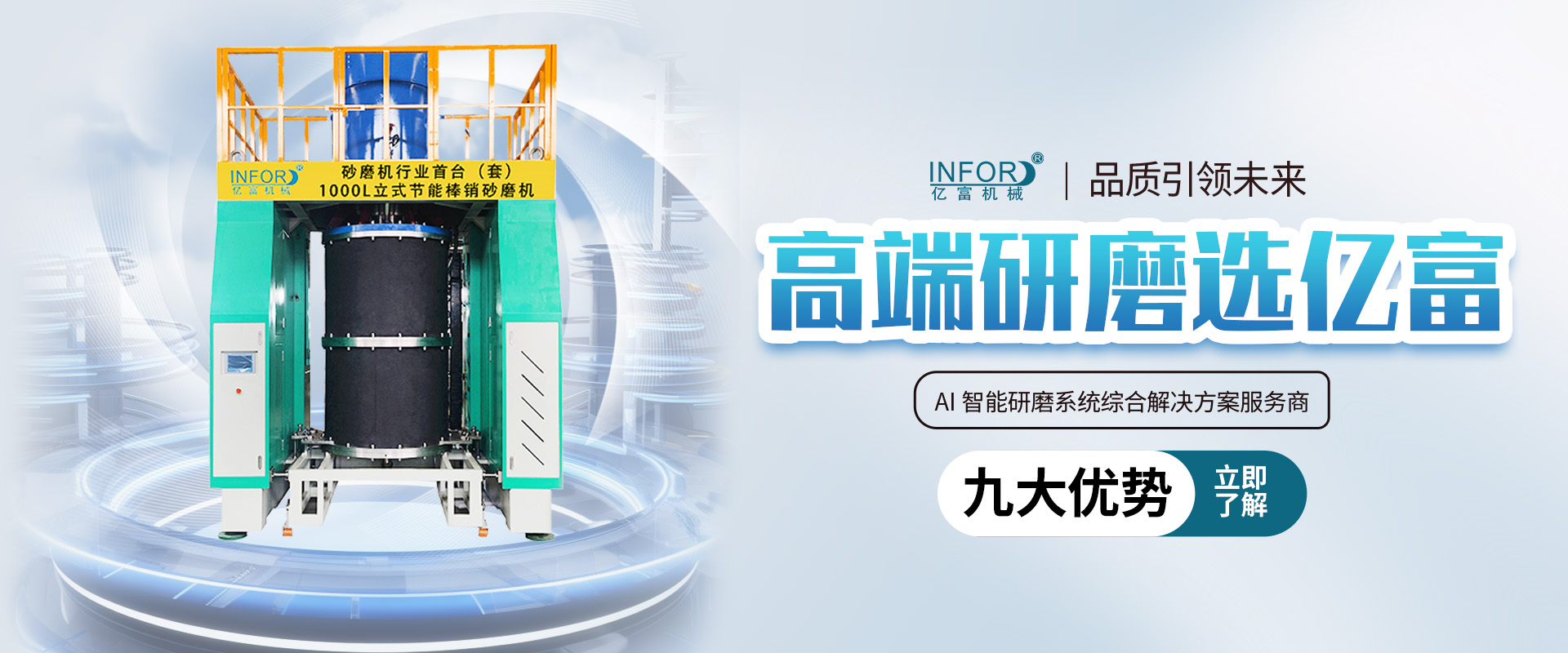
With its unique design and core advantages, the diaphragm pump has become an indispensable "conveying expert" in the sanding production line. In the future, with the advancement of material science and drive technology, the performance of diaphragm pumps will be improved to provide safer, more efficient and environmentally friendly fluid delivery solutions for more industries.

 English
 亿富机械
 +86-0769-85626082
 541476175@qq.com
 东莞市大岭山镇颜屋村莲颜路88号