Before the broken glass at the Champs Elysées in Paris was swept away, another bundle of charging pile cables was cut off at the high-speed service area in southern France.
The recent “European purchases for 0 yuan” that have flooded the Chinese Internet are half of the luxury goods showcases that were robbed during street riots, and half of them were charging copper wires that were bitten off by hydraulic pliers in the suburbs late at night.
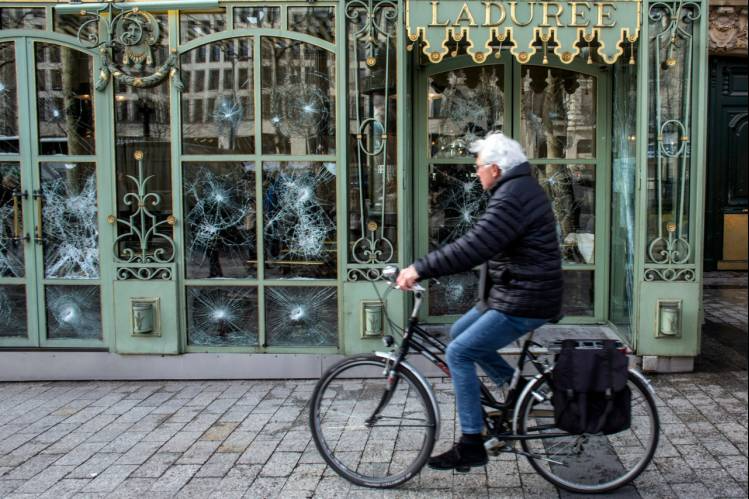
▲ On the Champs Elysées in Paris, the window of a long-established dessert shop was smashed into cracks after the riots. To the onlookers, it was a piece of news, but to the merchants, it was a loss they had to open the next day. (Photo: AP/Rafael Yaghobzadeh)
The former is like a reality show that is out of control, and the latter is like a small business that no one wants to report. But they are actually two sides of the same thing:
When energy bills, inflation and welfare decline squeeze the lives of ordinary people tighter and tighter, the green transformation that Europe is proud of is for the first time being "taken apart and sold for money" in a physical sense.
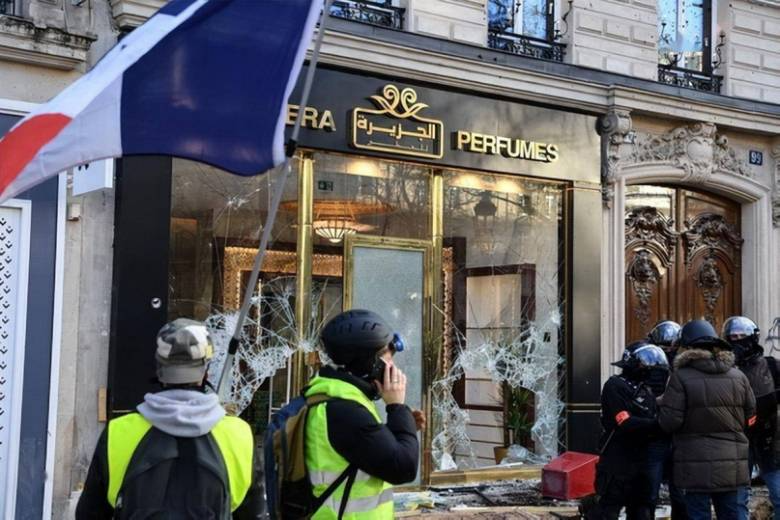
▲ Shop windows smashed during riots on the streets of Paris. The rush to grab copper wires spread from luxury stores to charging piles in suburbs. The other side of "zero yuan purchase" is the people's livelihood that is increasingly squeezed by energy bills and inflation.
Copper wires of tens of euros cost tens of thousands of euros
Many people think that "zero yuan purchase" is just a public security issue. Cutting a few wires and grabbing a few stores has nothing to do with the overall situation of new energy.
But pull the camera to the operator's backend, and you will see another set of numbers: A charging pile cable itself is only worth a few tens of euros, but once it is cut, the total loss of downtime for maintenance, dispatch of workers, spare parts, recalibration and outage often adds up to several thousand or even thousands. Up to 10,000 Euros; France has seen hundreds of charging cable theft cases this year, Germany's EnBW has been hit by hundreds of sites since 2025, with losses exceeding one million euros, and the UK's InstaVolt has lost more than 200 cables a year.
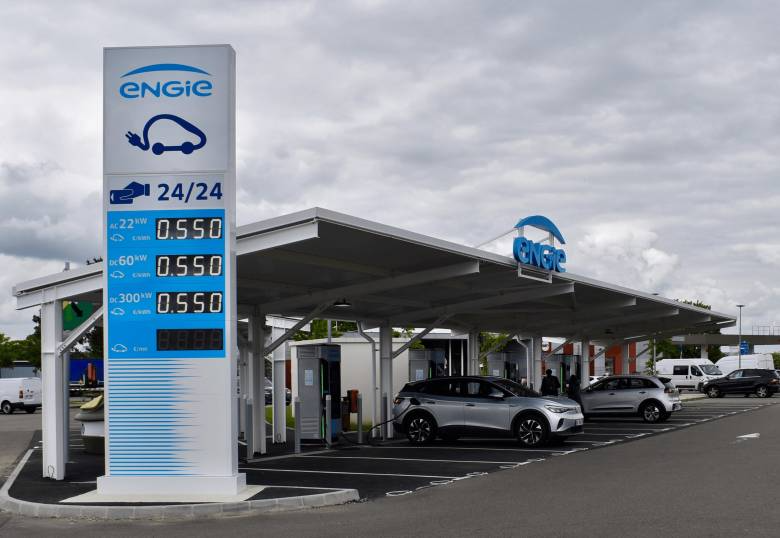
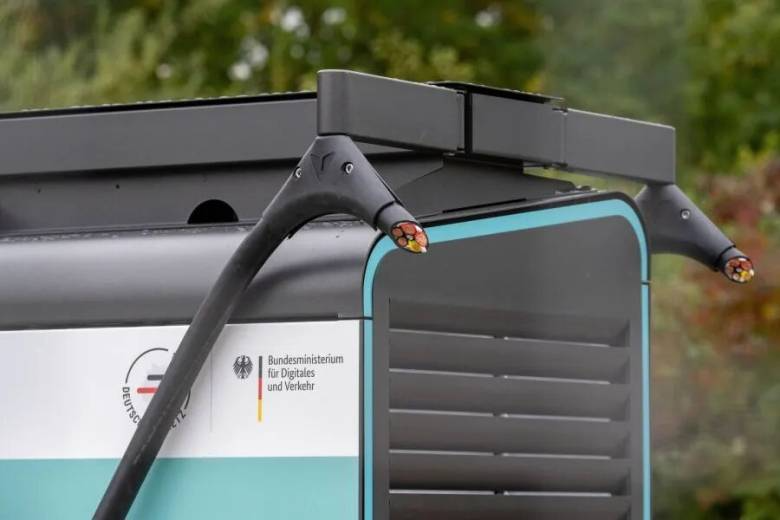
▲ The ENGIE Vianeo fast charging station in the French highway service area has multiple power levels from 22 to 300 kilowatts and is open around the clock. Such stations form the backbone of Europe's public charging network and are a hot spot for cable theft. (Photo: ENGIE Vianeo/Siemens)
In order to promote electrification, Europe has spent massive subsidies to build a public charging network, which is being shorted by a handful of hydraulic shears based on the "scrap copper price". This is not because “zero yuan purchase” has won, but because the depreciation logic of Europe’s new energy infrastructure has been fundamentally rewritten.
▲ The charging gun at a fast charging station in Germany was cut off, leaving only two pieces of copper core. EnBW said its more than 130 fast-charging stations have recorded more than 900 cable thefts since 2025, with losses in the millions of euros.
Battery Passport and Countervailing: Two Years in the Implementation of Rules
Looking further, the European new energy market has never been a cake that can be eaten only by relying on technology. It has a very thick policy foundation underneath.Subsidy reduction, countervailing duties, battery passports, carbon footprint classification, due diligence, proportion of recycled materials, foreign subsidy review... This set of rules has been implemented in the past two years. The essence is to change "you can come and sell" to "you must live according to my rules."
The EU's "New Battery Law" requires each power battery to carry a digital passport from 2027, and the carbon footprint, mineral sources, and recycling paths can all be checked; countervailing duties have significantly increased the export price of complete vehicles; foreign subsidy regulations require mergers and acquisitions and bidding to go through the political microscope first. On the surface, the policy governs cars and batteries, but it actually governs the interpretation power of the entire industrial chain.
A three-act drama of Chinese investment abroad: quotation, tariffs and compliance
Putting it on the timeline of Chinese investment overseas, this change is particularly dazzling.
Ten years ago, when Chinese companies looked at Europe, it was "I have the cost-effectiveness and you have the demand." Once the container arrived in Rotterdam, it was considered a success. Five years ago it became "I have production capacity, you have tariffs" and everyone started talking about price commitments and local assembly. Now, the rules have been changed to "I have standards, you have compliance costs."-Whether you can prove that this battery is not produced by high-carbon electricity, whether you can hire qualified workers locally, and whether you can embed all after-sales, recycling, and data interfaces into the European system will directly determine whether you are qualified to play on the poker table.
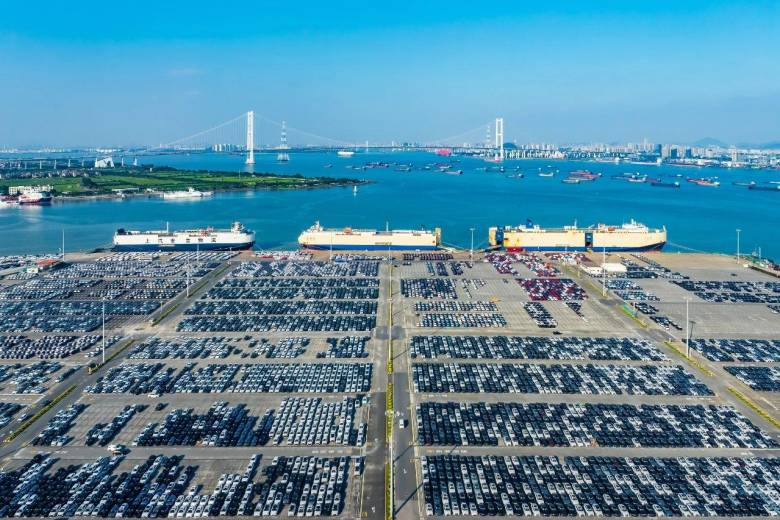
▲ At the Nansha Automobile Terminal of Guangzhou Port, a large number of new energy vehicles are lined up waiting to be shipped out to sea. Ten years ago, the arrival of a container in Rotterdam was considered a successful voyage; now this is just the first step in the process.
In the past, we were competing to see who had the lowest quotation. Now we are competing to see who can turn compliance into an operating system first, and who can become a "local interest community" in Europe first.
From "foreign suppliers" to "local industry nodes"
This also explains why "zero yuan purchase" and "countervailing" appear in the same story.
Those who grab things on the streets are grabbing the living space under inflation and high energy prices; those who write the rules in Brussels are grabbing the right to define the next generation industrial chain. One removes cables at the physical layer, and the other removes thresholds at the institutional level.
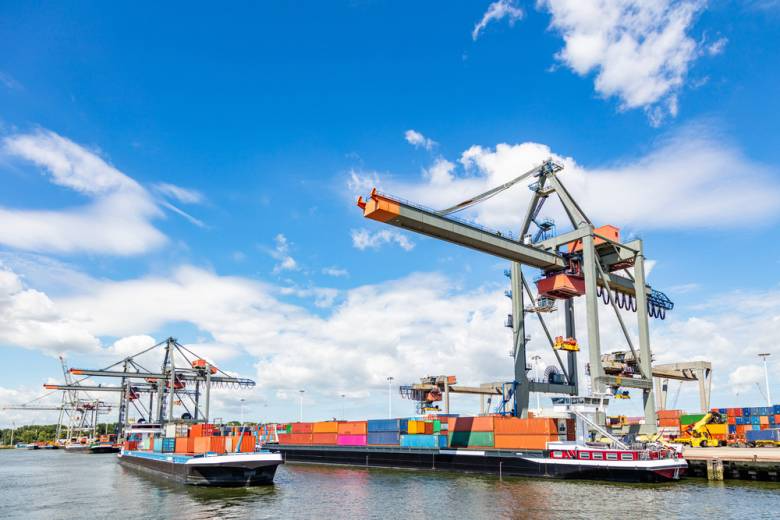
▲ Container terminal in the Port of Rotterdam. Europe's largest port was once the first stop for Chinese goods to go overseas, but now it is more like a watershed: what passed was goods, what remains is industry.
If Chinese-funded enterprises only focus on tariffs and exchange rates, they will miss the real main thread: Europe does not want China's new energy capabilities, but it wants to use the market to exchange industrial foundations - keep factories, research and development, taxation, and recycling systems here, and drive out pure trade arbitrage.
How to put"External suppliers"identity becomes"Local industry node",Only then can we sit in the conference room during the next round of rule updates instead of standing outside the hearing door.
The next ten years: Competition for licensing rights at the rules level
In the next ten years, the European new energy poker table will not disappear, but there will be fewer seats.
After all subsidies are withdrawn, the brands that remain will not necessarily be the loudest brands, but the brands that are the first toCompliance, localization and service networkA group of companies that weave into a web.
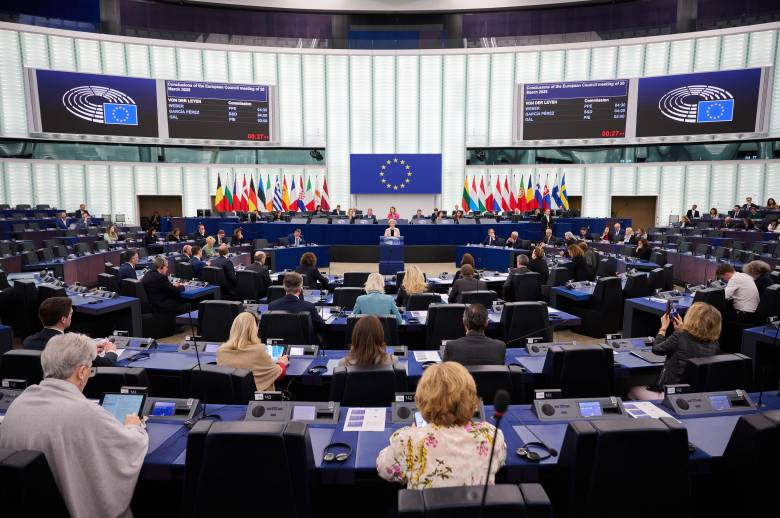
▲ The European Parliament plenary session in Strasbourg. Countervailing duties and battery law amendments will eventually be voted on in such a venue.
The "zero-yuan purchases" on the streets will eventually subside, but the "competition for licensing rights" at the regulatory level has just begun.
This round of smart equipment and industrial systems are going global with new energy, and their logic must also be upgraded.The real test question for Chinese investment abroad is never how to sell goods more expensively or cheaper, but whether it can replant itself in other people's soil.

 English
 亿富机械
 +86-0769-85626082
 541476175@qq.com
 东莞市大岭山镇颜屋村莲颜路88号
