— November 16th · Afternoon —
13:30 - 13:35
Opening Ceremony Host
Yang Xiaoyan, General Manager of Yifu Intelligence

On the afternoon of November 16, the "2026 New Energy and New Materials Industry Development Forum" officially opened! The forum focuses on lithium batteries, sodium batteries, solid-state and global new energy markets, putting materials, equipment and systems on the same industry map, talking about technology, trends, and the next turning point in real production lines.
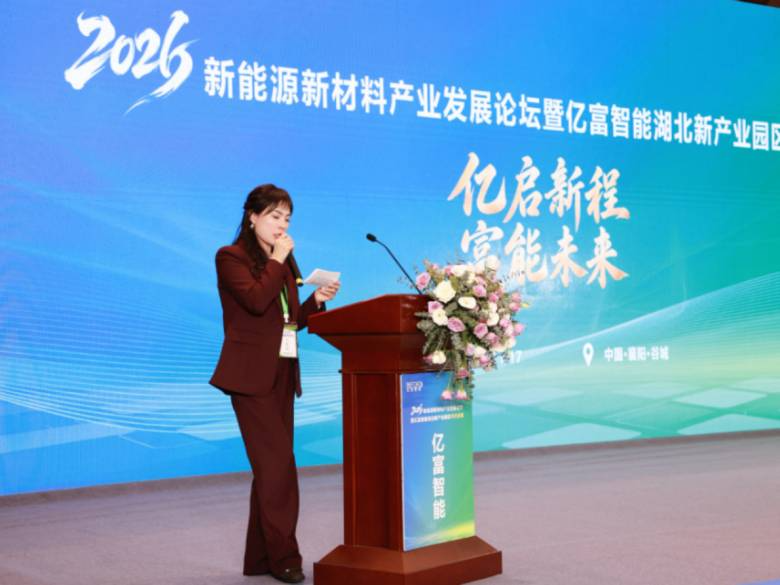
In this forum, Yifu General Manager Yang Xiaoyan served as the host and set the tone of the opening ceremony with "witnessing a new starting point in the morning and starting a feast of ideas in the afternoon", handing over the heat of the celebration to the professionals of the forum, allowing the rhythm of the entire opening ceremony to always adhere to the main line of "talking through real issues".
13:35 - 13:40
Speech by industry experts
Tang Yougen, Central South University Professor

Tang Yougen, is a second-level professor and doctoral supervisor at the School of Chemistry and Chemical Engineering, Central South University, director of the Institute of Chemical Power Sources and Materials, director of the Hunan Provincial Key Laboratory of Chemical Power Sources, counselor of the Hunan Provincial People's Government, and president of the Hunan Provincial Battery Industry Association. He has worked in Nature Communications, Advanced He has published more than 300 papers in journals such as Materials, and won 12 provincial and ministerial science and technology progress awards. He also serves as the chief scientist of Hunan Nake New Materials, promoting bamboo-based hard carbon anodes to kiloton-level production lines.
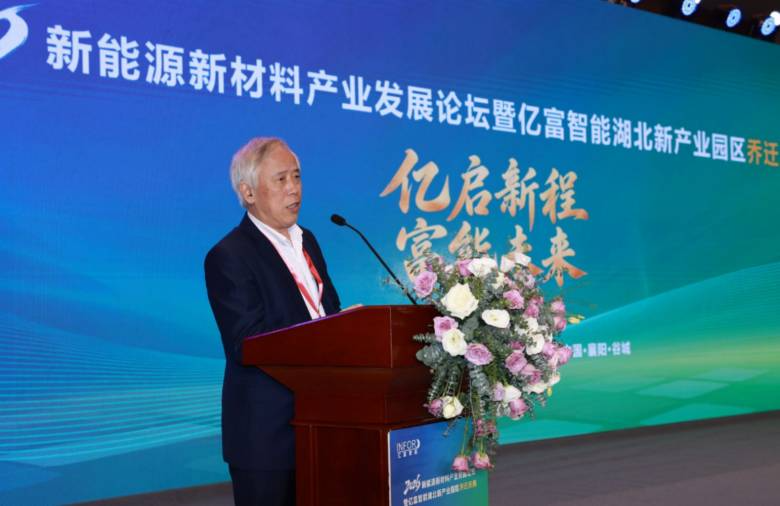
In his speech, Professor Tang pointed out that the new energy industry is moving from "scale expansion" to a key turning point of "technology improvement". Multiple technical routes such as lithium battery, sodium battery, and solid state are evolving in parallel. The depth of collaboration between material innovation and equipment upgrading will directly determine the industrialization boundary of next-generation battery technology. He called on the academic and industrial circles to be oriented by real problems and promote two-way research and production. He also wished this forum to become a high-value platform for technical exchanges and industrial cooperation, setting a professional and open tone for the entire forum.
13:40 - 14:00
High-end sand grinding production line: driving cost reduction, efficiency increase and quality upgrade of new energy materials
Chen Lu, General Manager of Yifu Intelligence

Chen Lu, General Manager of Yifu, leads the iteration of the company's product strategy and technical roadmap. He is the main promoter of the "process package + equipment" integrated delivery model. He is deeply involved in the overall planning of the horizontal to vertical grinding system, focusing on the balance between powder consistency and manufacturing cost in the long term.
In his speech, he systematically sorted out the application map of high-end sand mills in the new energy materials industry: horizontal sand mill series, horizontal large-scale production line equipment, vertical experimental machines, vertical large-scale production line equipment and LPM series vertical sand mills, and explained the technical indicators and advantages one by one; at the same time, he compared the differences in process, advantages and scope of application between horizontal and vertical sand grinding system EPC production lines, supplemented by detailed case analysis.
Mr. Chen specifically mentioned that Yifu's industry's first vertical grinding system started with the first 400L vertical nano-sand mill and has grown to 1000L and 2000L, leading the world. The 70,000-square-meter standardized production base is fully equipped with automated intelligent processing equipment, with a monthly production capacity of up to 1,000 units. While improving efficiency, it strictly controls quality and ensures delivery. The LPM series adopts a screenless centrifugal separation structure and can accommodate microbeads as low as 0.03mm. In scenarios such as high-pressure LFP, silicon-carbon anodes, and solid electrolyte slurries, it takes into account "fine grinding, no crystal breakage, controllable metal foreign matter, and continuous non-blocking of materials", and the particle size distribution CV value, dielectric loss and unit energy consumption are included in the process account book.
In one sentence, powder consistency is the foundation of material quality. Sanding is not a stand-alone business, but a joint construction of cost and technology moats. Yifu has moved from "selling equipment" to "being a process partner", connecting batching, grinding, grading, transportation and online data into a reproducible production line, allowing material factories to lock the yield rate and reduce the power consumption per ton in the early stage. This is the most practical capability left to the industry by the new park.
14:00 - 14:20
China's lithium iron phosphate market outlook from 2026 to 2028
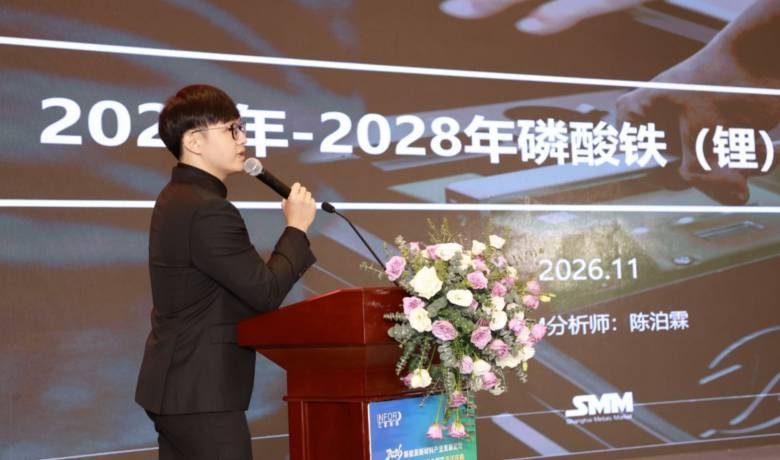
Chen Bolin Senior Analyst, Shanghai Nonferrous Metal Network (SMM)

Chen Bolin, senior analyst of lithium iron phosphate cathode materials in the New Energy Division of Shanghai Nonferrous Metal Industry Research Institute, has long been rooted in the front line of the lithium battery cathode industry chain. He focuses on the linkage analysis of phosphorus sources, iron sources, lithium sources, processing fees and long-term order structures, and outputs procurement strategies, mergers and acquisitions suggestions, and mid- and long-term price research and judgments for enterprises and investors. His judgments such as "high compaction product premium", "iron phosphate linked settlement" and "delayed release of effective production capacity" have been cited by many brokerage research reports and financial media.
In his speech, he pointed out that the rapid growth of energy storage combined with the accelerated production of new energy commercial vehicles is continuing to push up the proportion of lithium iron phosphate in the overall lithium battery; companies are actively expanding production, but effective and high-quality production capacity is still in short supply. The dominance of third-generation products as the mainstream will not last long - as the research and development of fourth- and fifth-generation high-pressure materials accelerates, their output proportion will gradually increase, and the increase in new production capacity will also make the leading market share narrow year by year.
SMM predicts that in 2027, the growth rate of iron lithium enterprises will be close to 30%, and the growth rate of iron phosphate process will be about 22%. After excluding the integration part, the growth rate of demand for purchased iron phosphate is relatively limited, roughly around 500,000 tons, while the new iron phosphate production capacity is relatively high, and the overall situation will still be in the surplus range. He further dissected it: on the one hand, it depends on whether the production capacity of the new projects can be fully realized; on the other hand, it depends on the pace of non-iron phosphate process advancement - even if the progress is slow, the underlying judgment of loose supply remains unchanged.
The implicit proposition for the upstream equipment side is that the fourth and fifth generations of high-pressure materials require narrower particle size distribution, lower metal foreign matter, and more stable batch consistency for front-end grinding. In the market fluctuations, who can help material manufacturers retain "fineness, no cracking, and low power consumption" at the same time? Who can survive the price war and stay on the certification list of leading customers.
14:20 - 14:40
Observe the development trends of materials and equipment from OEMs and consumer terminals
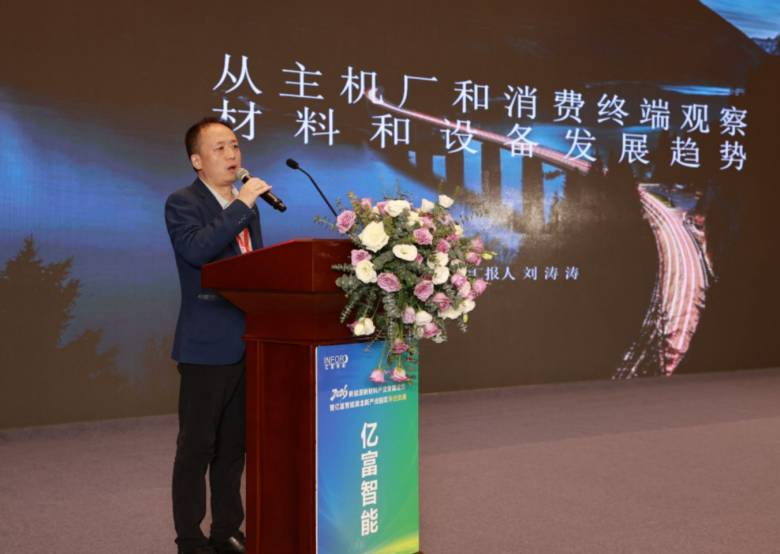
Liu Taotao Volkswagen (China) Battery and module quality control process expert

Liu Taotao is a battery and module quality control process expert at Volkswagen Group (China). He previously served as Volkswagen's battery and module technical manager. He was deeply involved in material selection, supplier process review and module manufacturing quality system construction under the Volkswagen Unified Cell architecture. He has long been rooted in vehicle-level acceptance standards and the establishment of multi-supplier quality standards. He is a process judge who stands at the "junction between the vehicle end and the battery end".
In his speech, he said that current new materials such as lithium iron manganese phosphate and sodium phosphate still have outstanding problems. The market size is relatively small and there is no prerequisite for large-scale expansion of production. In the future, the positive electrode of power batteries will be mainly lithium iron phosphate, matched with a small amount of high-nickel ternary, and the negative electrode will still be mainly artificial graphite. He sorted out the evolution paths of the main battery cell forms such as soft pack, square, large cylindrical and solid-state batteries, and pointed out that the middle process of square battery cells has the greatest manufacturing value, and the production bottleneck is concentrated in the battery core forming process. The two routes of winding and lamination put forward new requirements for the reuse of equipment parameters.
He particularly emphasized the true meaning of "car-grade": it is not about running through a round of data in the laboratory, but about controllable tail risks in 100,000 cycles. Rapid power loss in winter, bulging after fast charging, unexpected three-year attenuation, thermal runaway after collision - these user-side pain points will eventually be traced back to the consistency of material batches and the uniformity of dispersion in the previous stage. For battery cell factories, full inspection and traceability are not a cost burden, but a ticket to enter the whitelist of leading car companies.
The direct inspiration for equipment companies is: Sanding, dispersion, and grading equipment must output recordable, reproducible, and auditable process data. What OEMs no longer want is "equipment can rotate", but "evidence in every micron". After 2026, the focus will be on integrating upstream and downstream in smart factories, continuously optimizing the efficiency of intermediate links such as inventory, and further reducing manufacturing costs - equipment digitization is an unavoidable prerequisite.
14:40 - 15:00
Market Prospects of High-Performance Batteries in Emerging Fields
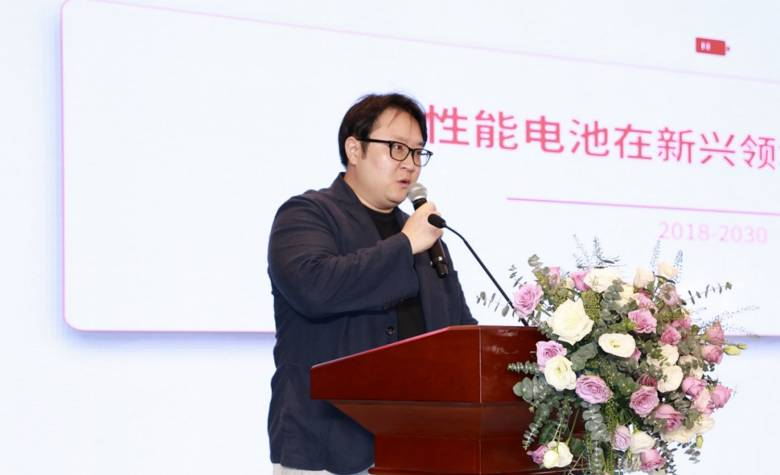
Zeng Zi Vice President of Neng Yuan Technology

Mr. Zeng Zi, Vice President of Neng Yuan Technology Co., Ltd., graduated from Ocean University of China with a master's degree. He has successively served as secretary to the chairman of Zhongwei Co., Ltd., director of strategic management and general manager of the customer development center of Rongbai Technology, and has been deeply involved in the strategic planning and market development of two leading materials companies. Currently, he is the vice president of Nengyuan Technology and is fully responsible for bulk material supply chain procurement and resource-side investment. Nengyuan Technology is the first company in the world to achieve mass production of lithium metal rechargeable batteries. Its high-power cylindrical batteries occupy a high-quality share in the European and American aircraft and orbital satellite battery markets.
In his speech, he judged that in the next five years, the global battery market will be divided into "extreme cost iron-lithium general market" and "extreme performance high-nickel niche market"; power and energy storage will still maintain a compound growth rate of nearly 30% in total lithium battery shipments with a huge base. The demand for lithium batteries in emerging fields will increase from less than 60GWh to over 600GWh, an increase of more than ten times, becoming the main driving force. The macro background is the dual characteristics of "AI computing power driven" and "low-carbon physical world" from 2026 to 2030, and energy demand has experienced the second exponential jump since the industrial revolution.
He further dissected the hard indicators of emerging scenarios: the low-altitude economy is driven by the opening of airspace, commercial aerospace is driven by the development of capital and space resources, and robots are driven by the global aging labor shortage. These three types of scenarios require high power density, wide temperature range operation, and extreme reliability, which far exceeds conventional vehicle regulations. At the same time, the global economy may shift from "stock game" to "competition for energy sovereignty," new energy has jumped from an environmentally friendly option to a national security base, and localized supply chains in Europe and the United States have become a rigid demand.
Back to materials and equipment, this kind of scenario has pushed the front-end powder grinding, slurry dispersion and pole piece consistency to a higher level of requirements: lithium metal anodes, high-nickel cathodes, and high-solid solid slurries do not allow particle size drift and metal foreign matter to be trapped. Equipment is no longer a purchase item at the end of the production line, but an invisible threshold for "whether you dare to mass-produce in emerging scenarios". Whoever can replicate the process from the laboratory to the 10,000-ton production line will be able to receive the next wave of high-performance battery orders.
The special opening ceremony on the afternoon of the 16th pinned the three clues of "materials-equipment-terminals" on the same map: technology must be advanced, data must be entered into the ledger, and standards must be global.
The review of the global market, lithium battery, sodium battery and comprehensive technology will continue to be dismantled. We will share the industry judgments that have been repeatedly verified in the forum and explain them to the production line!
— November 16th · Afternoon —
13:30 - 13:35
Opening Ceremony Host
Yang Xiaoyan, General Manager of Yifu Intelligence

On the afternoon of November 16, the "2026 New Energy and New Materials Industry Development Forum" officially opened! The forum focuses on lithium batteries, sodium batteries, solid-state and global new energy markets, putting materials, equipment and systems on the same industry map, talking about technology, trends, and the next turning point in real production lines.
In this forum, Yifu General Manager Yang Xiaoyan served as the host and set the tone of the opening ceremony with "witnessing a new starting point in the morning and starting a feast of ideas in the afternoon", handing over the heat of the celebration to the professionals of the forum, allowing the rhythm of the entire opening ceremony to always adhere to the main line of "talking through real issues".
13:35 - 13:40
Speech by industry experts
Tang Yougen, Central South University Professor

Tang Yougen, is a second-level professor and doctoral supervisor at the School of Chemistry and Chemical Engineering, Central South University, director of the Institute of Chemical Power Sources and Materials, director of the Hunan Provincial Key Laboratory of Chemical Power Sources, counselor of the Hunan Provincial People's Government, and president of the Hunan Provincial Battery Industry Association. He has worked in Nature Communications, Advanced He has published more than 300 papers in journals such as Materials, and won 12 provincial and ministerial science and technology progress awards. He also serves as the chief scientist of Hunan Nake New Materials, promoting bamboo-based hard carbon anodes to kiloton-level production lines.
In his speech, Professor Tang pointed out that the new energy industry is moving from "scale expansion" to a key turning point of "technology improvement". Multiple technical routes such as lithium battery, sodium battery, and solid state are evolving in parallel. The depth of collaboration between material innovation and equipment upgrading will directly determine the industrialization boundary of next-generation battery technology. He called on the academic and industrial circles to be oriented by real problems and promote two-way research and production. He also wished this forum to become a high-value platform for technical exchanges and industrial cooperation, setting a professional and open tone for the entire forum.
13:40 - 14:00
High-end sand grinding production line: driving cost reduction, efficiency increase and quality upgrade of new energy materials
Chen Lu, General Manager of Yifu Intelligence

Chen Lu, General Manager of Yifu, leads the iteration of the company's product strategy and technical roadmap. He is the main promoter of the "process package + equipment" integrated delivery model. He is deeply involved in the overall planning of the horizontal to vertical grinding system, focusing on the balance between powder consistency and manufacturing cost in the long term.
In his speech, he systematically sorted out the application map of high-end sand mills in the new energy materials industry: horizontal sand mill series, horizontal large-scale production line equipment, vertical experimental machines, vertical large-scale production line equipment and LPM series vertical sand mills, and explained the technical indicators and advantages one by one; at the same time, he compared the differences in process, advantages and scope of application between horizontal and vertical sand grinding system EPC production lines, supplemented by detailed case analysis.
Mr. Chen specifically mentioned that Yifu's industry's first vertical grinding system started with the first 400L vertical nano-sand mill and has grown to 1000L and 2000L, leading the world. The 70,000-square-meter standardized production base is fully equipped with automated intelligent processing equipment, with a monthly production capacity of up to 1,000 units. While improving efficiency, it strictly controls quality and ensures delivery. The LPM series adopts a screenless centrifugal separation structure and can accommodate microbeads as low as 0.03mm. In scenarios such as high-pressure LFP, silicon-carbon anodes, and solid electrolyte slurries, it takes into account "fine grinding, no crystal breakage, controllable metal foreign matter, and continuous non-blocking of materials", and the particle size distribution CV value, dielectric loss and unit energy consumption are included in the process account book.
In one sentence, powder consistency is the foundation of material quality. Sanding is not a stand-alone business, but a joint construction of cost and technology moats. Yifu has moved from "selling equipment" to "being a process partner", connecting batching, grinding, grading, transportation and online data into a reproducible production line, allowing material factories to lock the yield rate and reduce the power consumption per ton in the early stage. This is the most practical capability left to the industry by the new park.
14:00 - 14:20
China's lithium iron phosphate market outlook from 2026 to 2028
Chen Bolin Senior Analyst, Shanghai Nonferrous Metal Network (SMM)

Chen Bolin, senior analyst of lithium iron phosphate cathode materials in the New Energy Division of Shanghai Nonferrous Metal Industry Research Institute, has long been rooted in the front line of the lithium battery cathode industry chain. He focuses on the linkage analysis of phosphorus sources, iron sources, lithium sources, processing fees and long-term order structures, and outputs procurement strategies, mergers and acquisitions suggestions, and mid- and long-term price research and judgments for enterprises and investors. His judgments such as "high compaction product premium", "iron phosphate linked settlement" and "delayed release of effective production capacity" have been cited by many brokerage research reports and financial media.
In his speech, he pointed out that the rapid growth of energy storage combined with the accelerated production of new energy commercial vehicles is continuing to push up the proportion of lithium iron phosphate in the overall lithium battery; companies are actively expanding production, but effective and high-quality production capacity is still in short supply. The dominance of third-generation products as the mainstream will not last long - as the research and development of fourth- and fifth-generation high-pressure materials accelerates, their output proportion will gradually increase, and the increase in new production capacity will also make the leading market share narrow year by year.
SMM predicts that in 2027, the growth rate of iron lithium enterprises will be close to 30%, and the growth rate of iron phosphate process will be about 22%. After excluding the integration part, the growth rate of demand for purchased iron phosphate is relatively limited, roughly around 500,000 tons, while the new iron phosphate production capacity is relatively high, and the overall situation will still be in the surplus range. He further dissected it: on the one hand, it depends on whether the production capacity of the new projects can be fully realized; on the other hand, it depends on the pace of non-iron phosphate process advancement - even if the progress is slow, the underlying judgment of loose supply remains unchanged.
The implicit proposition for the upstream equipment side is that the fourth and fifth generations of high-pressure materials require narrower particle size distribution, lower metal foreign matter, and more stable batch consistency for front-end grinding. In the market fluctuations, who can help material manufacturers retain "fineness, no cracking, and low power consumption" at the same time? Who can survive the price war and stay on the certification list of leading customers.
14:20 - 14:40
Observe the development trends of materials and equipment from OEMs and consumer terminals
Liu Taotao Volkswagen (China) Battery and module quality control process expert

Liu Taotao is a battery and module quality control process expert at Volkswagen Group (China). He previously served as Volkswagen's battery and module technical manager. He was deeply involved in material selection, supplier process review and module manufacturing quality system construction under the Volkswagen Unified Cell architecture. He has long been rooted in vehicle-level acceptance standards and the establishment of multi-supplier quality standards. He is a process judge who stands at the "junction between the vehicle end and the battery end".
In his speech, he said that current new materials such as lithium iron manganese phosphate and sodium phosphate still have outstanding problems. The market size is relatively small and there is no prerequisite for large-scale expansion of production. In the future, the positive electrode of power batteries will be mainly lithium iron phosphate, matched with a small amount of high-nickel ternary, and the negative electrode will still be mainly artificial graphite. He sorted out the evolution paths of the main battery cell forms such as soft pack, square, large cylindrical and solid-state batteries, and pointed out that the middle process of square battery cells has the greatest manufacturing value, and the production bottleneck is concentrated in the battery core forming process. The two routes of winding and lamination put forward new requirements for the reuse of equipment parameters.
He particularly emphasized the true meaning of "car-grade": it is not about running through a round of data in the laboratory, but about controllable tail risks in 100,000 cycles. Rapid power loss in winter, bulging after fast charging, unexpected three-year attenuation, thermal runaway after collision - these user-side pain points will eventually be traced back to the consistency of material batches and the uniformity of dispersion in the previous stage. For battery cell factories, full inspection and traceability are not a cost burden, but a ticket to enter the whitelist of leading car companies.
The direct inspiration for equipment companies is: Sanding, dispersion, and grading equipment must output recordable, reproducible, and auditable process data. What OEMs no longer want is "equipment can rotate", but "evidence in every micron". After 2026, the focus will be on integrating upstream and downstream in smart factories, continuously optimizing the efficiency of intermediate links such as inventory, and further reducing manufacturing costs - equipment digitization is an unavoidable prerequisite.
14:40 - 15:00
Market Prospects of High-Performance Batteries in Emerging Fields
Zeng Zi Vice President of Neng Yuan Technology

Mr. Zeng Zi, Vice President of Neng Yuan Technology Co., Ltd., graduated from Ocean University of China with a master's degree. He has successively served as secretary to the chairman of Zhongwei Co., Ltd., director of strategic management and general manager of the customer development center of Rongbai Technology, and has been deeply involved in the strategic planning and market development of two leading materials companies. Currently, he is the vice president of Nengyuan Technology and is fully responsible for bulk material supply chain procurement and resource-side investment. Nengyuan Technology is the first company in the world to achieve mass production of lithium metal rechargeable batteries. Its high-power cylindrical batteries occupy a high-quality share in the European and American aircraft and orbital satellite battery markets.
In his speech, he judged that in the next five years, the global battery market will be divided into "extreme cost iron-lithium general market" and "extreme performance high-nickel niche market"; power and energy storage will still maintain a compound growth rate of nearly 30% in total lithium battery shipments with a huge base. The demand for lithium batteries in emerging fields will increase from less than 60GWh to over 600GWh, an increase of more than ten times, becoming the main driving force. The macro background is the dual characteristics of "AI computing power driven" and "low-carbon physical world" from 2026 to 2030, and energy demand has experienced the second exponential jump since the industrial revolution.
He further dissected the hard indicators of emerging scenarios: the low-altitude economy is driven by the opening of airspace, commercial aerospace is driven by the development of capital and space resources, and robots are driven by the global aging labor shortage. These three types of scenarios require high power density, wide temperature range operation, and extreme reliability, which far exceeds conventional vehicle regulations. At the same time, the global economy may shift from "stock game" to "competition for energy sovereignty," new energy has jumped from an environmentally friendly option to a national security base, and localized supply chains in Europe and the United States have become a rigid demand.
Back to materials and equipment, this kind of scenario has pushed the front-end powder grinding, slurry dispersion and pole piece consistency to a higher level of requirements: lithium metal anodes, high-nickel cathodes, and high-solid solid slurries do not allow particle size drift and metal foreign matter to be trapped. Equipment is no longer a purchase item at the end of the production line, but an invisible threshold for "whether you dare to mass-produce in emerging scenarios". Whoever can replicate the process from the laboratory to the 10,000-ton production line will be able to receive the next wave of high-performance battery orders.
The special opening ceremony on the afternoon of the 16th pinned the three clues of "materials-equipment-terminals" on the same map: technology must be advanced, data must be entered into the ledger, and standards must be global.
The review of the global market, lithium battery, sodium battery and comprehensive technology will continue to be dismantled. We will share the industry judgments that have been repeatedly verified in the forum and explain them to the production line!