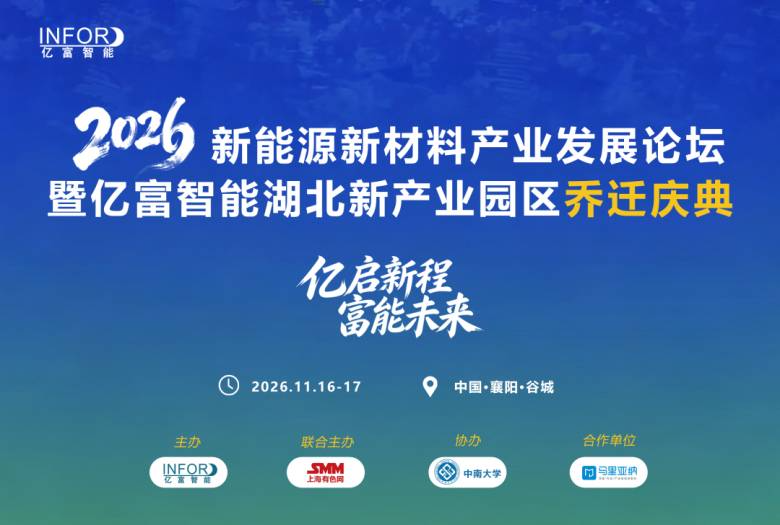
November 16-17, 2026, Gucheng, Xiangyang, Hubei.
On the day of the celebration of Yifu Intelligent Hubei New Industrial Park, the forum's focus broadened from "positive electrode main materials" to "carbon-based auxiliary materials and negative electrode carriers." When the global battery industry is squeezed by three things at the same time - cost red lines, low-carbon compliance, and supply chain regionalization, carbon is no longer just a supporting role in the conductive agent, but the protagonist of hard carbon anodes, CNT conductive networks, and silicon-based porous carbon.
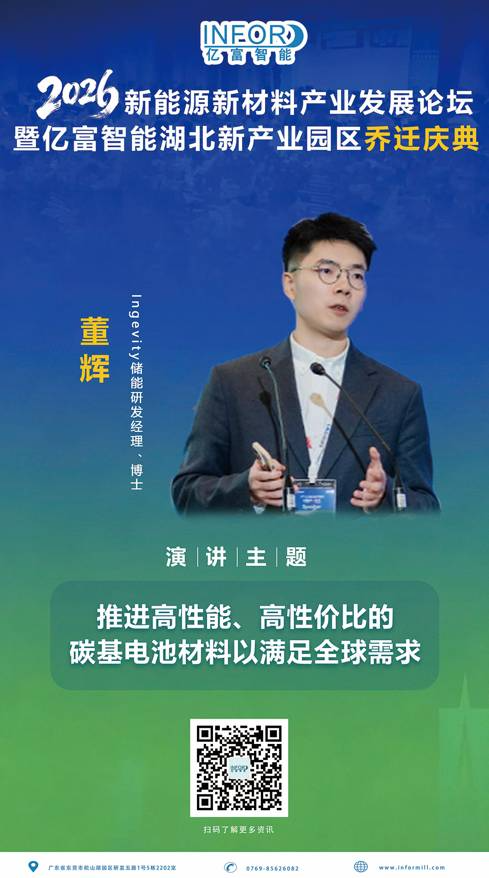
In this round of "carbon materials redefine battery cell economics", we invited an electrochemistry practitioner who spans upstream lithium resources, mid-range battery cells and downstream car company applications - Dr. Hui Dong, Ingevity energy storage R&D manager . He officially confirmed to attend this forum and the moving celebration of Yifu Intelligent Hubei New Industrial Park, and will bring a keynote report"Advancing high-performance, cost-effective carbon-based battery materials to meet global demand". From local CNT supply in North America to lignin-based hard carbon consumption reduction of 45%, he will explain "what kind of carbon global battery factories need" in one go.
The R&D operator who pushed the "full electrochemistry link" into the development of carbon materials
Dr. Dong Hui received a doctorate and postdoctoral training in electrochemistry. He has been in the battery industry for more than ten years, and his career track covers the upstream, middle and downstream of the industrial chain:He once worked at Albemarle to participate in the development of upstream lithium resources and material systems, and worked at Our Next Energy to do battery cell pilot testing and product definition, and then joined Rivian and Toyota to delve into downstream vehicle applications and failure feedback. He will join Ingevity in 2024 as an energy storage R&D manager, leading the battery-level verification and scenario development of hard carbon, carbon nanotubes, and silicon-based carbon materials.
At Ingevity, he transformed his "full-link perspective" into material indicators: hard carbon anodes not only look at gram capacity, but also first efficiency, low temperature and mass production consistency; CNT conductive agents not only look at tube diameter, but also narrow distribution, low residue and high-rate cycling; lignin-based precursors must take into account both low cost and low carbon footprint. Relying on more than 40 years of experience in automotive carbon materials, Ingevity has deployed local supply of NTeC®-E carbon nanotubes in North America and Europe through CHASM authorization, and at the same time promoted the pilot and scale-up of biomass hard carbon (NaCarb technology). Dr. Dong Hui’s work is to polish these carbon materials from “laboratory data” to “car-grade delivery”.
In-depth echo with the theme of the forum "New Energy and New Materials"
Dr. Dong Hui’s report"Advancing high-performance, cost-effective carbon-based battery materials to meet global demand", just catches the underlying proposition of this forum "new materials drive new batteries":
The report will be broken down into three layers to look at: material layer - hard carbon makes sodium electric energy storage cost-effective, CNT allows high nickel and silicon anodes to handle the rate and expansion, porous carbon and dispersant determine the uniformity of the pole piece and slurry stability; cost layer - using biomass lignin to replace fossil precursors Specifically, the production temperature of hard carbon can be reduced by 100-150°C, energy consumption and carbon footprint are significantly reduced, turning "green" from a certification label to a manufacturing variable; at the global level - European and American battery factories want not just cheap carbon, but a supply system that is traceable, localizable, and reproducible in batches. Carbon materials are being upgraded from "additives" to "regional supply chain fulcrums."
For material factories, it provides vehicle regulatory verification paths for carbon-based products; for battery cell factories, it reminds that conductive networks and negative electrode structures must be designed in advance; for equipment companies such as Yifu, it means that sanding, dispersing, and grading equipment must be adapted to the high solid content and low agglomeration process of biomass hard carbon, CNT slurry, and silicon-carbon negative electrodes. The next step for carbon-based materials is not to “add a little bit to get better”, but to “start over if you can’t disperse it.”
In the golden autumn of November, Gucheng’s new garden opens
From November 16th to 17th, the new park and forum opened simultaneously in Gucheng, Xiangyang, Hubei! It is recommended that all friends who are engaged in hard carbon, conductive agents, silicon-based anodes and overseas battery projects save their seats: listen to Dr. Dong Hui explain clearly "how high performance and low cost can occur in carbon materials at the same time" from Ingevity's global R&D perspective; also see how Yifu's new production line uses high-precision dispersion to catch up with the process rhythm of biomass hard carbon and CNT mass production. The relocation is not a ribbon-cutting, but a front-line carbon material team like Yifu and Ingevit working together to stabilize the "carbon base" of global batteries.
Start a new journey with you in Gucheng, see you there!
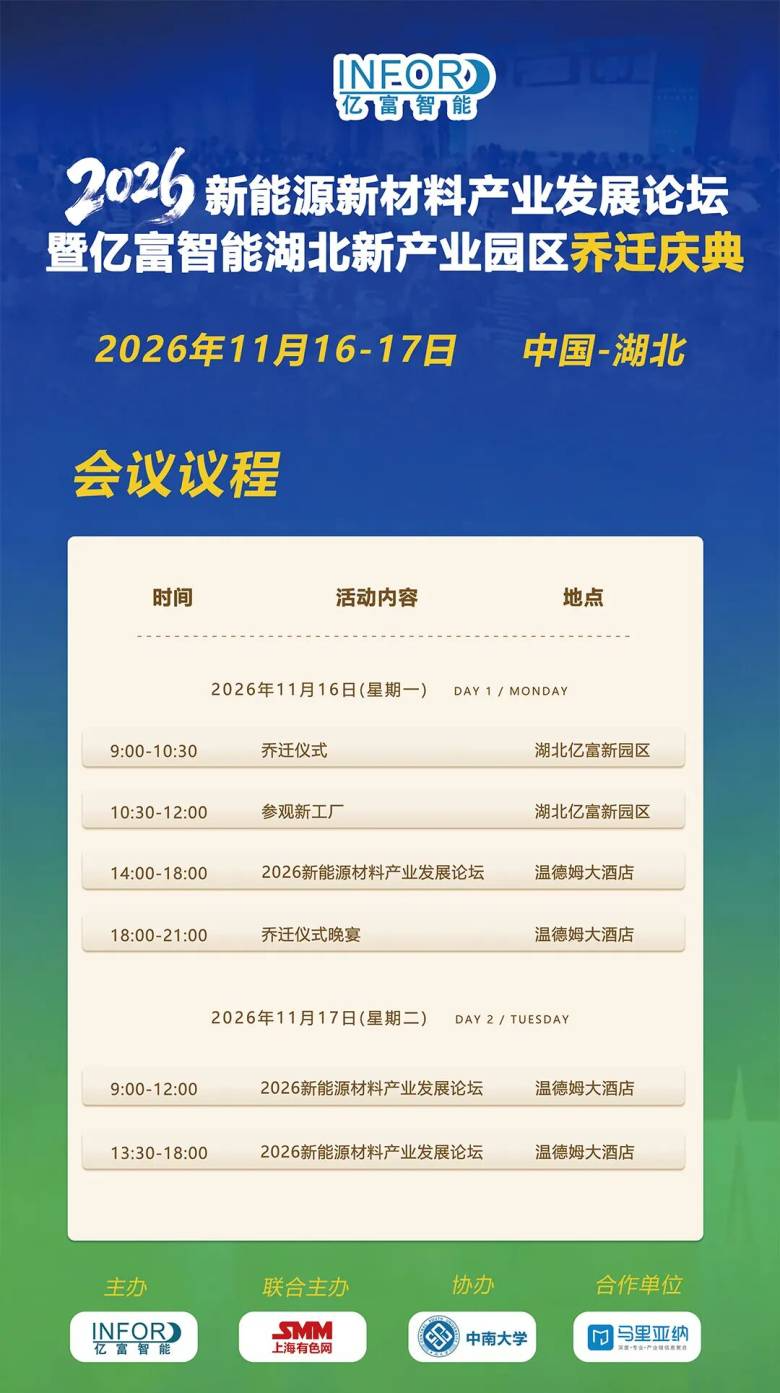
2026 New Energy and New Materials Industry Development Forum and Yifu Intelligent Hubei New Industrial Park Moving Celebration
Time:November 16-17, 2026 | Location: Gucheng, Xiangyang, Hubei, China
Speaker:Dr. Dong Hui (Ingevity Energy Storage R&D Manager)
Speech Topic:"Advancing high-performance, cost-effective carbon-based battery materials to meet global demand"
Sponsor:Yifu Intelligent
Co-organizer:Shanghai Nonferrous Network
Co-organizer:Central South University
Support:Gucheng County People's Government
 English
 亿富机械
 +86-0769-85626082
 541476175@qq.com
 东莞市大岭山镇颜屋村莲颜路88号