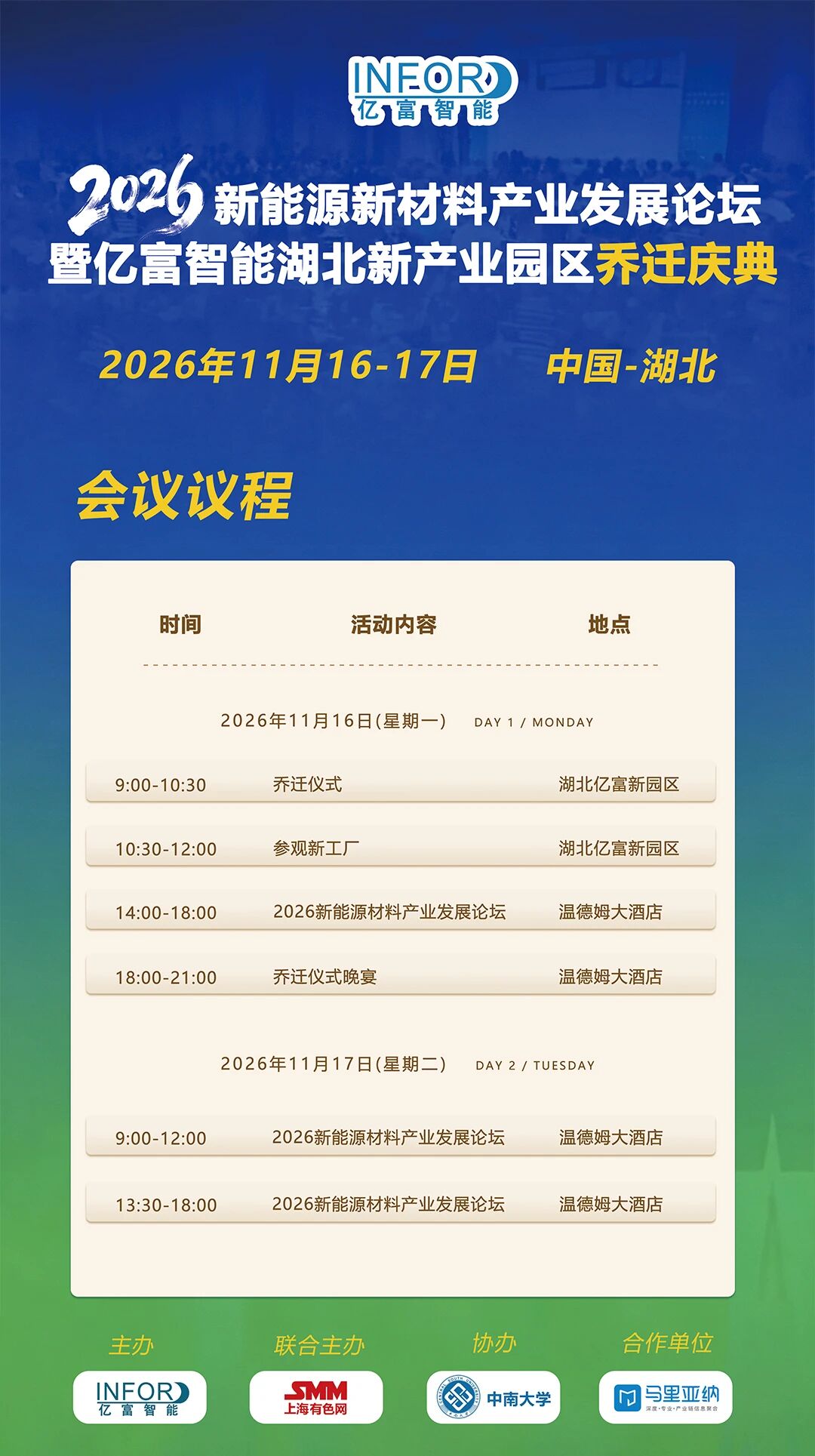
November 16-17, 2026, Gucheng, Xiangyang, Hubei.
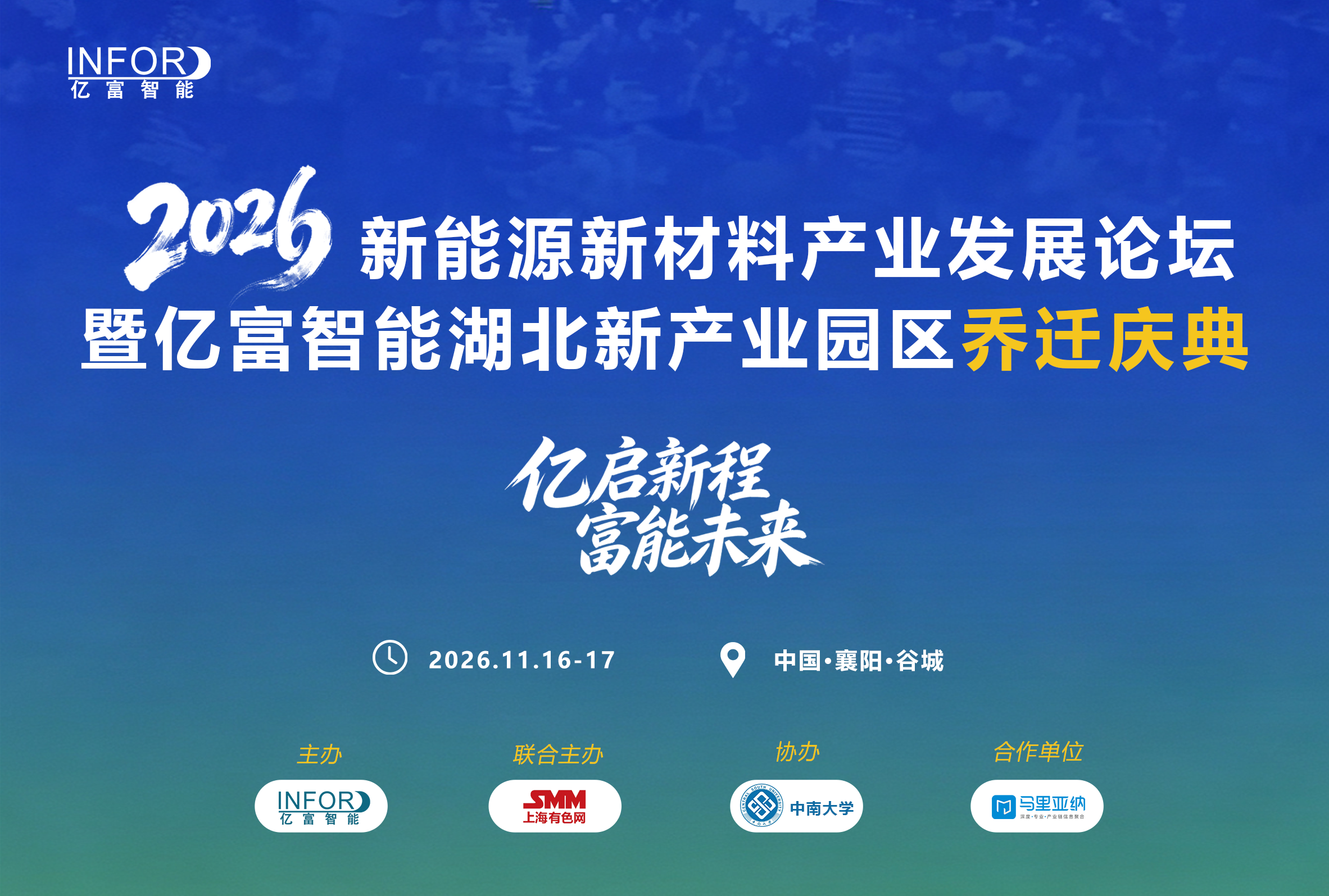
The new garden is located in Jingchu, and the sodium and electricity special lecture is taking advantage of the opportunity. As the Yifu Intelligent Hubei New Industrial Park moves from "construction drawings" to mass production sites, the focus of competition for new energy materials has also shifted from "whether they can be made" to "whether they can serve stably in a wide temperature range, high magnification, and long cycles."
On this occasion of the opening of the new park + the parallel industry forum, we welcome a young scientist who has been deeply involved in the layered oxide cathode of sodium-ion batteries for a long time and has made "crystal structure control" into the "cell performance language" - Professor Xiao Yao from the School of Chemistry and Materials Engineering of Wenzhou University. He is officially confirmed to attend the 2026 New Energy and New Materials Industry Development Forum and Yifu Intelligent Hubei New Industrial Park's relocation, and will bring a keynote report "Research on the Mechanism and Application of Adaptive Sodium Electric Layered Oxide Cathode at the Celebration".
From charge reconstruction to adaptive structure: a sodium-electricity researcher who "explained" layered oxides
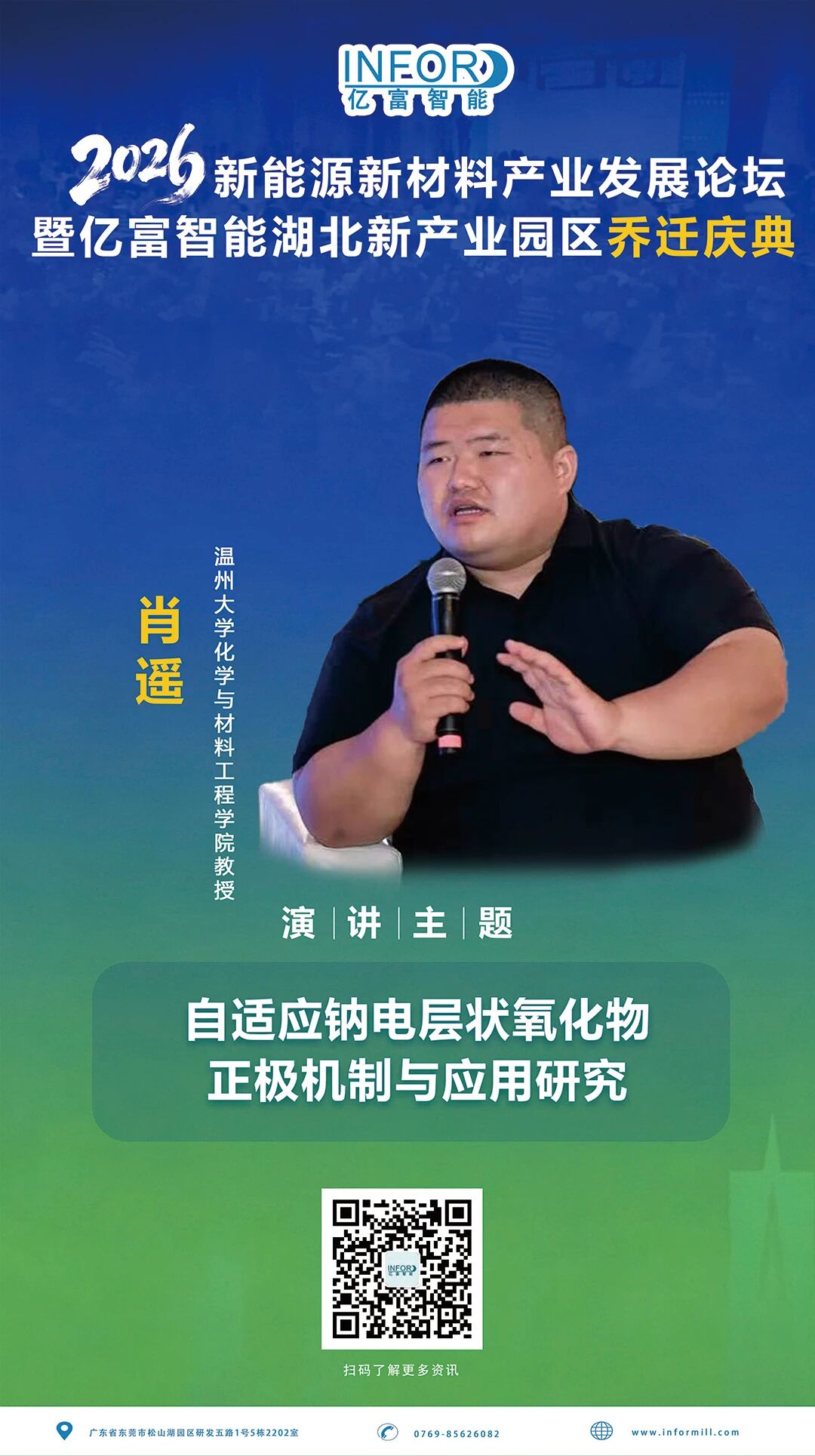
Xiao Yao - Oujiang Distinguished Professor (Class A) of Wenzhou University, doctoral supervisor, executive vice president of the Carbon Neutral Research Institute, deputy secretary-general of the Academic Committee of the World Young Scientists Summit, was selected into the National Major Talent Project Youth Project, and has been continuously selected into the top 2% of Stanford University scientists in the world.
He has long focused on the basic scientific issues and industrial applications of layered oxide cathode materials for sodium-ion batteries, and conducted systematic research around the three main lines of structural stability control, interface electrochemical reaction mechanism, and ion transport dynamics:
• Adaptive structure mechanism: Propose a multi-element strategy to collaboratively regulate the local electronic structure of transition metal-oxygen, allowing the material to actively adjust the lattice volume and internal stress during the sodium deintercalation process, showing an adaptive evolution of "first expansion and then contraction", suppressing phase transitions and micro-cracks under high voltage;
• Interface and doping engineering: using non-metallic modifications such as boron control to build a B–O–TM strong bond network, from bulk doping to interface reconstruction, taking into account air stability, high temperature stability and rate performance;
• Advanced characterization feeds back material design: Analyze charge density and electric field distribution at the atomic scale with the help of 4D-STEM, in-situ electrochemistry and other methods, and translate "invisible interlayer stress" into designable structural parameters;
• Industrial application exploration: Host the National Key R&D Program Young Scientist Project, the National Natural Science Foundation of China/Youth Project, major research projects in Zhejiang Province and Wenzhou City, and promote the layered oxide cathode from coin cell verification to soft package and energy storage scenario adaptation.
In the eyes of peers, Xiao Yao's team has very distinctive characteristics: it not only explains clearly "why it is stable" in journals such as Nature Communications, JACS, Angew, AM, EES, etc., but also cares about whether this stability can be left after batching of powder, dispersion of slurry and compaction of pole pieces.
In-depth echo with the theme of the forum "New Energy and New Materials"
Professor Xiao Yao's theme report "Research on the Mechanism and Application of Adaptive Sodium Electric Layered Oxide Cathode" deeply echoes the core concerns of this "New Energy and New Materials" forum:
The report will jump out of a purely academic perspective and from the perspective of industrial implementation, systematically explain the structural degradation mechanism of layered oxide cathode materials under wide temperature range and high rate working conditions, and focus on how the "adaptive" evolution of the material crystal structure directly determines the cycle life and gas production suppression of the battery core. At a critical juncture in the current industrialization of sodium electricity moving towards energy storage and power scenarios, this research directly addresses the performance attenuation pain points caused by insufficient powder consistency and uncontrollable interface side reactions when cathode materials move from the laboratory to large-scale mass production.
This not only points out the direction of molecular-level design of highly stable cathodes for material companies, but also provides a valuable basis for dialogue between the upstream and downstream of the industry chain.
The new garden opens, an on-site class on "Positive Self-Healing"
At the opening speech of the new park, Professor Xiao Yao will condense the above research into a sharing for the industry:
No longer repeat the crystallographic definition in the textbook, but clarify three things -
• In which voltage range does the adaptive layered oxide "adapt"?
• From laboratory button cells to Ah-level soft packs, what margins should be left in advance for the positive electrode slurry and powder process;
• Structural innovation on the material side, how to reversely define the process window of the front-end equipment of grinding, dispersing, and drying.
For the cathode material factory, cell engineers and equipment selection leaders in the audience, the gold content of this report lies in how a scholar who understands both charge reconstruction and precursor batch fluctuations can translate "Layered Oxide Cathode" from the paper title into production line parameters.
 English
 亿富机械
 +86-0769-85626082
 541476175@qq.com
 东莞市大岭山镇颜屋村莲颜路88号