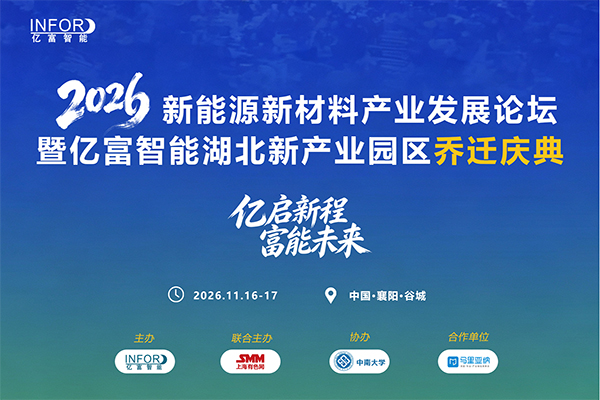
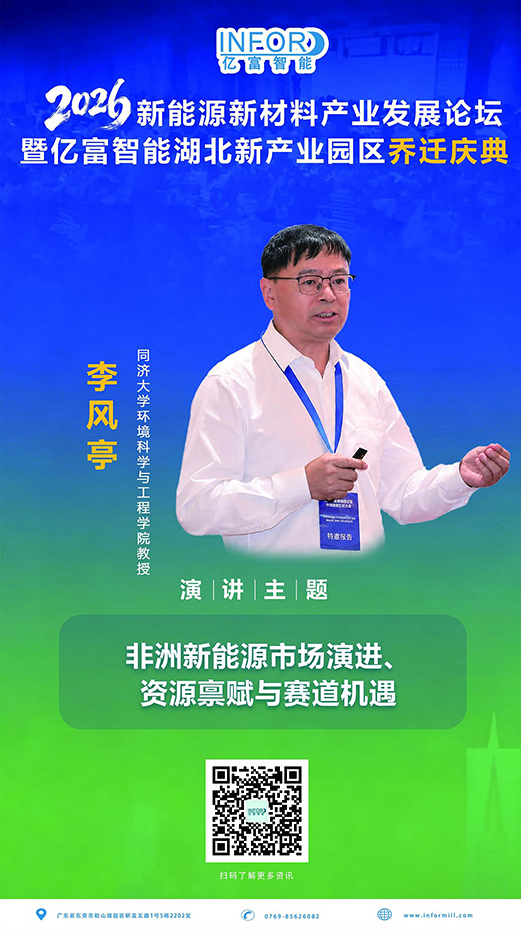
As China's new energy industry chain moves from "rolling production capacity" to "finding the sea" and from "material innovation" to "global scenarios", an industrial forum connecting domestic intelligent manufacturing and overseas markets is also moving from the agenda to the scene in Gucheng. Li Fengting, professor of the School of Environmental Science and Engineering at Tongji University, academician of the African Academy of Sciences, and director of the African Climate and Environment Research Institute of the UN-Habitat-Tongji University Cooperation Program, has officially confirmed that he will attend the 2026 New Energy and New Materials Industry Development Forum and the Moving Celebration of Yifu Smart Hubei New Industrial Park, and will bring a special report on "Africa's New Energy Market Evolution, Resource Endowments and Track Opportunities".
A practitioner of South-South cooperation who has written the African energy proposition into China’s new energy overseas map
Li Fengting—Professor and doctoral supervisor of the School of Environmental Science and Engineering of Tongji University, academician of the African Academy of Sciences, fellow of the Chemical Industry Society of China, and specially appointed water treatment expert of the United Nations Human Settlements Program. He is currently the director of the African Climate and Environmental Research Institute of the United Nations Habitat-Tongji University Cooperation Program and the director of the Shanghai Key Laboratory of Urban Climate Change and Response of the National Meteorological Administration.
Have long been engaged in research on climate change and carbon neutral technology, environmental functional materials, new energy high-purity chemicals and clean production, key materials for solid-state batteries, African climate change and water resources, and South-South cooperation mechanisms. Since 2005, it has traveled to Liberia, Kenya, Tanzania, Ethiopia, Morocco, Uganda, Côte d'Ivoire and other countries for more than 50 times to carry out cooperation; it has jointly released the "African Urban Water Management Report" and "Green Economy Report" with the United Nations Environment Program and UN-Habitat; published more than 450 papers in Nature and mainstream journals in the fields of environment, materials and chemical industry, and obtained more than 150 invention patent authorizations from China and the United States. The results have been transferred to more than 60 companies across the country for industrial application.
At the same time, he is also a bridge scholar for China-Africa green cooperation - from clean water and waste recycling to the integration of light and storage and clean manufacturing of new energy materials, linking "Chinese technology-African scenarios-sustainable development of the Global South" into an implementable cooperation chain.
Africa’s New Energy: From “Electricity Shortage Continent” to “Optical and Storage Blue Ocean”
Africa does not lack resources, but what it lacks is the systematic ability to turn resources into electricity and electricity into industries. Professor Li Fengting’s observation is very direct – Africa’s new energy opportunities are not in the export of single components, but in the triple co-production of “resource endowment + power gap + China’s chemical manufacturing capabilities”:
• Resource trump card: solar energy reserves account for more than 40% of the world, high-quality lighting resources are concentrated, and battery minerals such as lithium, cobalt, manganese, and copper are widely distributed;
• Rigid demand: Sub-Saharan Africa has frequent power outages, diesel power generation costs are high, and off-grid and micro-grid optical storage have changed from "optional" to "required";
• Market evolution: from assisted construction of power stations and component exports to a composite track of "photovoltaics + energy storage + mining electrification + localized assembly";
• Chinese location: the entire chain of materials, cells, inverters, grinding and dispersion equipment, and general engineering contracting is going overseas, and is shifting from selling products to building systems.
As he often emphasizes: "Africa is not a low-end market, but a system testing ground on a piece of white paper; whoever thinks clearly about standards, operation and maintenance, and localization first will get a ticket for the next round of globalization."
Echoes the external vision of the forum's theme of "New Energy and New Materials"
After new energy and new materials are created, where will they go? Professor Li Fengting will give a layer of coordinates at this forum:
- Market coordinates: Which stage of the light-storage curve are South Africa, Egypt, Morocco, Kenya, and Nigeria respectively at?
• Resource coordinates: How African minerals and green electricity can feed back China’s sodium, solid-state, and lithium battery material systems;
• Equipment coordinates: How smart grinding and dispersing equipment companies like Yifu Intelligent can go out together with material factories and battery core factories;
• Risk coordinates: Financing, power grids, localization, community relations, policy changes, which pitfalls must be calculated in the model in advance.
This also coincides with the positioning of Yifu Intelligent New Industrial Park - not only to serve domestic production lines, but also to become an "equipment rehearsal venue" for new energy material companies before going overseas.
In November, the new park opened in Gucheng, and the overseas perspective officially entered the game.
Professor Li Fengting will use thirty years of South-South cooperation accumulation to reveal the real terrain of the African optical storage market at the forum: where are the first-mover markets, where are resource rich ores, and where equipment companies need to deploy in advance. For Yifu Intelligent and participating material companies, the value of this report does not lie in "Africa is far away", but in "the next round of orders may come from Africa."
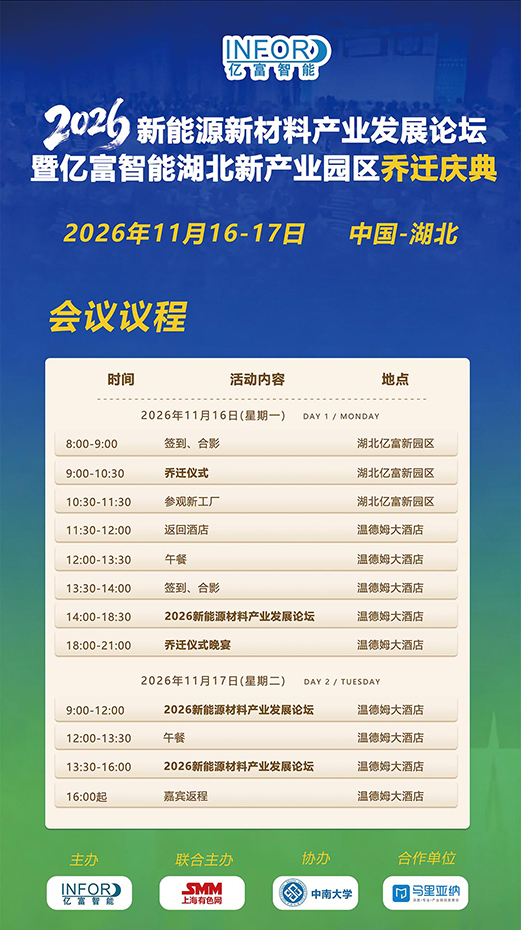
2026 New Energy and New Materials Industry Development Forum and Yifu Intelligent Hubei New Industrial Park Moving Celebration
Time: November 16-17, 2026|Location: Gucheng, Xiangyang, Hubei, China
Speaker: Professor Li Fengting (Professor of the School of Environmental Science and Engineering, Tongji University, Academician of the African Academy of Sciences, President of the African Institute of Climate and Environment)
Speech topic: Africa’s new energy market evolution, resource endowment and track opportunities
Host: Guangdong Yifu Intelligent Equipment Co., Ltd.
Co-organizer: Shanghai Nonferrous Metal Network
Co-organizer: Central South University
Supported by: Gucheng County People's Government

 English
 亿富机械
 +86-0769-85626082
 541476175@qq.com
 东莞市大岭山镇颜屋村莲颜路88号