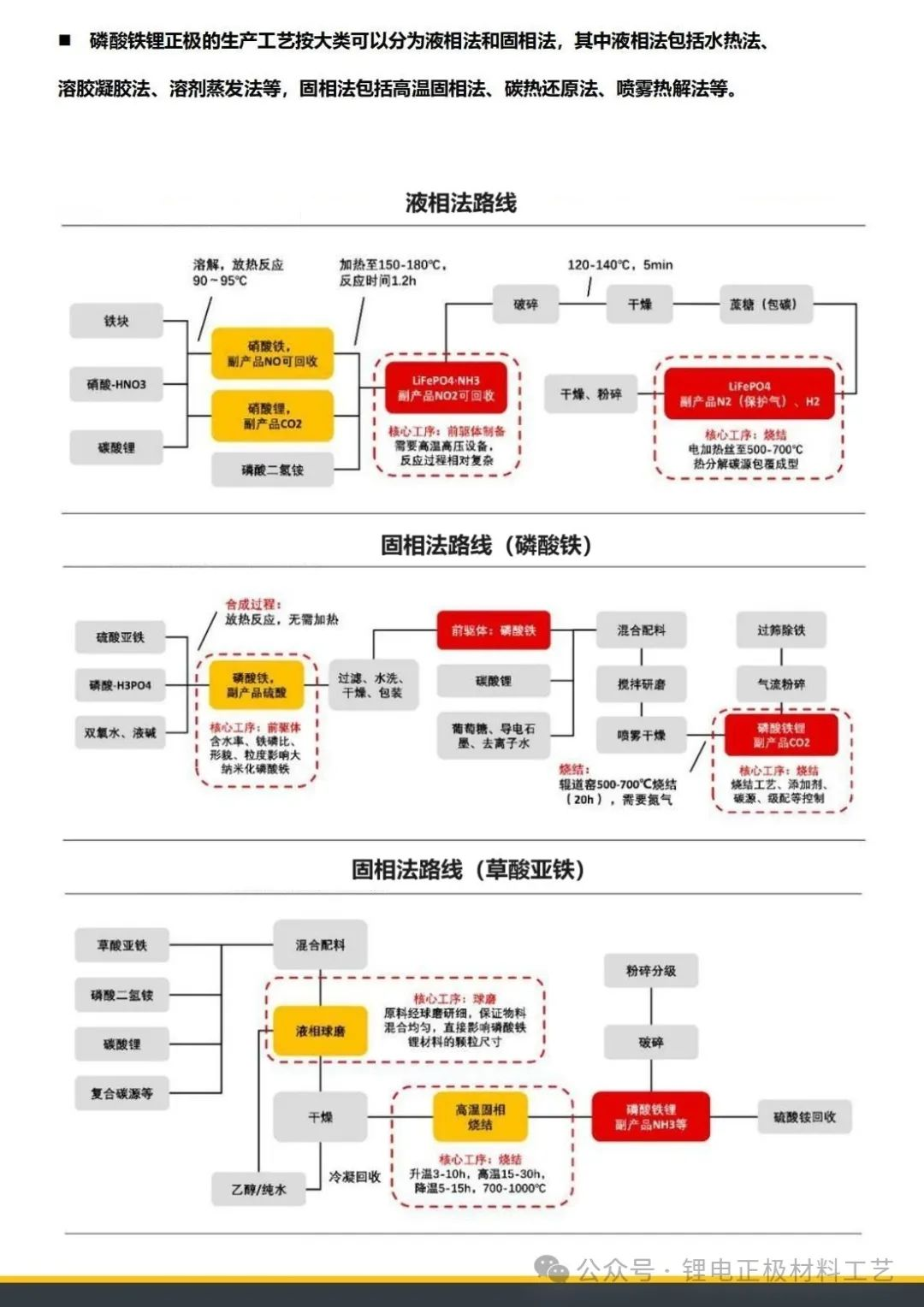
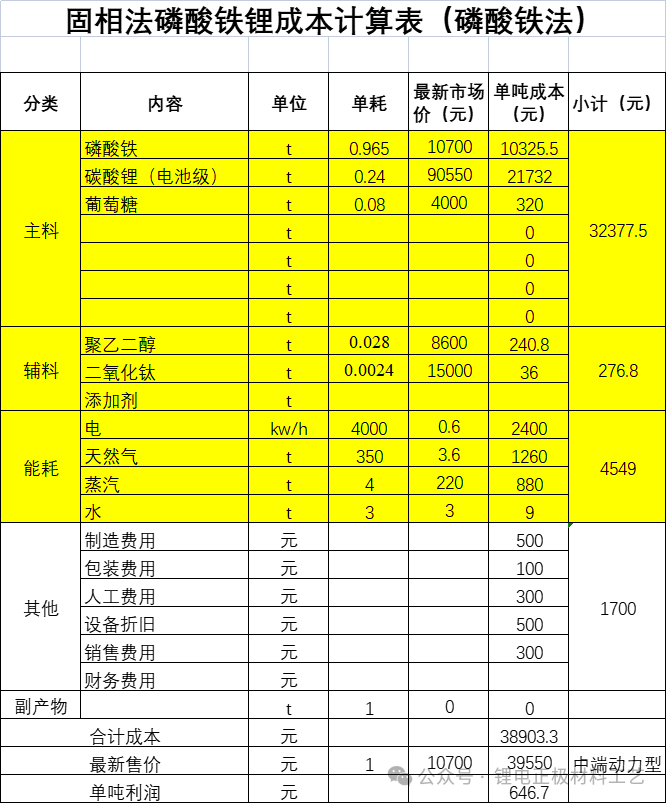
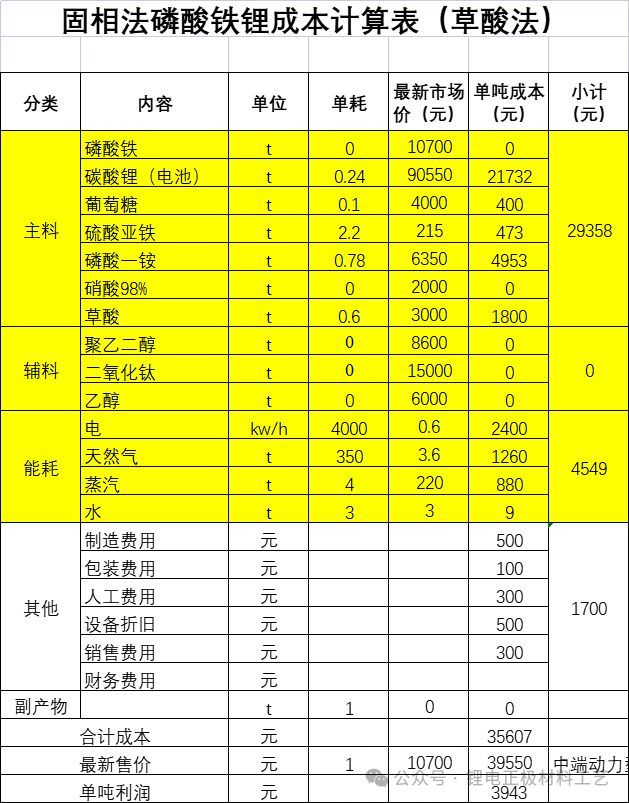
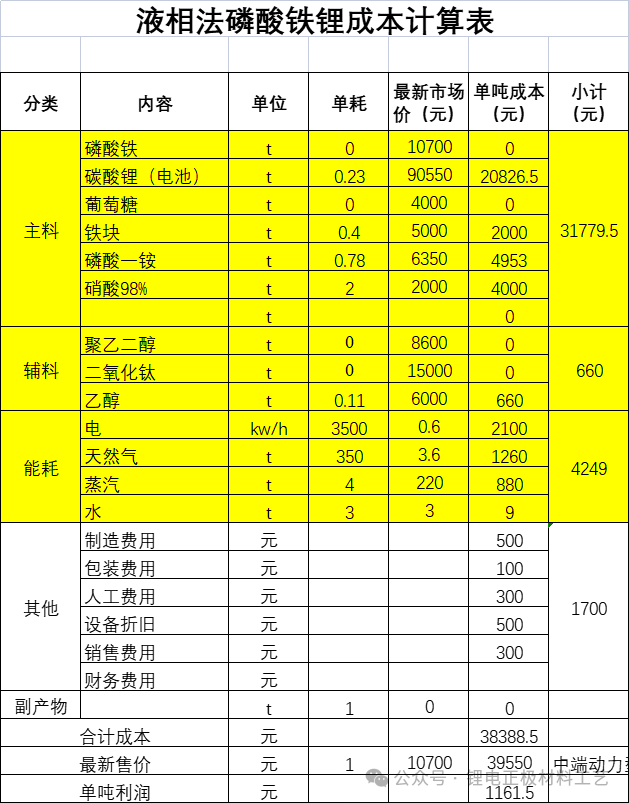
Lithium iron phosphate currently also has three mainstream routes: iron phosphate solid phase method, oxalic acid solid phase method, and liquid phase method.
The advantages of liquid phase method at the cost side are reflected in: 1) Low energy consumption. German Nano adopts the "self-heating evaporating liquid phase synthesis method". There is no external heating in the precursor synthesis process. At the same time, due to particle nanoification, there is no need for ball milling process. Therefore, judging from the single ton power consumption disclosed by various companies, German Nano's power consumption level is the lowest in the same period compared with the solid phase method. 2) Raw materials taste advantages. Lithium sources are the main cost item for lithium iron phosphate. Currently, enterprises mainly purchase battery-grade lithium carbonate, including the raw materials disclosed in the German Nano prospectus, which are also battery-grade lithium carbonate. However, theoretically speaking, the process reaction of the liquid phase method is more uniform. The taste requirements for raw materials can be lower while ensuring product quality, including the use of salt lakes, lithium carbonate from mica, and industrial-grade lithium carbonate, which in turn brings cost advantages. 3) The unit consumption of lithium sources is low, and residual lithium may exist after solid phase sintering, so it is usually necessary to over-configure 2%-5% of the lithium source; the configuration of the liquid phase elements is more accurate.
The advantages of the iron phosphate solid-phase method on the cost side are reflected in: 1) The phosphate railway line fully uses the elements of related raw materials, which are reflected in the finished lithium iron phosphate or by-products, and are basically not discharged as waste gas and wastewater; while the nitrate in the liquid-phase method is more likely to form nitrogen emissions, and the oxalate in the oxalic acid route will also be emitted as carbon oxides. 2) The waste gas treatment cost of the ferric phosphate route is low, the liquid phase method needs to recover NONO2, and the oxalic acid route also needs to treat NH3. 3) There are more chemical by-products that the phosphate railway line can rely on. For example, ferrous sulfate is a by-product of titanium dioxide companies. The cost of obtaining iron sources is extremely low: and the raw materials involved in the phosphate railway line are all bulk commodities. Judging from the current market price of ammonium oxalic acid, the oxalate subway line currently has the lowest cost. Oxalic acid is a relatively niche chemical raw material, mainly used in traditional industries such as pharmaceuticals and rare earths. Whether the price will rise in the future depends on market conditions. From the perspective of production capacity planning, the supply of oxalic acid will increase significantly in the future, which is expected to drive cost improvements for the oxalic acid subway line.
In summary, the theoretical cost curves of different lithium iron phosphate technical routes are relatively flat. When the price of phosphorus chemical industry is high, the cost of phosphate railway line is high, and the phosphorus chemical industry is at a low level. Therefore, iron phosphate has certain cost advantages due to the utilization of iron source by-products. Because the liquid phase method uses nitric acid, it is a one-step synthesis of lithium iron phosphate, which eliminates the steps of multiple filter press washing, flash drying and sintering, sand grinding, spray drying and other processes of the precursor. It is superior to the phosphate railway line in terms of energy consumption. However, if the difference in the taste of the lithium source can be realized, it will form a more obvious cost advantage. The oxalic acid route is more reflected in the price of oxalic acid, which is currently relatively low.

 English
 亿富机械
 +86-0769-85626082
 541476175@qq.com
 东莞市大岭山镇颜屋村莲颜路88号