The new garden was established in Jingchu, and the forum took advantage of the momentum.
When Yifu Intelligent Hubei New Industrial Park pressed the "start new" button, the topic of the new energy industry also moved from "single point materials" to "sodium electricity breakthrough, multi-system coexistence".
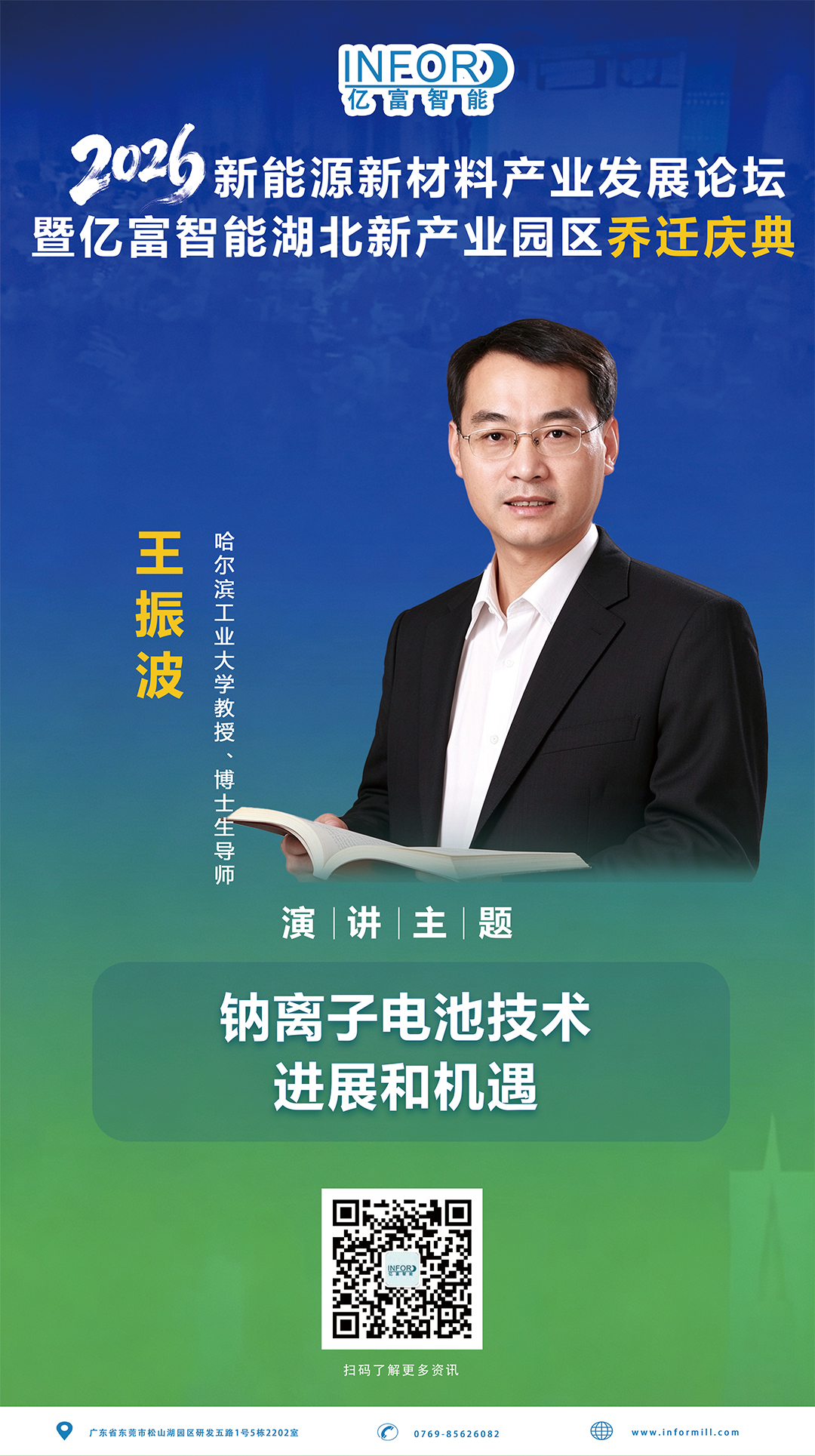
This time, we have invited a university scholar who has long been involved in advanced chemical power sources and electrochemical energy storage research, Professor Wang Zhenbo of Harbin Institute of Technology, to officially confirm his attendance at the 2026 New Energy and New Materials Industry Development Forum and the Yifu Intelligent Hubei New Industrial Park Moving Ceremony, and will bring a themed report "Sodium-ion Battery Technology Progress and Opportunities".
Systematic scholar who writes "basic research on electrochemistry" into power supply and energy storage systems
Wang Zhenbo, second-level tenured professor and doctoral supervisor at Harbin Institute of Technology, foreign academician of the Russian Academy of Engineering, has long been engaged in advanced chemical power sources, sodium-ion batteries, electrocatalysis and nanoelectrode materials He has been selected as a national high-level talent and a young and middle-aged leading scientific and technological innovation talent of the Ministry of Science and Technology. He has won the Hou Debang Innovation Award for Chemical Science and Technology. He has been selected as a 2025 Clarivate Analytics "Global Highly Cited Scientist" and has been selected as an Elsevier China Highly Cited Scientist for many years.
Research directions focus on lithium-ion batteries/next generation energy storage materials, sodium-ion battery cathode and anode materials, electrocatalytic water splitting and oxygen reduction, advanced electrochemical energy storage and integrated energy system optimization. He has presided over a number of national-level scientific research tasks, published more than 300 SCI papers in journals such as Nature Catalysis, Nature Communications, Advanced Materials, and Angewandte Chemie, and obtained dozens of authorized invention patents. His achievements cover battery materials, electrocatalysis, and fuel cells.
His research has a very clear industrial main line: do not let the electrochemical reaction stop in the paper. From the design of nano-electrode materials, to the engineering of positive and negative electrode materials, to the energy scheduling in sodium-ion battery systems, we are always answering "how do materials enter the battery cells, how do the battery cells enter the system, and how does the system connect to the production line?"
A problem solver with the same frequency as electrode interface, battery cell engineering and energy storage system
In the eyes of his colleagues, Professor Wang Zhenbo's research has a rare "penetrating power": it can not only start from nanoscale surface and interface reactions, but also reach the front of the megawatt-level energy storage dispatching platform. His job is not to break the paper into chapters, but to completely connect a technical chain from "active site" to "energy storage system".
• Electrode materials and interface control: Focusing on key materials for high-specific energy chemical power sources, we start from crystal structure, surface modification and interface engineering to solve the problems of side reactions, ion migration hysteresis and cycle attenuation under high voltage, so that the material system can maintain stable output under wide temperature range and high rate working conditions;
• Sodium-ion battery materials and device engineering: Focus on the core material bottleneck of sodium-ion batteries, develop high-capacity, long-life anode and cathode material systems, simultaneously optimize electrode/electrolyte interface compatibility and ion transmission channels, and bring the three originally interfering goals of "energy density-cycle life-cost" to the same balance point;
• Sodium-electricity hybrid and multi-system energy storage architecture: Thinking beyond a single battery, study the dynamic matching logic of sodium-ion batteries, lithium-ion batteries, and supercapacitors, and build a closed-loop energy flow of "sodium electricity peak regulation-lithium battery energy replenishment-capacitance response" so that the hybrid energy storage system can find the optimal operating point under different load conditions;
• Multi-energy complementary comprehensive energy: The fast response characteristics of chemical power sources and the continuous output capability of sodium electricity are configured in layers, and a schedulable and scalable comprehensive energy topology solution is designed for campus microgrids, distributed power stations and high-energy-consuming industrial scenarios;
• System-level performance mapping: Establish a performance transfer model from active materials → electrodes → cells → system level, use data to translate material parameters into system indicators, and allow upstream material development to directly align with the real needs of terminal energy storage systems.
He is accustomed to summarizing his research logic in one sentence: "Materials determine the ceiling of energy density, and systems determine the floor of energy utilization - both ends must be accessible, and technology can be considered sustainable."
In-depth echo with the theme of the forum "New Energy and New Materials"
Professor Wang Zhenbo's judgment on the new energy industry is highly consistent with the underlying logic of this forum: the industrial breakthrough point for sodium-ion batteries has never been the breakthrough of a single point of material, but the simultaneous evolution of materials, equipment and systems.
Several core topics that this forum focuses on can be found in his research map:
• The engineering window of new material systems: layered oxide cathodes, hard carbon anodes, new electrolytes and functional binders are reshaping the boundaries of sodium electrical performance, but whether these materials can leave the laboratory depends on whether powder processing, slurry dispersion and pole piece manufacturing can provide matching process windows;
• Equipment capacity for sodium battery manufacturing: From the crushing and classification of hard carbon negative electrodes to the uniform dispersion of cathode slurry, the scale-up manufacturing of each layer of materials puts forward new requirements for grinding accuracy, dispersion uniformity and coating consistency. Small fluctuations on the equipment side will be directly transmitted to the battery core consistency and system efficiency;
• Scheduling logic of energy storage systems: Sodium-ion batteries are not simply "lithium battery replacements", but need to redesign BMS strategies, thermal management architecture and energy scheduling algorithms based on their low-temperature performance, rate characteristics and safety advantages. This requires material properties, cell response and control systems to collaborate on the same timeline;
• The system verification field of the industrial park: Yifu New Industrial Park itself is a physical sample of the "material-equipment-system" collaboration - the intelligent grinding and dispersing equipment here is not just a stand-alone equipment, but the first guarantee of material consistency in the upstream of the sodium power industry chain.
This is also the deep intention of this forum’s choice of juxtaposing “New Park Moving” and “Industrial Forum”: to allow equipment manufacturers, material developers and system engineers to stand in the same park and discuss issues.
The new park opens, a live dialogue about the future of sodium power
In November, Yifu Intelligent Hubei New Industrial Park will be officially unveiled in Gucheng. Professor Wang Zhenbo will stand on the forum podium and condense his years of research accumulation in the fields of advanced chemical power sources, sodium-electric materials and energy storage system integration into a systematic sharing for industrial sites with the title of "Sodium-ion Battery Technology Progress and Opportunities".
For the material companies, equipment manufacturers and system integrators in the audience, the real value of this report lies in how a scholar who understands not only the molecular structure of electrode materials, but also the engineering parameters of battery cells, and the energy management of energy storage systems can solve the problem of "how to implement sodium-electric materials, how to amplify battery cells, and how to reverse material design of the system."
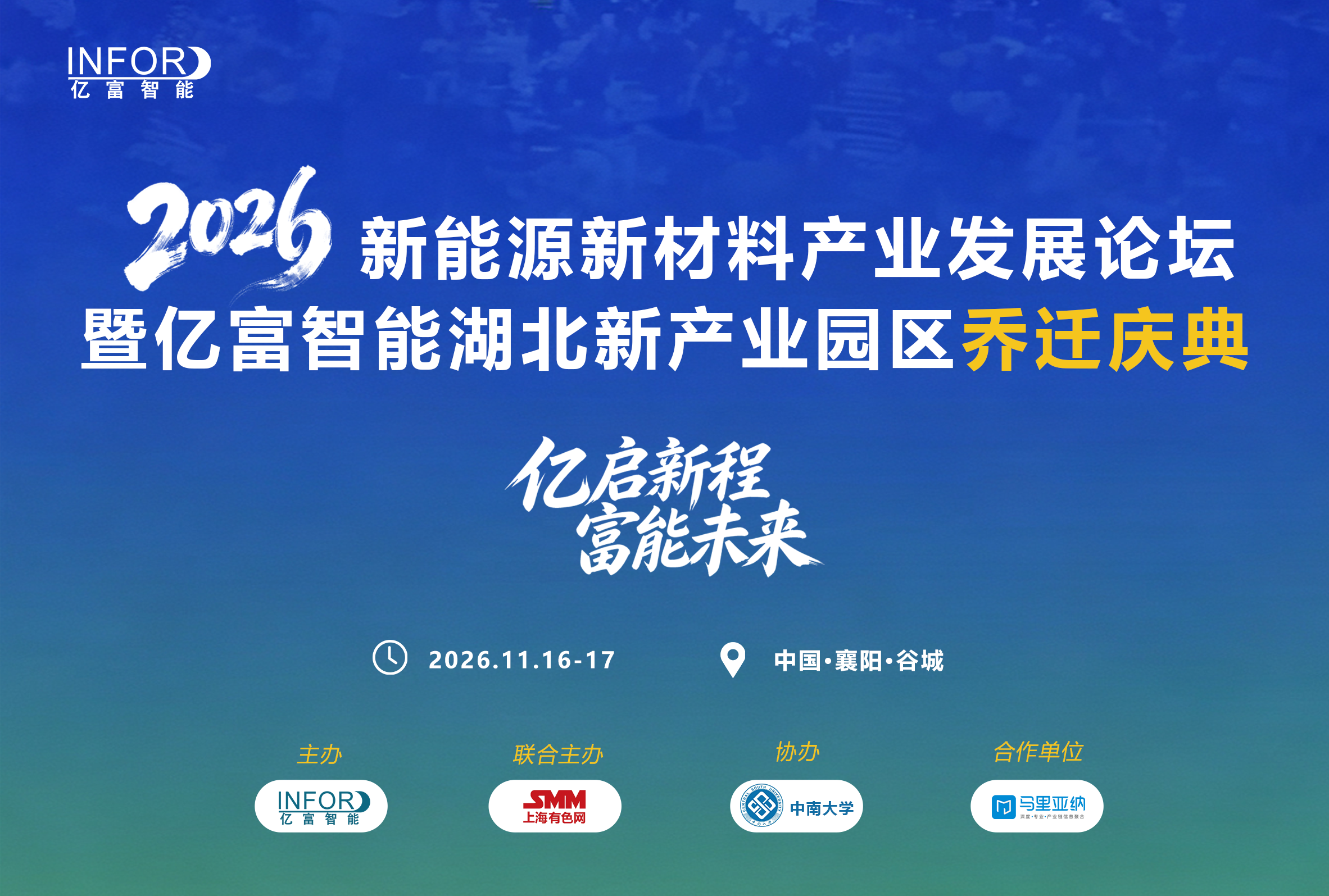
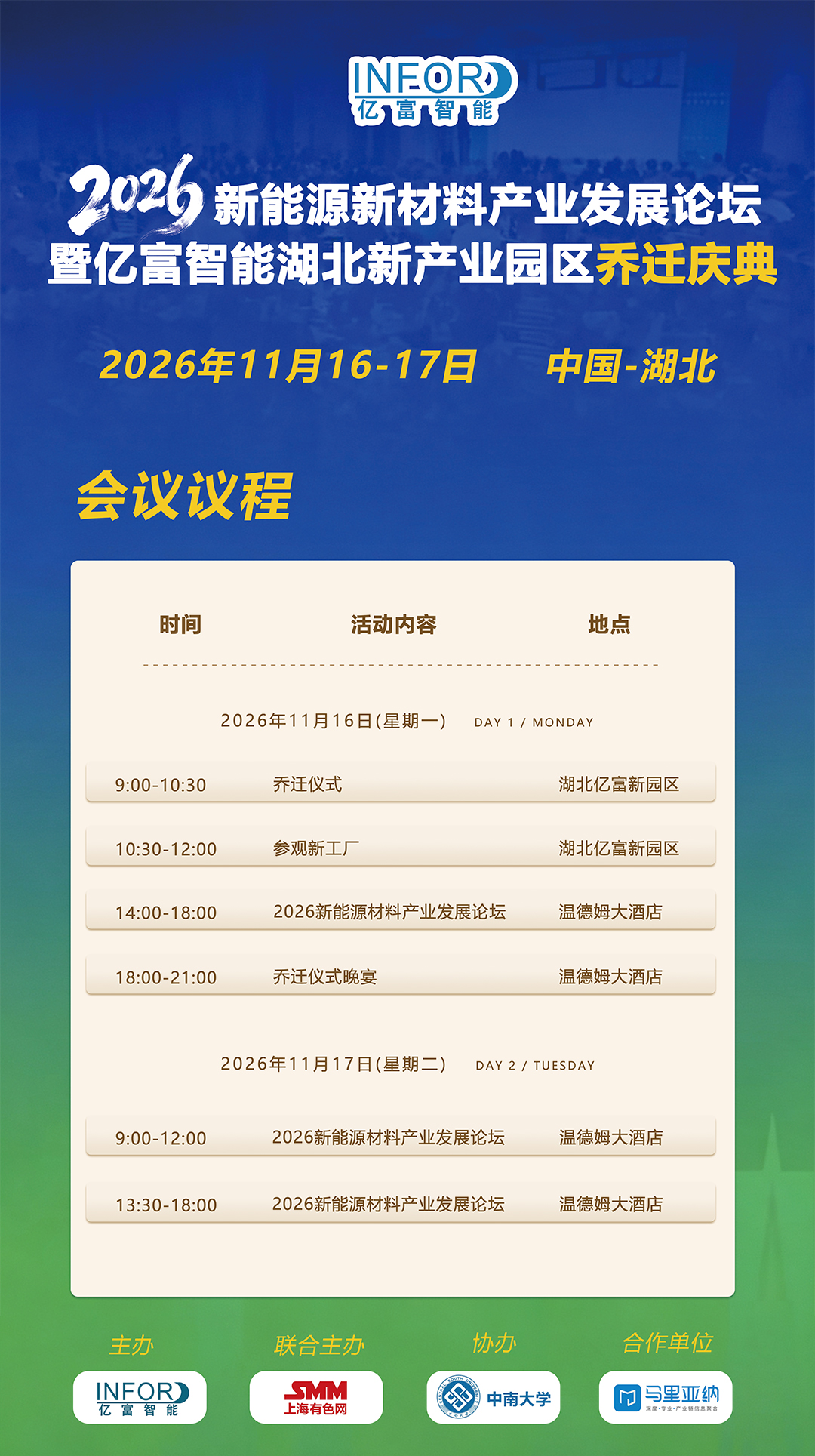
2026 New Energy and New Materials Industry Development Forum and Yifu Intelligent Hubei New Industrial Park Moving Celebration
Time: November 16-17, 2026 | Location: Gucheng, Xiangyang, Hubei, China
Speaker: Professor Wang Zhenbo (Second-level tenured professor at Harbin Institute of Technology, doctoral supervisor, national high-level talent)
Speech topic: "Sodium-ion battery technology progress and opportunities"
Hosted by: Yifu Intelligent
Co-organized by: Shanghai Nonferrous Metal Network
Co-organized by: Central South University
Supported by: Gucheng County People's Government

 English
 亿富机械
 +86-0769-85626082
 541476175@qq.com
 东莞市大岭山镇颜屋村莲颜路88号