
The United States, as an important global automobile market and a powerhouse in technological innovation, has attracted much attention for the current development status of its new energy automobile industry and industrial chain.
In the first half of 2025, the U.S. new energy vehicle market showed the characteristics of "high at first and then low", with overall sales hitting a record high. However, the year-on-year decline in the second quarter exposed multiple pressures after the market entered a mature period.
Hybrid models continue to grow, while the growth of pure electric and plug-in hybrid models has slowed. Adjustments to federal tax incentives have become an important variable affecting consumer decision-making, and have also added more uncertainty to market trends in the second half of the year.
In the first half of this year, a total of 607,089 electric vehicles were sold in the United States, a slight increase of 1.5% from the first half of 2024. But sales in the second quarter were 310,839 vehicles, down 6.3% year-on-year, one of the few quarterly declines in history, partly due to the expiration of federal tax credits in September.
In terms of industrial policy, automakers are encouraged to increase investment in the research and development and production of new energy vehicles. By providing subsidies and preferential policies, it has attracted many companies to build new energy vehicle factories and battery production bases in the United States. For example, the super factory built by Tesla in Nevada not only created a large number of local jobs, but also promoted the development of the new energy vehicle industry chain in the United States.
In addition to Tesla, traditional car manufacturers are also increasing their presence in the field of new energy vehicles. General Motors announced that it will stop selling fuel vehicles by 2035 and fully shift to electric vehicle production. Ford has also launched a number of new energy models, such as the Mustang Mach-E, in an attempt to grab a share of the new energy vehicle market.
However, the U.S. new energy vehicle market also faces some challenges. On the one hand, the price of new energy vehicles is relatively high. Despite the tax credit policy, it still poses a certain financial pressure for some consumers. On the other hand, the construction of charging infrastructure is not perfect enough, especially in some remote areas, and the coverage of charging piles is low, which limits the further popularization of new energy vehicles.
The U.S. new energy vehicle industry chain covers upstream raw material supply, midstream parts manufacturing, and downstream vehicle production and after-sales services. In terms of upstream raw materials, key metals such as lithium, cobalt, and nickel are important components of new energy vehicle batteries. Although the United States has certain mineral resources, it still relies heavily on the import of these key raw materials. In order to ensure the supply security of raw materials, the United States and companies have begun to increase investment in the development and recycling of domestic mineral resources.
In the midstream parts manufacturing segment, the United States has a number of companies with advanced technologies. For example, battery manufacturers LG Chem and Samsung SDI have production bases in the United States to provide battery products to American new energy vehicle companies. In addition, the United States also has certain technological advantages in core components such as motors and electronic controls.
In terms of downstream vehicle production, Tesla’s success has driven the development of the US new energy vehicle industry. More and more companies are getting involved in the field of new energy vehicle manufacturing, promoting competition and innovation in the industry. However, compared with China and Europe, the United States still lags behind in terms of large-scale production and cost control of new energy vehicles.
In terms of core technology, although the United States has made certain progress in battery technology, autonomous driving and other fields, it still faces some challenges. For example, issues such as battery energy density, safety and cost are still key factors restricting the development of new energy vehicles. In addition, the commercial application of autonomous driving technology also faces challenges in laws and regulations, safety and reliability, etc.
Chinese companies such as Ning Times have cooperated with Ford to produce lithium iron phosphate batteries at the Michigan factory through technology licensing, and have cooperated with Tesla to produce batteries at the Neihuada factory through technology licensing, and are gradually establishing their own mass production lines in the United States; Envision Power supplies batteries to Mercedes-Benz's U.S. factories and builds super factories in the United States; Great Wall Motors cooperates with FF to build automobile production lines; Chinese materials companies such as Wanrun New Energy are actively preparing to build factories in the United States, etc.
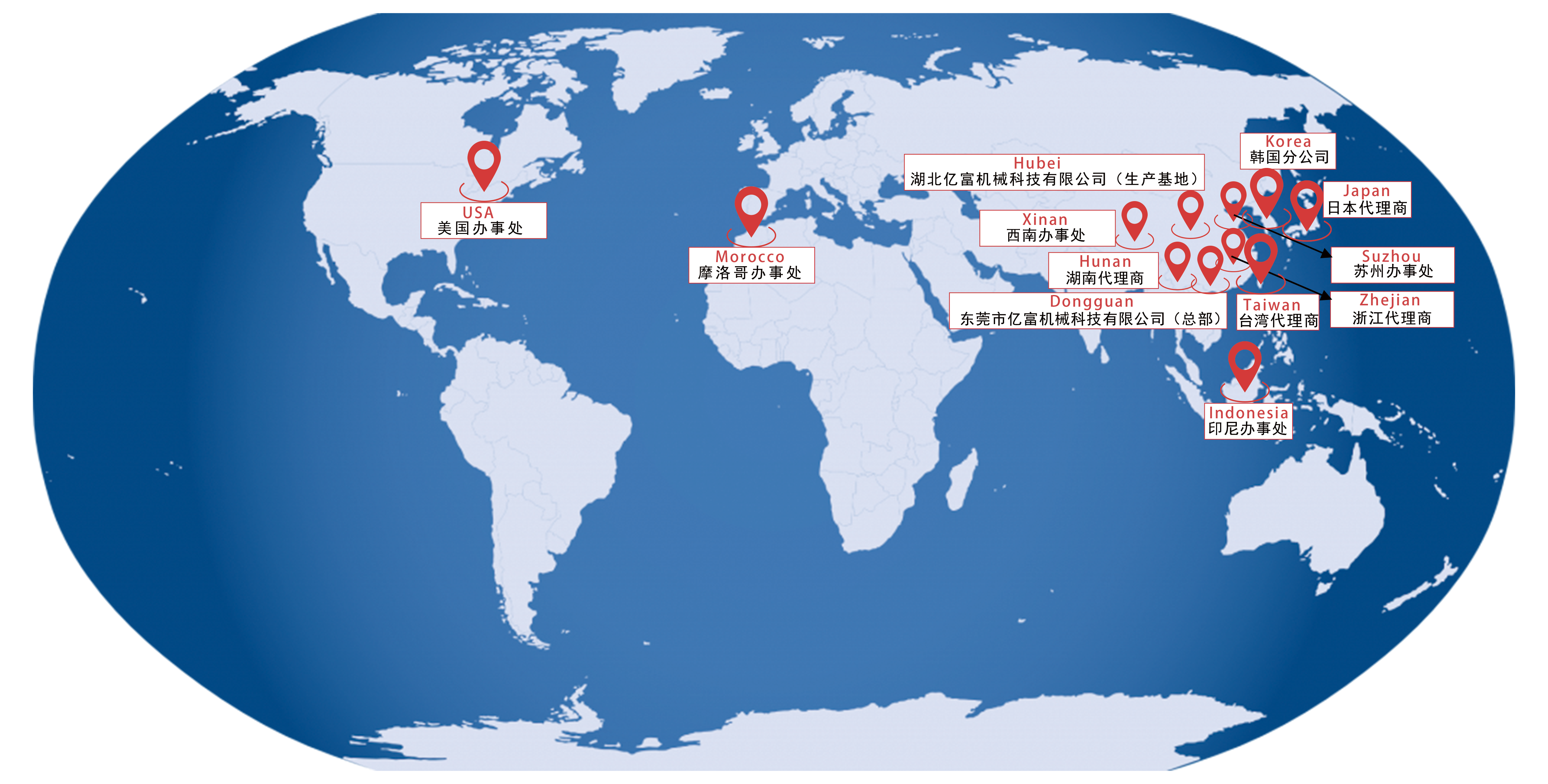
Yifu Machinery has been very active in the U.S. market. In addition to participating in U.S. exhibitions frequently, it has also established cooperation with local companies and scientific research machinery. Its offices in the U.S. are also in the process of being established. It is committed to promoting the technology and services of Chinese sand mills to the U.S. market and assisting the international development of sand grinding equipment.
The U.S. new energy vehicle industry and industrial chain have achieved certain development driven by policies, but they also face challenges in market, technology and infrastructure. In the future, the United States needs to further improve the industrial chain, break through core technology bottlenecks, and strengthen international cooperation to achieve the sustainable development of the new energy vehicle industry and occupy a place in the global new energy vehicle market.

 English
 亿富机械
 +86-0769-85626082
 541476175@qq.com
 东莞市大岭山镇颜屋村莲颜路88号
