In the past few days, the trade war between China and the United States has escalated.
Tariffs are changing, lists are being added, and countermeasures are being issued—a series of news makes friends who are engaged in foreign trade, manufacturing, and new energy unable to sit still: Is the U.S. market completely blocked? Can our products still be sold?
Today we go over the latest situation, and then talk about a more practical issue: whether there are still opportunities in the United States in the future to develop industries and new energy overseas.

1. The latest actions on the U.S. side
1. Tariffs are stacked one after another and cannot be calculated with one “tax rate”
Let’s talk about the old 301 tariffs first, and continue to retain them:
· Lithium batteries and energy storage equipment: 25% additional tariffs (Article 301)
· Photovoltaic modules: up to 50% superimposed tax rate, plus basic most-favored nation tariffs
· Electric cars: 100% tariff
This is just the base layer.
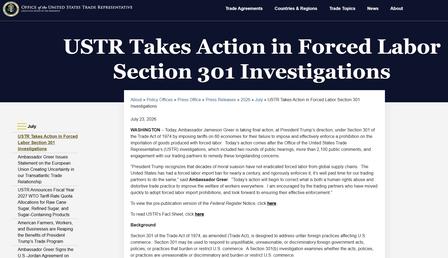
In late July, the United States implemented a new round of Section 301 tariffs - imposing tariffs of 10% to 12.5% on 60 economies, including China, on the grounds of so-called "forced labor", which officially came into effect on July 24. The United States promised during the Sino-US economic and trade consultations that the additional tariffs on substitute Chinese products would not exceed 20%, but the current actual implementation rate is 12.5%.
The old and new tariffs are calculated superimposed.
For example: energy storage batteries - 3.4% basic tariff + 25% 301 tariff + 10% fentanyl tariff + 10% reciprocal tariff, the comprehensive tax rate has reached 48.4%. The overall tariff level for battery energy storage systems (BESS) is close to 40%.
Moreover, the "second boot" has not yet been launched - the United States has launched a 301 investigation of "overcapacity" against 16 economies including China, Vietnam, and Mexico. Once landed, additional tariffs may apply. Steel, aluminum, batteries, solar energy, chemicals, and electronics are all key targets.
One sentence: Friends who are exporters cannot use last year’s tax rate to calculate this year’s accounts. Policies change at any time and must be tracked dynamically.
2. The “largest expansion in history” of the entity list
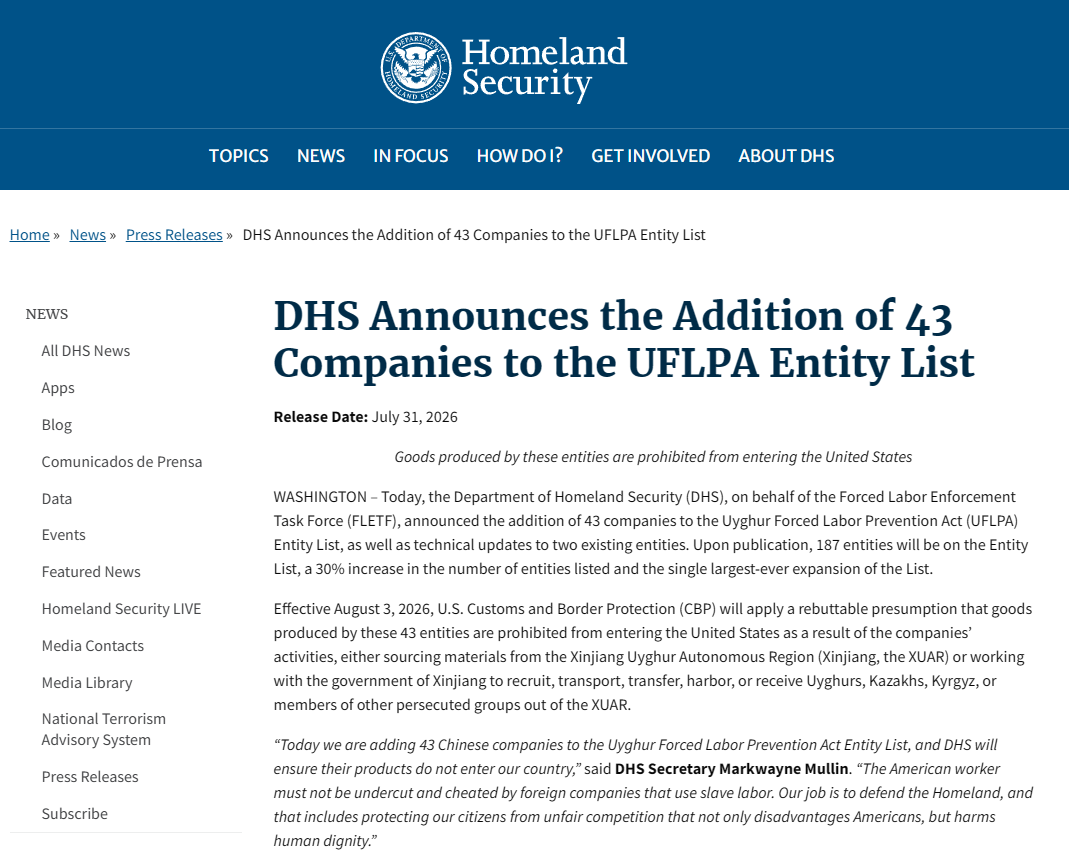
On July 31, the U.S. Department of Homeland Security added 43 Chinese companies to the UFLPA Entity List at one time on the grounds of so-called Xinjiang-related issues, which officially came into effect on August 3.
This is the largest single expansion in the number of blacklists since the implementation of UFLPA (Uyghur Forced Labor Prevention Act) in 2022. The total number of listings increased from 144 to 187.
Extremely wide coverage: aluminum industry, minerals, textiles, food, biomedicine, new materials, and energy. Well-known companies affected include Tianshan Aluminum, Shandong Weiqiao, TBEA, Qiaqia Food, Septwolves, Miss Food, Shandong Gold, etc.
New energy-related companies have also been targeted accurately - upstream lithium raw material companies such as SDIC Xinjiang Lithium Industry, as well as many metal and new material manufacturing companies are included.
What does it mean to be included in this list?
It is not a direct embargo, but the consequences are very serious: the U.S. Customs will implement a “rebuttable presumption” on the products of relevant companies - by default, the products involve forced labor and are prohibited from entry in principle. To prove their innocence, importers need to submit "clear and convincing evidence" that there are no problems in the supply chain. In actual operation, the approval rate is extremely low. Many U.S. importers simply give up purchasing because compliance costs are too high and the process is too complicated.
And don’t forget—in addition to the UFLPA list, there are also old BIS entity lists and defense-related lists, which are constantly being updated. The risk of being included on the list may fall on any Chinese company doing business in the United States at any time.
2. China counterattacked with unprecedented intensity
Faced with this round of US offensive, China did not stop at verbal protests.
On August 5, a complete set of countermeasures was implemented:
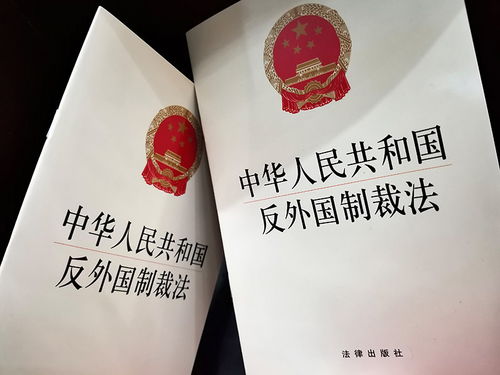
First, in accordance with the Anti-Foreign Sanctions Act, six US entities that assist the US in concocting Xinjiang-related sanctions are included in the countermeasures list. Domestic enterprises and individuals are prohibited from conducting any transactions or cooperation with these six institutions. Those listed include Applied DNA Sciences, Strata Reservoir Corporation, Altana Technologies, Responsible Business Alliance, Veritas Group, "Human Rights in China" and others.
Second, suspend the authority of domestic CCC compulsory certification to entrust American institutions to conduct factory inspections in China. It is equivalent to cutting off the U.S.’s grip on our companies’ necks to obtain certification and audit cards—in the future, U.S. companies will have to find auditing agencies outside the United States if they want to enter the Chinese market for CCC certification.
Third, tighten controls on the export of drones, key components, and technologies to the United States. All exports must be strictly reviewed and approved on a case-by-case basis without any licensing convenience.
Fourth, include U.S. compliance testing companies on the countermeasures list and prohibit domestic entities from dealing with them.
Fifth, launch a foreign trade national security investigation targeting imported printing and copying office equipment.
China’s attitude is very clear: this is reciprocal defense. If the U.S. continues to increase its efforts, we still have more toolboxes at our disposal.
3. Do we still have opportunities in the US market?
Many friends who are engaged in foreign trade, equipment, and new energy are anxious after seeing these news - the United States has set up barriers everywhere, should it just give up the American market?
My opinion is: There is no chance at all, but the old way no longer works.
Recognize the reality first
The current logic of the United States is very clear - in the new energy track, it not only wants to enjoy the dividends of the global clean energy transformation, but also wants to protect local industries. By building walls layer by layer with tariffs, entity lists, and compliance reviews, the threshold for direct import will become higher and higher, and the risks will also increase.
If he was accidentally included in the list, the entire business would be immediately shut down.
But the market demand is real
The explosion of AI computing power in the United States has driven a surge in demand for electricity, energy storage, and photovoltaics. There is a huge gap in power grid upgrade and energy storage power station construction. The production capacity of the domestic industrial chain in the United States simply cannot keep up, and a large number of equipment and parts are still inseparable from the global supply chain.
There is real commercial space here.
Three pragmatic judgments
First, exporting direct finished products in large quantities brings increasing risks.
Don’t put all your chips on direct export from the United States. Tariffs may be added at any time, and the list may be implemented at any time. The risks of a single market and a single path are too high.
Second, change paths and bypass barriers.
· Through third countries and near-shore supply chains: Mexico and Southeast Asia for processing and support
· Technology licensing, joint ventures and cooperation: exporting technology and equipment capabilities, it is not necessary to transport goods from China to the United States
This is the direction that many new energy manufacturing companies are exploring - participating in the North American supply chain in another way.
Third, distinguish the race track and seize the urgent needs of subdivision.
Not all areas are completely blocked. There are still cooperation windows for energy storage supporting components, industrial equipment, subdivided materials, and some B-end industrial supply chains.
But the premise is: compliance with regulations is sufficient, risk isolation is done well, and policy changes are studied and judged in advance - you cannot bet that the policy will remain unchanged.
Written at the end
The game between China and the United States is repeated over a long period of time. On and off, tariffs and lists are sometimes tightened and sometimes loosened - this will be the norm.
For our physical enterprises, don’t be emotional:
· Don’t give up the US market completely because of sanctions
· Don’t have any illusions that you can go back to the unimpeded era of the past
The truly reliable overseas strategy must be a global multi-point layout.
The United States will seize opportunities when they have the opportunity, but at the same time, it will solidify its incremental markets in Southeast Asia, the Middle East, South America, and South Asia. The east is not bright but the west is bright - the market in hand is sufficiently dispersed so that it will not be choked by policy fluctuations in a single region.

 English
 亿富机械
 +86-0769-85626082
 541476175@qq.com
 东莞市大岭山镇颜屋村莲颜路88号