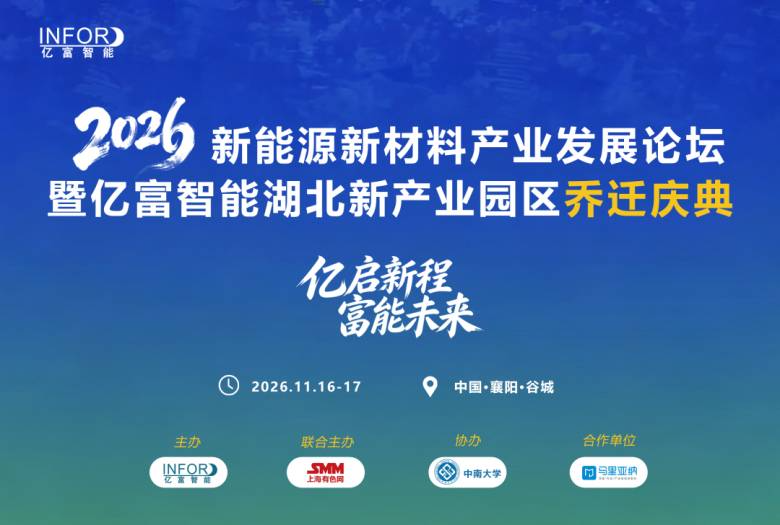
November 16-17, 2026, Gucheng, Xiangyang, Hubei.
Yifu Intelligent Hubei New Industrial Park is about to open, and the forum's focus has shifted from the "positive electrode main line" to the most critical negative electrode base of sodium electricity. When sodium-ion batteries moved from demonstration projects to GWh-level energy storage tenders, the industry gradually realized that sodium power cannot really reduce costs and can run for a long cycle. Half of it depends on the positive electrode and the other half depends on hard carbon - and hard carbon is precisely the segment that relies most on experience and lacks stable technology in the past.
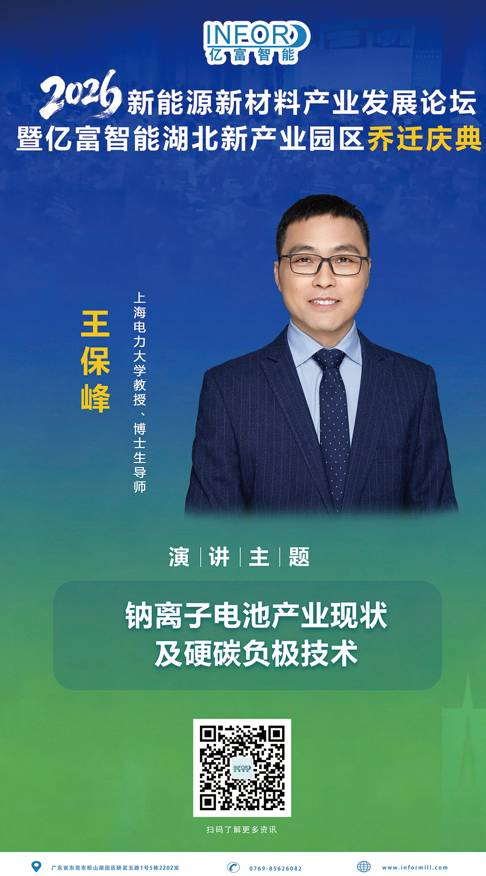
At the node of this round of "finding the anode main axis for the industrialization of sodium electricity", we invited a senior researcher who has been working on lithium iron phosphate for 20 years and has advanced hard carbon anodes to the pilot line——Professor Wang Baofeng of Shanghai Electric Power University. He graduated from the Shanghai Institute of Microsystems and Information Technology, Chinese Academy of Sciences with a Ph.D., and has been engaged in battery material research and development and mass production management at Shanghai Jiao Tong University and Valence (Suzhou). He is currently the dean of Sichuan Wanpeng Times Research Institute and the chief scientist of Osai New Energy Technology Co., Ltd. He is officially confirmed to attend this forum and the relocation celebration of Yifu Intelligent Hubei New Industrial Park, and will bring a keynote report"Current Status of Sodium-Ion Battery Industry and Hard Carbon Anode Technology". From the sodium storage mechanism to 10,000-ton carbonization, he will explain "how to go from being able to use sodium electricity to being able to use it".
Battery materials professor who combines "material mechanism" and "production line yield"
Wang Baofeng, professor and doctoral supervisor at the School of Environmental and Chemical Engineering, Shanghai Electric Power University. Ph.D. from the Shanghai Institute of Microsystems, Chinese Academy of Sciences. He lectured at the School of Chemistry and Chemical Engineering of Shanghai Jiao Tong University in his early years, and then entered Valence (Suzhou) to do battery material production technology management. In 2008, he transferred to Shanghai Electric Power University (now Shanghai Electric Power University) to teach. The research direction has always been anchored on chemical power sources: iron phosphate, lithium iron phosphate, sodium electric hard carbon, silicon-based negative electrode and binder systems.
He is not a scholar who "only publishes papers": lithium iron phosphate technology has been continuously developed for more than 20 years, and related results have been implemented in more than ten companies in Hubei, Sichuan, Guizhou, and Shanxi. He has presided over 5 vertical subjects such as the National Natural Science Foundation of China and more than 10 corporate projects. He has published more than 60 papers in journals such as Nature Communications, eScience, Advanced Functional Materials, and Energy Storage Materials, and applied for more than 50 invention patents. In recent years, he has concurrently served as the dean of Wanpeng Times Research Institute and the chief scientist of OSAI New Energy. He has promoted hard carbon precursor screening, closed cell control, and first-efficiency improvement from pilot trials to industrial verification. He has also brought the closed-loop judgment of "materials-electrode-cells" into every industry report.
In-depth echo with the theme of the forum "New Energy and New Materials"
Professor Wang Baofeng’s report"Current Status of Sodium-Ion Battery Industry and Hard Carbon Anode Technology" just brings the main axis of this forum of "new materials driving new batteries" to the hardest process barrier of sodium batteries:
Industrial layer - Sodium electricity is moving from "concept proof" to "energy storage and two-wheeled vehicle scale": the positive electrode NFPP/LFS dual lines are running in parallel, and the battery cell cycle is moving towards 15,000 times, but the negative hard carbon is still the bottleneck of cost and consistency. Imported hard carbon is expensive, and domestically produced hard carbon has large batch fluctuations. Whoever can stabilize the first effect, low temperature, and compaction at the same time will get the ticket to sodium power production.
Material layer - hard carbon relies on "adsorption + closed pore filling" to store sodium. The precursors range from coconut shell, lignin, Xanthium chinensis to coal-based and resin-based through trial and error; N/O co-doping, closed-pore engineering, and surface coating determine the first effect and magnification. Wang Baofeng's team used biomass N/O co-doped hard carbon to achieve a reversible capacity of 366mAh/g, which is a sample that translates "mechanism" into "recipe".
Process layer - hard carbon precursor crushing, spray drying, carbonization, depolymerization, classification, which requires extremely high wear resistance, anti-pollution, and narrow particle size distribution of the powder equipment; if the sanding and dispersion in the front stage are not well controlled, no matter how good the closed-cell structure is, it will collapse during the pole piece coating.
For the material factory, it answered "How can hard carbon cross the threshold of 90% first efficiency?"; for the equipment factory, it reminded the grinding system to adapt to carbon materials with high porosity, easy dust generation, and zero tolerance for metal foreign matter; for Yifu, it meant that the new park production line should make hard carbon pre-treatment into a reproducible process package. The trump card for the industrialization of sodium electricity lies in the consistency of hard carbon powder.
In the golden autumn of November, Gucheng’s new garden opens
From November 16th to 17th, the new park and forum opened simultaneously in Gucheng, Xiangyang, Hubei. It is recommended that all friends who are engaged in the application of sodium electric cathodes, hard carbon anodes, energy storage cells and two-wheeled vehicles save their seats: listen to Wang Baofeng explain clearly from the dual perspectives of Shanghai Electric Power University and Wanpeng/Osai, "Where is the sodium electric industry going now and how can hard carbon technology break the mass production death valley?"; also see how Yifu's new production line uses high-precision dispersion to catch the industrialization pace of hard carbon from carbonization to pole pieces. Relocation is not a ribbon-cutting. It is Yifu and a generation of sodium-electricity materials people who have worked together to transform China's sodium-electricity from "clearly explaining the mechanism" to "delivering stable batteries."
Billion starts a new journey, a rich future, Gucheng New Park will see you there!
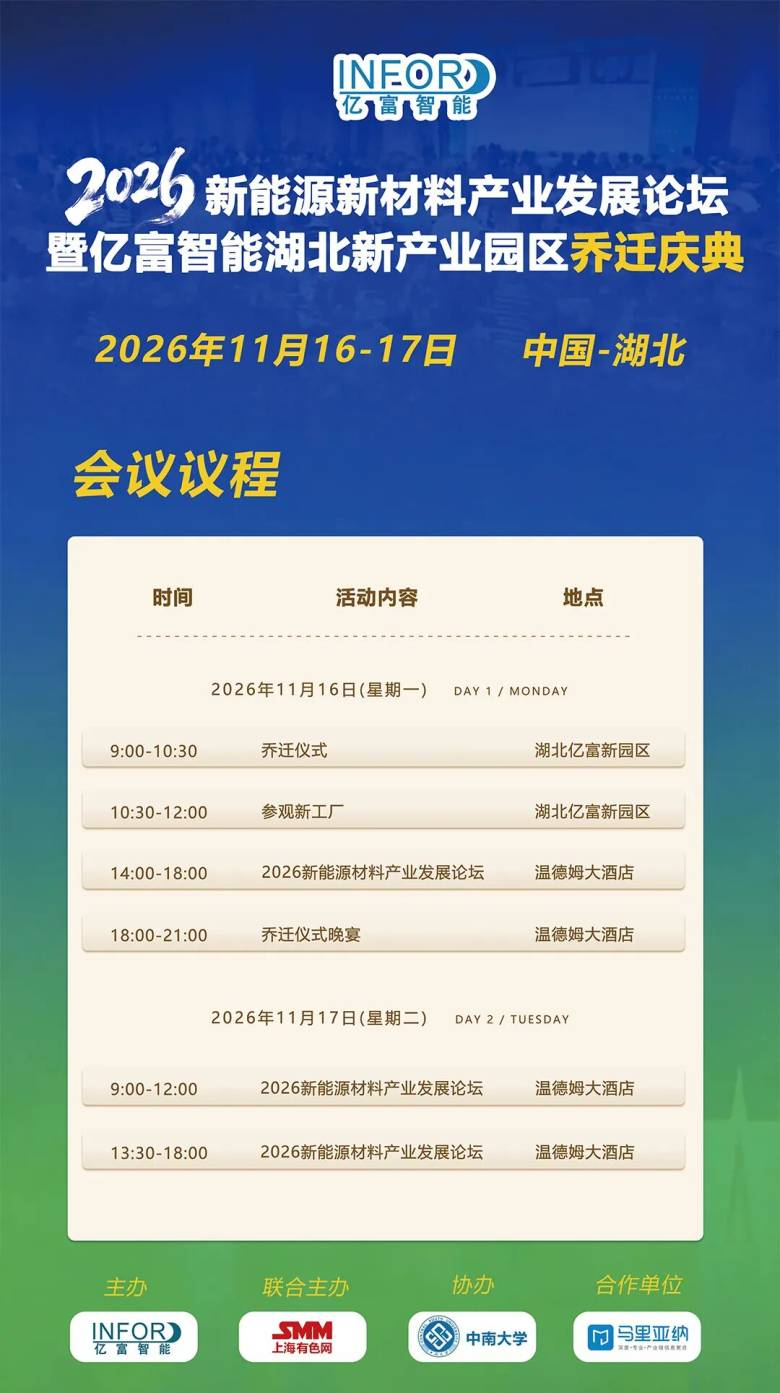
2026 New Energy and New Materials Industry Development Forum and Yifu Intelligent Hubei New Industrial Park Moving Celebration
Time:November 16-17, 2026 | Location: Gucheng, Xiangyang, Hubei, China
Speaker:Wang Baofeng (Professor and doctoral supervisor at Shanghai Electric Power University, Dean of Wanpeng Times Research Institute, Chief Scientist of OSAI New Energy)
Speech Topic:"Current Status of Sodium-Ion Battery Industry and Hard Carbon Anode Technology"
Sponsor:Yifu Intelligent
Co-organizer:Shanghai Nonferrous Network
Co-organizer:Central South University
Support:Gucheng County People's Government
 English
 亿富机械
 +86-0769-85626082
 541476175@qq.com
 东莞市大岭山镇颜屋村莲颜路88号