The Middle East, broadly speaking, refers to the region from the southern eastern Mediterranean to the Persian Gulf coast, roughly overlapping with Western Asia and including parts of North Africa. This area connects the Atlantic Ocean and the Indian Ocean and is located at the junction of the three continents of Asia, Europe and Africa. It is known as "Two Oceans, Three Continents and Five Seas", with a total area of about 15 million square kilometers. Mainly including Saudi Arabia, Iran, Iraq, United Arab Emirates, Kuwait, Qatar, Oman, Bahrain, Turkey, Egypt, Israel, Jordan, Syria, Yemen and other countries. The climate of the Middle East is dominated by a tropical desert climate, the terrain is dominated by plateaus, and the main rivers are the Nile, Tigris and Euphrates.
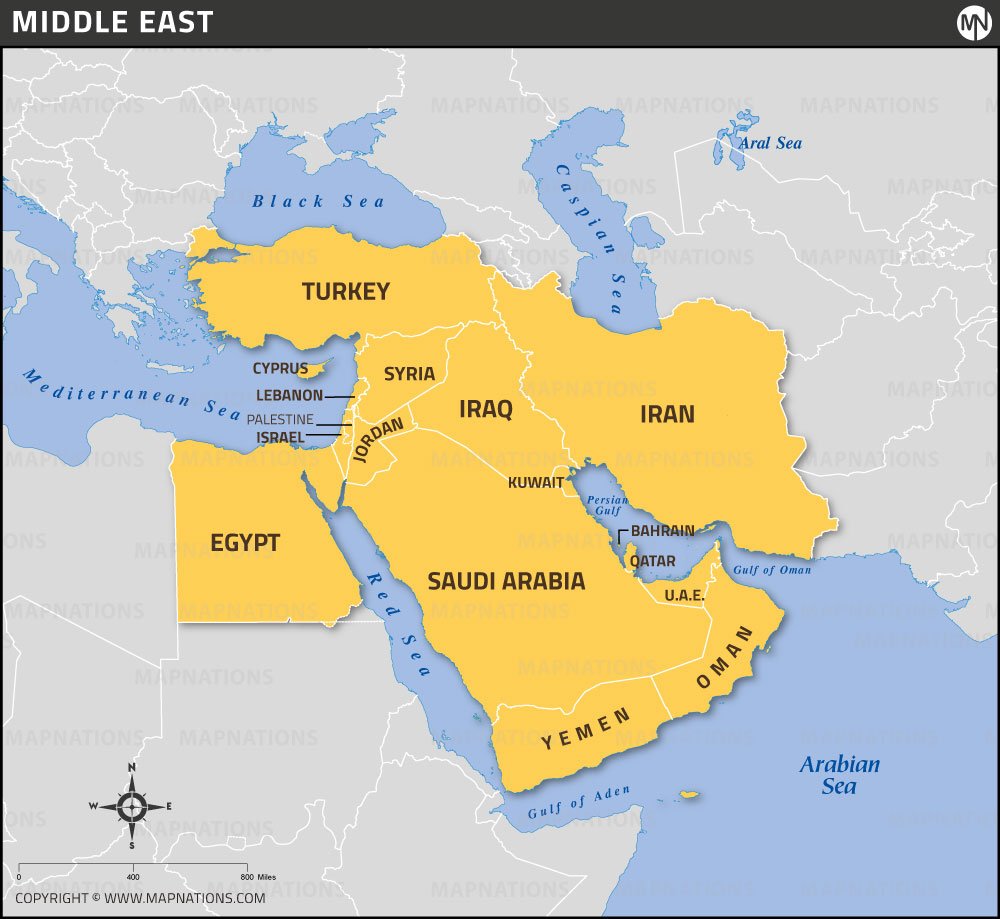
Middle East Administrative Region Map
The Middle East can be called the "oil reservoir of the world" and has the richest oil and natural gas resources in the world. The oil and gas industry is still the mainstay of the regional economy - Saudi Arabia's oil accounts for about 25% of GDP, and 70% of its fiscal revenue comes from oil and gas sales; UAE's oil and gas accounts for about 24% of GDP; Iraqi oil accounts for about 60% of GDP, and 90% of its fiscal revenue comes from oil exports. However, in recent years, various countries have been actively promoting economic diversification and transformation, and the manufacturing and service industries of Gulf countries such as Saudi Arabia, the United Arab Emirates, and Qatar have become relatively mature. Relying on its unique location advantages, the Middle East is gradually transforming from a traditional energy center into a global trade and shipping hub and an emerging digital infrastructure hub.
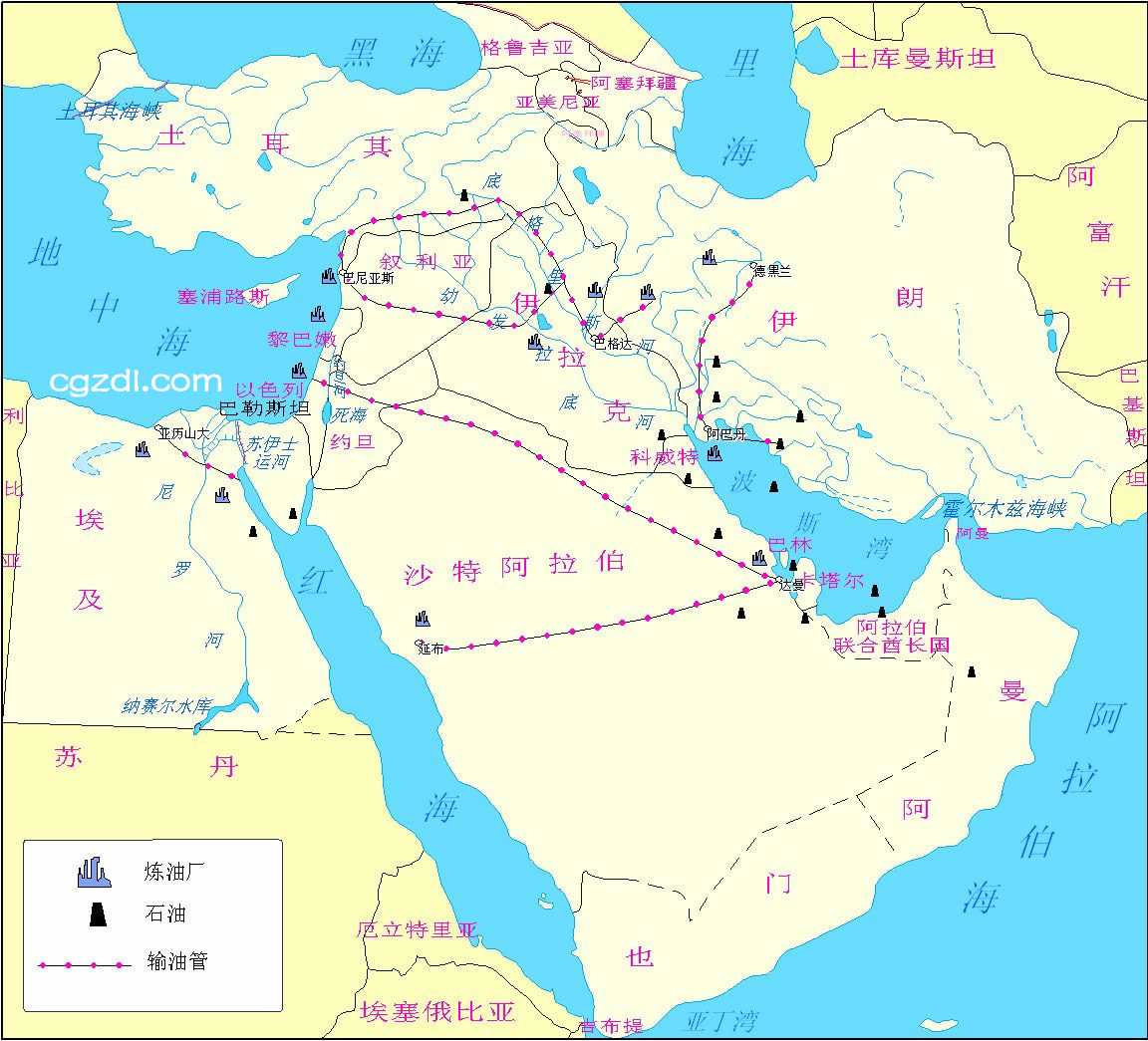
Distribution map of oil producing areas in the Middle East
1. Core geopolitical conflict (the biggest flash point in recent times)
1. The United States and Iran directly went to war, and shipping in the Strait of Hormuz was in emergency
The previous temporary ceasefire between the United States and Iran completely broke down, and the US military launched air strikes on Iran for many nights in a row. The US military's targets include military surveillance facilities, air defense facilities, command centers, maritime combat facilities, missile and drone storage points on Iran's coast; at the same time, civilian infrastructure such as bridges, railways, airports, communication towers, and desalination plants were also attacked. Six bridges in Hormozgan Province were blown up, 116 communication towers were damaged, and a desalination plant was attacked, completely interrupting the drinking water supply to about 10,000 surrounding residents. Iran counterattacked simultaneously with air strikes on US military bases in Bahrain, Kuwait and Jordan. Oil tankers exploded and caught fire one after another in the Strait of Hormuz, and the Iranian Revolutionary Guards even claimed to have "completely blocked" the strait. About 30% of the world's crude oil passes through this waterway, and Brent crude oil hit $91 per barrel, a five-week high. But five months of airstrikes have failed to bring Iran to its knees, and the conflict is reaching a stalemate.
2. The Houthi armed forces announced a blockade of Saudi Arabia's sea routes, putting pressure on both the Red Sea and the Persian Gulf
The Houthi armed forces in Yemen announced on the 20th that a "maritime embargo" on Saudi Arabia would take effect immediately, and warned ships not to sail to Saudi ports. The Houthis said they would "close the Bab el-Mandeb Strait" to Saudi Arabia based on the principle of "blockade in response to blockade." 75% of Saudi Arabia's crude oil is exported through the Yanbu Port on the Red Sea. Once the strait is blocked, nearly 25% of the global crude oil supply will be threatened. Ship tracking data shows that five oil tankers changed routes in the Red Sea on the 22nd. The Saudi-led multinational coalition said it would resolutely respond to any threat.
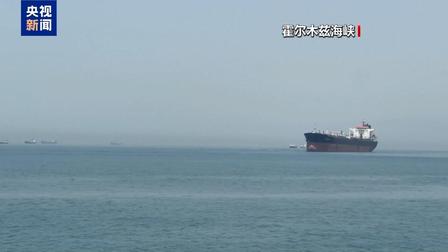
Shipping in the Strait of Hormuz
3. The United States demands "protection fees" from the six Gulf countries
Trump said on the 13th that the United States will charge a 20% fee for all goods transported through the Strait of Hormuz as "compensation." According to current oil price estimates, a single toll for a supertanker is as high as approximately US$30 million. The next day, Trump changed his tune and said that Gulf countries would replace tolls with large-scale investments in the United States. A series of words and deeds by the United States have been criticized as "blackmail", further overdrawing the credibility of the United States in the Gulf countries.
4. Saudi Arabia changes its air defense strategy and purchases Turkish anti-drone equipment
In the past, Saudi Arabia relied on high-priced US-made anti-aircraft missiles to intercept cheap drones, which seriously inflated costs. Recently, Saudi Arabia and Qatar have signed an agreement to purchase the Korkut 100/25 air defense system produced by Türkiye's ASELSAN, which is specially designed to combat small drones. Gulf countries are accelerating the purchase of short-range air defense and anti-drone technology from Türkiye.
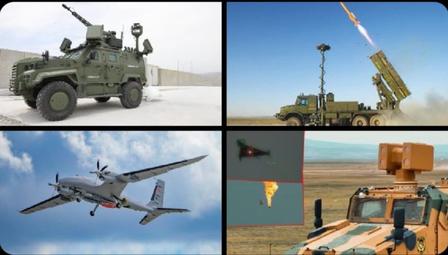
Turkey's Korkut Air Defense System
2. New trends in energy and regional economy
1. The UAE and Iran restart economic cooperation
Even if the United States and Iran are at war, the UAE and Iran still hold a joint economic meeting to finalize cooperation in new energy, logistics, trade and other fields. There is a clear division within the Gulf: Saudi Arabia sides with the United States, while the UAE focuses on economic pragmatism.
2. Saudi Arabia accelerates “Vision 2030”
Saudi Arabia continues to deploy green hydrogen, lithium battery raw material processing, and manufacturing, actively liberalizes industrial land, and attracts foreign investment with tax incentives to build factories, with the goal of gradually reducing the proportion of crude oil exports in GDP.
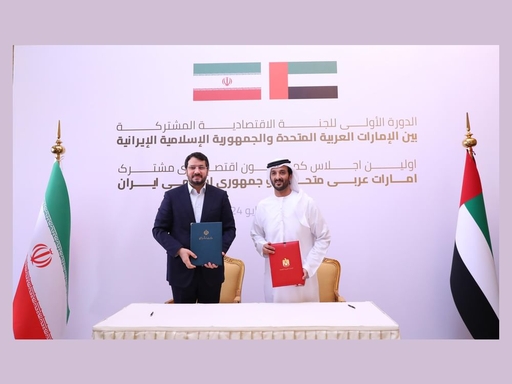
UAE-Iran Economic Cooperation Talks
3. The Middle East collectively increases its investment in new energy
Saudi Arabia, Oman, and the United Arab Emirates simultaneously expand the production capacity of wind power, green hydrogen, and lithium battery materials. The more intense the conflict, the more determined the Gulf countries are to promote energy transformation - on the one hand, selling high-priced crude oil to earn cash flow, on the other hand, they are laying out new energy industries to protect their bottom line in the long term.
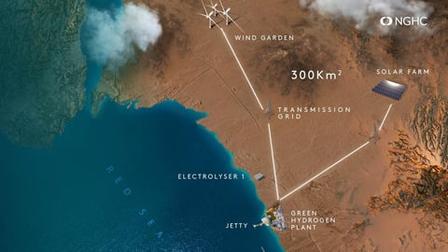
Saudi NEOM Green Hydrogen Industrial Park
3. The latest Chinese-funded projects
1. Oman: Wind power + negative electrode material energy storage closed loop
Shanghai Electric has invested in building a wind turbine manufacturing plant in Oman with an annual output of 1,100 MW of wind turbines; Zhongke Star City Oman’s lithium-ion battery anode material integrated base project has started construction in the Sohar Free Trade Port. In addition, Chinese-funded enterprises have invested US$500 million in a silicon-based battery anode material project in the Duqm Special Economic Zone to accelerate construction. The first phase will have an annual output of 2,000 tons, and the second phase will be expanded to 5,000 tons. It will directly support the Shanghai Electric fan project.
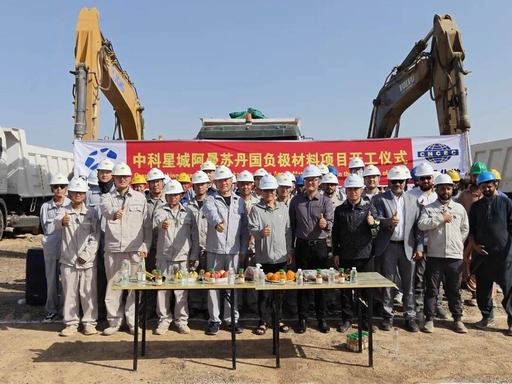
Opening Ceremony of Zhongke Xingcheng Oman Anode Project
2. UAE: Construction of two major Chinese-funded industrial parks begins
China Railway Construction won Dubai’s US$5 billion aviation infrastructure project to build the world’s largest civil aviation maintenance hangar. Ras Al Khaimah is located in Mingcheng International Industrial Park. The first phase plans to cover 1 million square meters, focusing on metal recycling, lithium battery raw material refining, and new material manufacturing.
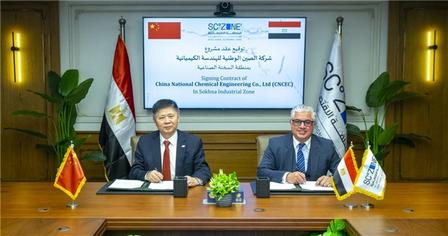
China Chemical Egypt Base Signing Site
3. Kuwait and Egypt successively launched Chinese-funded projects
China State Construction won the bid for a US$233 million super high-rise headquarters building in Kuwait, with a height of 275 meters and 55 floors. China National Chemical is building a chemical equipment manufacturing base in Egypt's Suez Economic Zone, with an annual output of 20,000 tons of steel structures and 400,000 dynes of pipeline prefabrication capacity in the first phase.
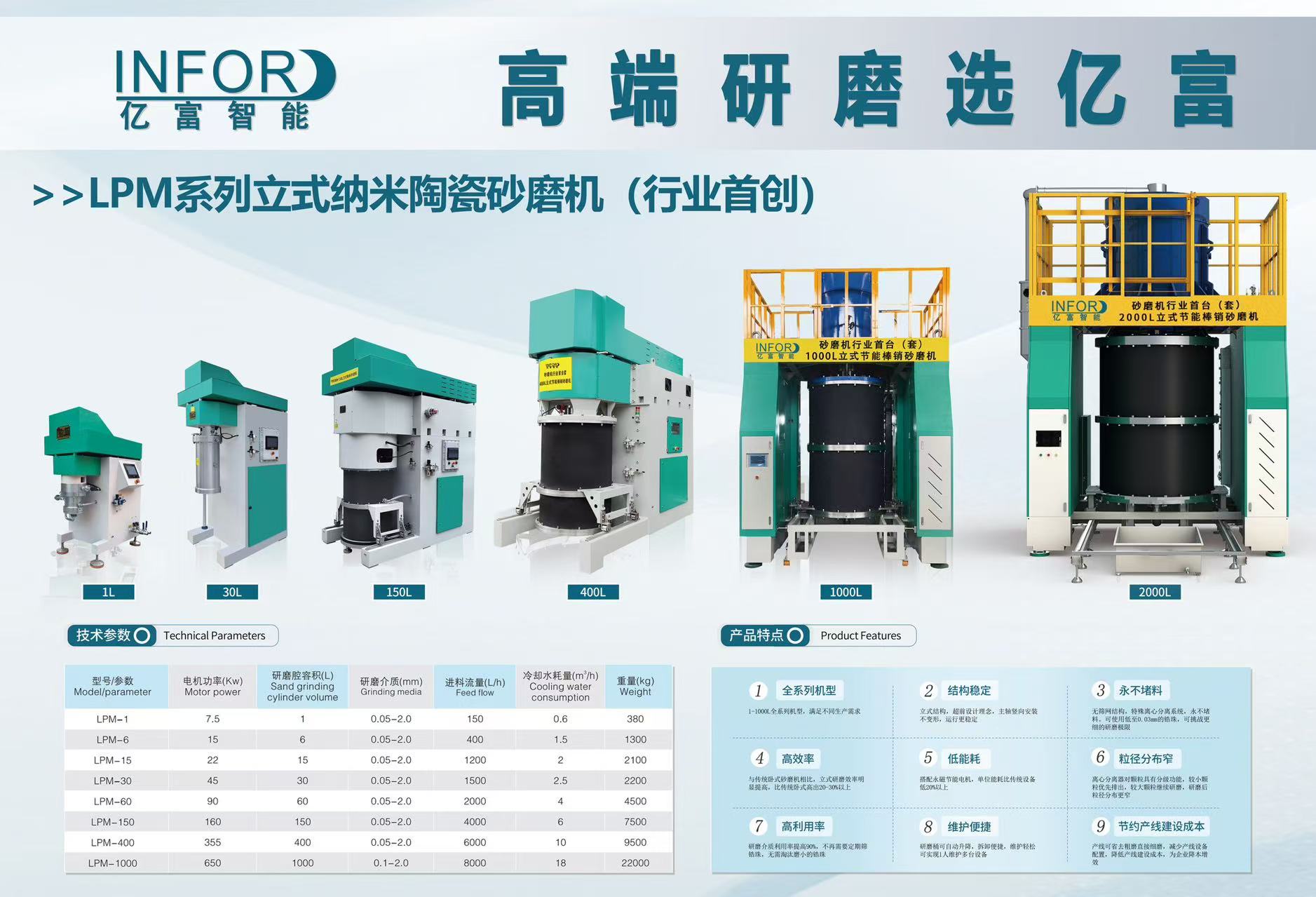
The Middle East is at the intersection of war and transformation. For Chinese-funded enterprises, the industrial opportunities hidden in the crisis - especially in the fields of new energy, lithium battery materials, and equipment manufacturing - deserve continued attention.

 English
 亿富机械
 +86-0769-85626082
 541476175@qq.com
 东莞市大岭山镇颜屋村莲颜路88号