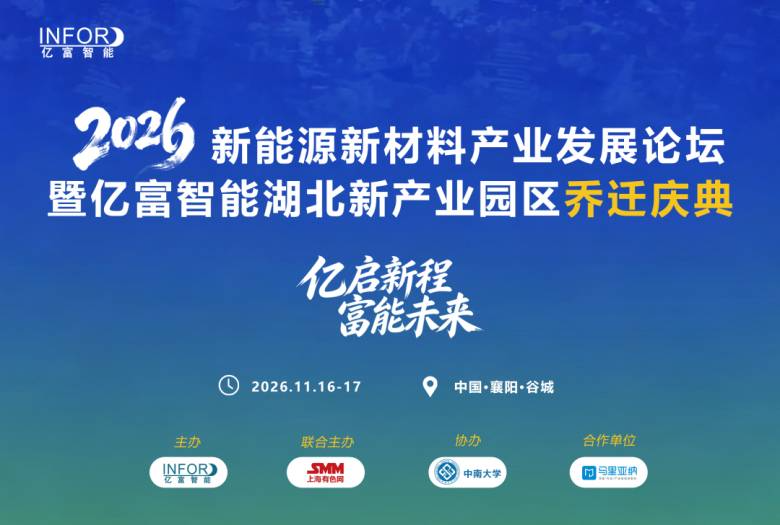
November 16-17, 2026, Gucheng, Xiangyang, Hubei.
When sodium electric hard carbon and silicon carbon anodes move from trial lines to mass production, Chinese anode companies no longer only compete for domestic tonnage, but "who can build the factory to the resource side and build it to the customer's doorstep" - Southeast Asia is becoming the first stop.
In this round of "anode mass production + overseas localization", we invited an overseas practitioner who built the factory directly in the mud of Sarawak - JACK Yang, co-founder of Huakai New Energy and C&M China-Malaysia Group. He is based in Malaysia to promote the implementation of China-Malaysia green energy projects. He has officially confirmed to attend this forum and the relocation celebration of Yifu Intelligent Hubei New Industrial Park, and will bring a keynote report."Anode Materials in the First Year of Large-Scale Mass Production: Research on C&M China-Malaysia Group's Globalization Practice and New Energy Investment Sarawak Settlement Project". From the 60-acre land in Kuching to the energy storage facilities of Petra Green Technology Park, he will explain "how to launch an anode factory in ASEAN" in one go.
The co-founder who first planted "hard carbon anodes" in Malaysia
JACK Yang is the co-founder of Huakai New Energy Technology (Zhongshan) Co., Ltd. and C&M Global Green Energy, and is also the actual promoter of Huakai's overseas business.Huakai New Energy focuses on hard carbon, silicon-carbon anode precursors and biomass-based anode materials for sodium-ion batteries. Relying on the team of Academician Zheng Feng and Dr. Liao Songyi of Central South University, Huakai New Energy has developed 300/330/350mAh/g grade hard carbon products, and has been recognized as a national technology-based small and medium-sized enterprise and Shenzhen Stock Exchange Listing (681645).
He led the overseas layout earlier than most peers: In December 2023, Huakai's first phase of the "100,000-ton sodium anode precursor carbonization" project in Kuching, Sarawak, Malaysia started; in 2024, it passed the C&M China-Malaysia Global Green Energy and ANA Synergy signed an MOU to promote the second phase of "50,000 tons of carbonization and pickling" and smart factories; during the same period, it will connect a 300MW photovoltaic + 600MWh energy storage scenario around the Kuching Petra Green Technology Park (KPGTP). He also promoted Huakai to be awarded the title of "Malaysian Foreign-Invested Socially Responsible Advanced Manufacturing Enterprise" (the only Chinese enterprise). The value of JACK Yang does not lie in the concept of globalization, but in turning "land acquisition-environmental assessment-energy assessment-local employment-battery factory nearby" into a replicable process.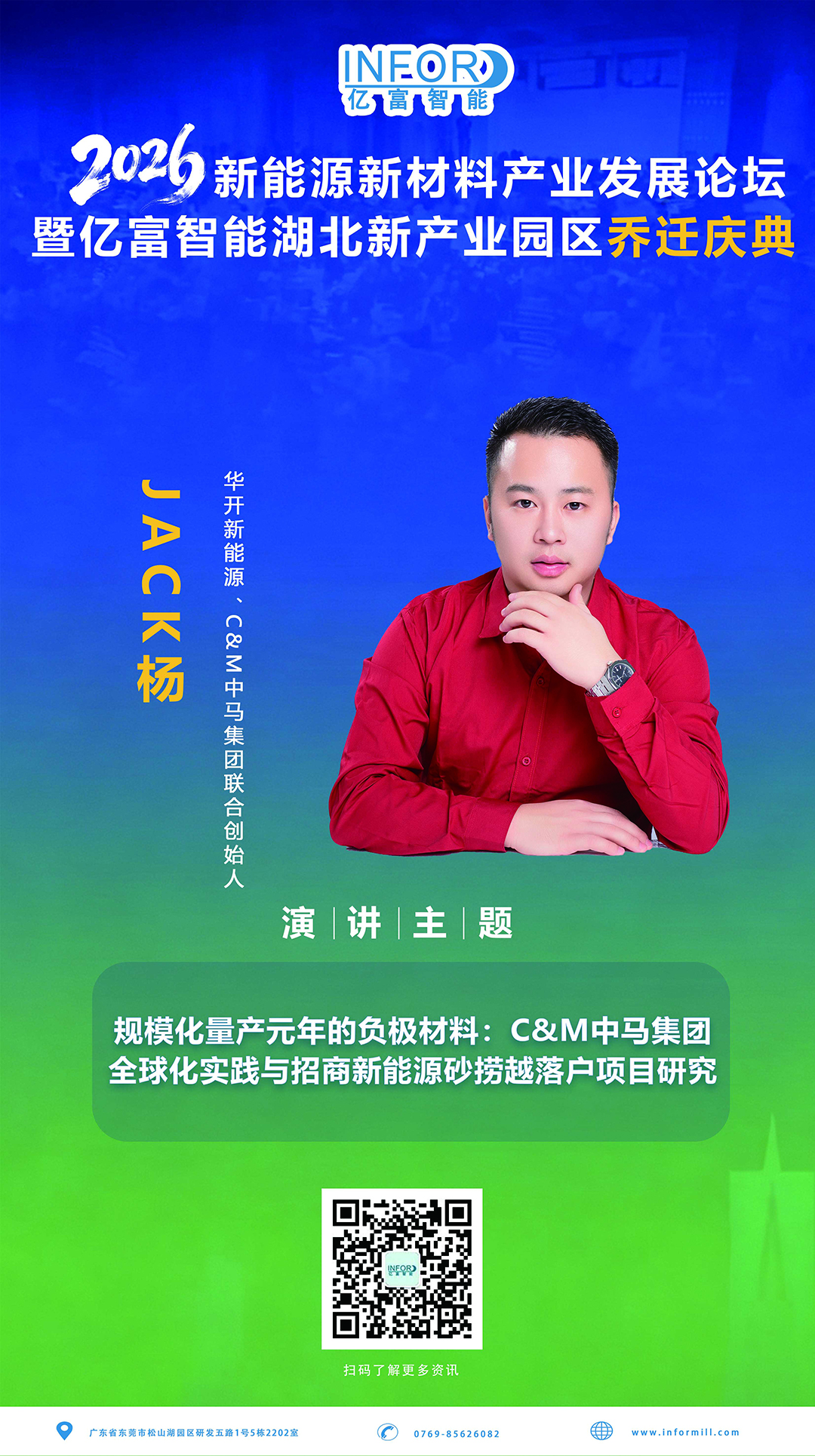
In-depth echo with the theme of the forum "New Energy and New Materials"
JACK Yang’s report"Anode Materials in the First Year of Large-Scale Mass Production: Research on C&M China-Malaysia Group's Globalization Practice and New Energy Investment Sarawak Settlement Project" just catches the main theme of this forum “New Materials-New Equipment-New Globalization”:
The report will break down three layers of real problems: the material layer - biomass hard carbon (durian shell, bamboo base, oil nut shell) how to reduce the precursor cost, while maintaining the first effect and low temperature cycle, to meet the energy storage and light movement scenarios; the mass production layer - Zhongshan R&D to Kuching carbonization and pickling, powder consistency, kiln temperature control, crushing and classification and packaging and transshipment, each link determines the reputation of overseas delivery; at the regional level - Sarawak has hydropower, green electricity, nickel resources, and KPGTP computing power + energy storage needs, but the localization rate (TKDN), environmental impact assessment LPJP, power purchase agreement and park investment rules determine whether the project is "completed" or "stable."
For material factories, it answers "Which process should be implemented first when the negative electrode goes overseas?"; for equipment factories, it reminds overseas production lines that it is not a translation of domestic drawings, but must have a spare parts system, remote operation and maintenance, and a low-carbon energy consumption curve; for companies like Yifu, it means that grinding, dispersion, and carbonization pre-treatment equipment must adapt to the high porosity and dust-prone characteristics of biomass hard carbon. The next 10,000-ton market for negative electrodes will not be based on coil prices, but on “local production, local use, and local certification.”
In the golden autumn of November, Gucheng’s new garden opens
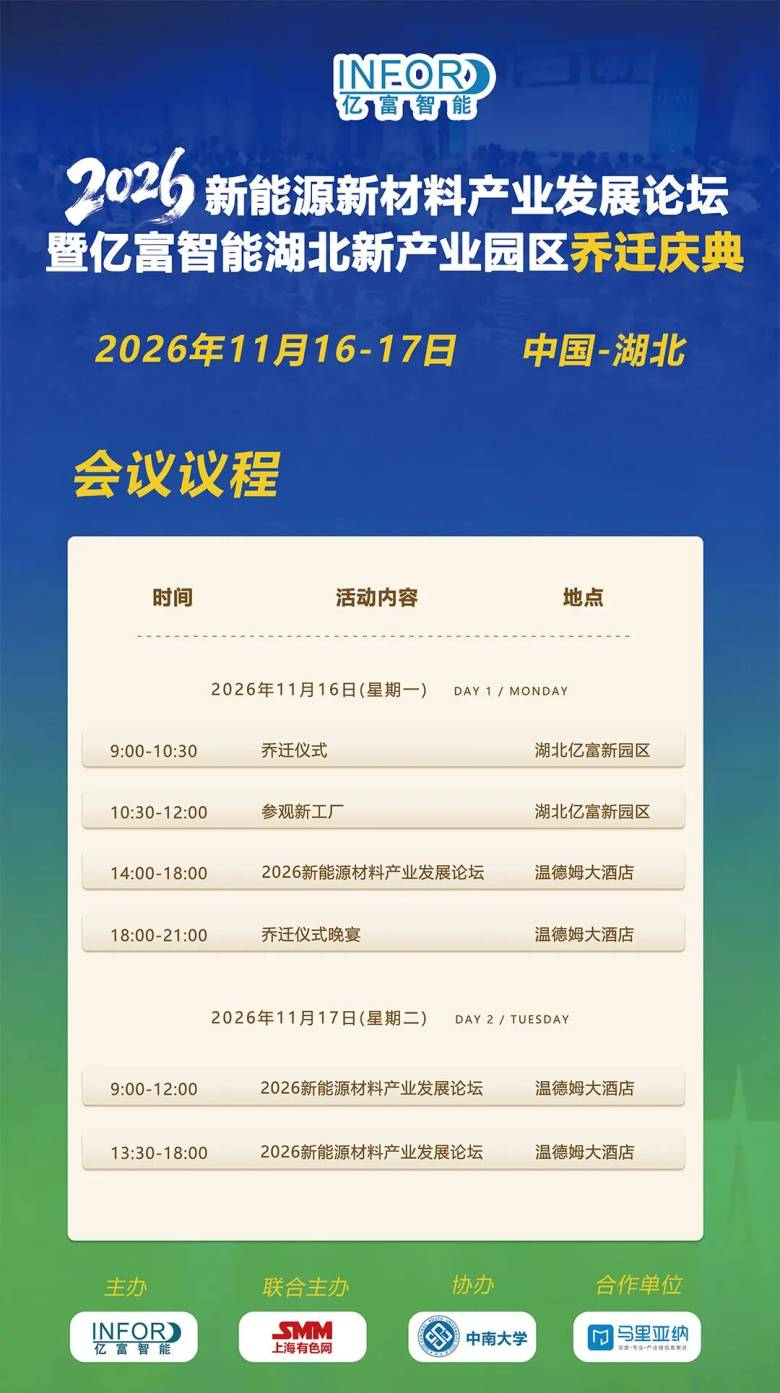
From November 16th to 17th, the new park and forum opened simultaneously in Gucheng, Xiangyang, Hubei! Let’s listen to JACK Yang’s explanation from Sarawak on “how to cross the threshold of localization in the first year of mass production”; and also see how Yifu’s new production line uses a set of replicable process bases to catch up with the rhythm of Southeast Asian anode factories. Relocation is not a ribbon-cutting, it is a matter of Yifu, Huakai, C&M and other front-line overseas players working together to smooth out the global delivery chain of China's anodes.
Billion starts a new journey, a rich future, Gucheng New Park will see you there!
2026 New Energy and New Materials Industry Development Forum and Yifu Intelligent Hubei New Industrial Park Moving Celebration
Time:November 16-17, 2026 | Location: Gucheng, Xiangyang, Hubei, China
Speaker:JACK Yang (co-founder of Huakai New Energy and C&M China Malaysia Group)
Speech Topic:"Anode Materials in the First Year of Large-Scale Mass Production: Research on C&M China-Malaysia Group's Globalization Practice and New Energy Investment Sarawak Settlement Project"
Sponsor:Yifu Intelligent
Co-organizer:Shanghai Nonferrous Network
Co-organizer:Central South University
Support:Gucheng County People's Government
 English
 亿富机械
 +86-0769-85626082
 541476175@qq.com
 东莞市大岭山镇颜屋村莲颜路88号
